-
Affiliation
-
Faculty of Science and Technology, Department of Chemistry 理論化学研究室 ( Yagami )
-
Position
-
Professor
-
External Links

KEIO RESEARCHERS INFORMATION SYSTEM |
Details of a Researcher
このページはJavascriptを使用しています。すべての機能を使用するためにはJavascript を有効にする必要があります。
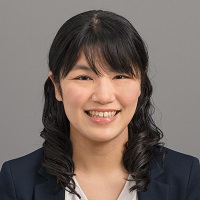
Hatanaka, Miho
|
|
|
慶應義塾大学, 大学院理工学研究科, 助教(有期・研究奨励)
京都大学, 福井謙一記念研究センター, 福井センターフェロー
近畿大学, 理工学部理学科化学コース, 助教
JSTさきがけ, 研究員(兼任)
奈良先端科学技術大学院大学, 研究推進機構(兼 端科学技術研究科・データ駆動型サイエンス創造センター) , 特任准教授
Keio University, 理工学部, 化学科
University, Graduated, Other
Keio University, 大学院 理工学研究科, 基礎理工学専攻 修士課程
Graduate School, Completed, Master's course
Keio University, 大学院 理工学研究科, 基礎理工学専攻 後期博士課程
Graduate School, Completed, Doctoral course
博士(理学), Keio University, Coursework, 2011.03
Theoretical study on the f-f transition intensities of lanthanide trihalide systems
Nanotechnology/Materials / Fundamental physical chemistry (理論化学・計算化学・情報化学)
理論・計算・情報化学を駆使した機能性材料の理解と設計,
特徴量データベースの構築による機能性材料開発の加速,
Topics in Organometallic Chemistry “New Directions in the Modeling of Organometallic Reactions”
M. Hatanaka, T. Yoshimura, S. Maeda , Springer, 2021.11
Scope: Artificial Force-Induced Reaction Method for Systematic Elucidation of Mechanism and Selectivity in Organometallic Reactions in "New Directions in the Modeling of Organometallic Reactions”, Contact page: p.57-80
マテリアルズ・インフォマティクスQ&A集-解析実務と応用事例-
茂本勇, 山本海, 畑中美穂, 船津公人, 一杉太郎 他, 情報機構, 2020.12
Scope: 第7章 材料探索・材料開発・構造解析事例 問14:MIによる触媒材料関連の開発例とは? / 第7章 材料探索・材料開発・構造解析事例 問28:発光材料設計へのMI応用法とは?
マテリアルズ・インフォマティクス~データ科学と計算・実験の融合による材料開発~
島津博基, 畑中美穂, 永田賢二,大場史康, 坂下竜一, 小澤哲也, 伊藤聡, 船津公人, 足立吉隆,松下外, 佐伯昭紀, 野田祐輔, 中山将伸, 奥野幸洋, 後潟敬介, 館山佳尚, 袖山慶太朗, 岩崎富生, 茂本勇, 林智広, 種石慶, 情報機構, 2018.03
Scope: 第2章, 第1節, Contact page: pp. 25-34
From Si16to Ge16: Geometric Origins of Robustness in Binary Cage Superatoms on Organic Substrates
Osada Y., Sato R., Nishikawa T., Tokita M., Kamoshida T., Masubuchi T., Shibuta M., Hatanaka M., Nakajima A.
Journal of Physical Chemistry C 130 ( 9 ) 3518 - 3525 2026.03
ISSN 19327447
Ikuta S., Inagaki T., Hatanaka M.
Journal of Computational Chemistry 47 ( 5 ) 2026.02
ISSN 01928651
Comprehensive Molecular-Level Understanding of MgO Hydration through Computational Chemistry
Inagaki T., Hatanaka M.
Journal of Physical Chemistry C 130 ( 3 ) 1312 - 1326 2026.01
ISSN 19327447
Nag A., Wakiuchi A., Takasuka S., Asano S., Hashizume R., Hatanaka M., Miyao T., Ohnishi Y., Matsubara T., Ando T., Sugawara T., Fujii M., Ajiro H.
MRS Communications 15 ( 6 ) 1122 - 1128 2025.12
ISSN 21596859
Hiromu Yamada, Shogo Takasuka, Shunto Oikawa, Yosuke Harashima, Tomoaki Takayama, Aniruddha Nag, Araki Wakiuchi, Tsuyoshi Ando, Tetsunori Sugawara, Miho Hatanaka, Tomoyuki Miyao, Takamitsu Matsubara, Yu-ya Ohnishi, Hiroharu Ajiro, Mikiya Fujii
ACS Applied Engineering Materials 3 ( 8 ) 2402 - 2415 2025.08
ISSN 2771-9545
Research on catalyst design by transition state control for efficient chain walking
Hatanaka, Miho
科学研究費補助金研究成果報告書 2021
Hatanaka, Miho
科学研究費補助金研究成果報告書 2021
Prediction of the catalytic ability based on the transition state database
Hatanaka, Miho
学事振興資金研究成果実績報告書 (慶應義塾大学) 2020
The ONIOM Method and Its Applications
L.W. Chung, W.M.C. Sameera, R. Ramozzi, A.J. Page, M. Hatanaka, G.P. Petrova, T.V. Harris, X. Li, Z. Ke, F. Liu, H. Li, L. Ding, K. Morokuma
Chemical Reviews 115 ( 12 ) 5678 - 5796 2015.04
Article, review, commentary, editorial, etc. (scientific journal), Joint Work
データ数が少ない系における マテリアルズ・インフォマティクス技術の効率的活用を目指して
畑中 美穂
CICSJ Bulletin 36 ( 1 ) 2 - 4 2018.07
Article, review, commentary, editorial, etc. (scientific journal), Single Work
人工力誘起反応法による化学反応経路の自動探索:有機合成化学への応用と展望
前田理, 畑中美穂, 植松遼平, 武次徹也, 諸熊奎治
有機合成化学協会誌 72 ( 5 ) 567 - 579 2014.05
Article, review, commentary, editorial, etc. (scientific journal)
畑中美穂
会報光触媒 (光機能材料研究会) ( 75 ) 7 - 10 2024.09
Article, review, commentary, editorial, etc. (scientific journal), Single Work, ISSN 1345-5818
畑中美穂
アンサンブル (分子シミュレーション学会) 25 ( 1 ) 41 - 45 2023.01
Article, review, commentary, editorial, etc. (scientific journal), Single Work
A descriptor database for metal-phosphorus complexes to evaluate the catalytic abilities using machine learning
M. Hatanaka
[International presentation] The 8th Japan-Czech-Slovakia (JCS) International Symposium on Theoretical Chemistry (Sapporo) ,
Oral presentation (invited, special)
Excited states of cerium photocatalysts through a machine learning lens
M. Hatanaka
[International presentation] The 5th conference of Theory and Applications of Computational Chemistry (TACC2023) (Sapporo) ,
Oral presentation (invited, special)
Phosphorescent Intensity of Cyclometalated Iridium(III) Complexes: A Combined DFT and Machine Learning Approach
M. Hatanaka
[International presentation] The 31st International Conference on Photochemistry (ICP2023) (Sapporo) ,
Oral presentation (invited, special)
Elucidation of mechanism and extraction of key for hybrid catalytic systems based on the automated reaction path search method
M. Hatanaka
[International presentation] The 3rd International Symposium on Hybrid Catalysis for Enabling Molecular Synthesis on Demand (Nagoya) ,
Oral presentation (invited, special)
Activation energy database for catalyst screening
M. Hatanaka
[International presentation] 5th China-Japan-Korea Workshop on Theoretical & Computational Chemistry (CJK-WTCC-V) ( (Online) ,
Oral presentation (invited, special)
金属錯体触媒データベースの構築による触媒開発の加速
学術変革領域研究(A) , Principal investigator
電解発生活性化学種の利用による新物質変換系の構築
基盤研究(A), Coinvestigator(s)
データ駆動科学によるスマートスケーラブルケミストリーの確立
NEDO先導研究プログラム, Coinvestigator(s)
フラーレンC60の赤外発光メカニズムと宇宙存在度
基盤研究(C), Coinvestigator(s)
σおよびπ二重芳香族性および二重非局在系の創製と展開
基盤研究(A), Coinvestigator(s)
ナイスステップな研究者2021
2021, 文部科学省 科学技術・学術政策研究所(NISTEP), 化学的性質を活かした近似計算方法の開発と応用-機能性材料の理解の深化と効率的設計を目指して-
第9回日本化学会女性化学者奨励賞
2021, 日本化学会, 理論・計算化学による機能性希土類材料の機構解明と分子設計
Type of Award: Award from Japanese society, conference, symposium, etc.
第12回分子科学会奨励賞
2019, 分子科学会, 理論的材料設計に向けたランタノイド励起状態の近似的記述法の開発
第11回PCCP Prize
2017, 英国王立化学会, Theoretical Study on the Lanthanide Chemistry: Structural Fluctuation, Catalytic Ability, and Luminescence
The Best Poster Award in “The 6th Asia Pacific Conference of Theoretical and Computational Chemistry”
2013
Type of Award: Award from international society, conference, symposium, etc.
BACHELOR'S THESIS
2026
SEMINAR IN CHEMISTRY
2026
TOPICS IN CHEMISTRY
2026
BASIC QUANTUM CHEMISTRY (BASIC PHYSICAL CHEMISTRY 2)
2026
MOLECULAR QUANTUM CHEMISTRY (PHYSICAL CHEMISTRY 1)
2026
マテリアル・インフォマティクス特論
奈良先端科学技術大学院大学
Spring Semester, Postgraduate, Lecture, Within own faculty, 12h
Materials Informatics
NAIST
Autumn Semester, Postgraduate, Lecture, Within own faculty, 12h
データサイエンスPBL II
奈良先端科学技術大学院大学
Postgraduate, Seminar, Lecturer outside of Keio, 12h
データサイエンスPBL I
奈良先端科学技術大学院大学
Postgraduate, Seminar, Lecturer outside of Keio, 12h
Data Science Ⅱ
NAIST
Lecture, Lecturer outside of Keio, 1h
基礎科学チュートリアル:すぐできるマテリアルズ・インフォマティクス -材料×機械学習の融合-の教材作成
, Development of Textbook and Teaching Material
三菱ケミカルなど、量子コンピュータを用いた光機能性物質向け計算法を開発
マイナビニュース , 2023.02
「化学とAI融合」推進の処方箋 CSTI有識者議員懇で慶大の畑中准教授が提案
科学新聞, 2022.07
慶応大学 人工光合成 量子化学とMIで挑む
化学工業日報, 2021.05
炭化水素から有機分子 東大など 医薬品製造が安価に
日経産業新聞, 2019.01
ミクロな世界 スパコンで見る
読売新聞(奈良版), 2018.02
第25回理論化学討論会実行委員会
第16回分子科学討論会2022横浜実行委員会
シンポジウム「化学反応経路探索のニューフロンティア2022」世話人代表
34th Symposium on Chemical Kinetics and Dynamics(第34回化学反応討論会)実行委員
異分野融合ワークショップ「データ科学との融合による化学の新展開」主催
理論化学会,
日本希土類学会,
分子科学会,
日本化学会,
文部科学省 量子科学技術委員会委員
JST ACT-X「トランススケールな理解で切り拓く革新的マテリアル」領域アドバイザー
日本化学会関東支部幹事
NEDO「機能性化学品の連続精密生産プロセス技術の開発」プロジェクト技術推進委員
理論化学会幹事


Click to view the Scopus page. The data was downloaded from Scopus API in October 11, 2026, via http://api.elsevier.com and http://www.scopus.com .