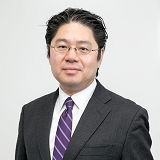
Maeda, Shoichi

写真a

Affiliation

Graduate School of Health Management ( Shonan Fujisawa )

Position

Professor

Profile 【 Display / hide

  • Technology related to medicine and medical treatment has advanced rapidly in recent years and enabled the diagnosis, treatment, and prevention of illnesses that were previously untreatable. On the other hand, technological advances have also created new ethical, legal and social issues. Issues related to prenatal diagnoses and elective abortions and end of life care and withholding and termination of life support are just a few examples. Within public health, many ethical, legal and social issues have been created, such as determining the order of priority for immunization against new infectious diseases. Within such an environment, the pressing issue of research and education relating to medical ethics has become all the more important. Technology used for medical treatment has also undergone remarkable progress over the past few years. However, this sophisticated technology has also become increasingly complex. Combined with a shortage of healthcare professionals, this has also led to an increasing number of medical errors. Such medical errors have become an important issue, not only in Japan, but also across the world, leading to a strong demand for more research and education on safe medical practices and how to respond to medical accidents. Dealing with error is not only applicable at the bedside. The approval of full-scale clinical research using stem cells requires thoughtful consideration of how to deal with clinical research ethics. These rapid changes exceed the boundaries of the traditional theoretical framework and force reconsideration of current public policy. Our laboratory aims for those involved in research, practice and public administration in a variety of fields to work together to study medical ethics and medical safety issues and suggest public policy improvements.

Other Affiliation 【 Display / hide

  • School of Medicine, 医療政策・管理学, 兼担教授

  • Dean, Graduate School of Health Management


Research Areas 【 Display / hide

  • Humanities & Social Sciences / New fields of law (medical law)

  • Life Science / Medical management and medical sociology (clinical ethics)

Research Keywords 【 Display / hide

  • Medical Law, Medical Ethics, Research Ethics, Clinical Ethics, Patient Safety Management, Risk Management


Papers 【 Display / hide

  • Ensuring patient safety: a comprehensive approach to radiological errors

    Maeda S., Ishikawa E., Starkey J.

    Abdominal Radiology  2025

    ISSN  2366004X

     View Summary

    Radiologic errors arise from the interaction of human fallibility and systemic weakness. Using a fatigue-related missed renal mass, this paper proposes a model that joins two complementary duties: ethical transparency through disclosure and apology, and system redesign grounded in Just Culture and human factors engineering. Together, these principles create a sustainable path toward safety. We outline common malpractice sources, offer practical guidance for disclosure and apology, and emphasize institutional strategies that transform individual error into system learning and patient-centered improvement.

  • Family presence during resuscitation: a survey of Japanese physicians’ views

    Tanabe Y., Ishikawa E., Yamada T., Shime N., Maeda S.

    Journal of Public Health Germany  2024

    ISSN  21981833

     View Summary

    Aim: This study aimed to clarify physicians’ awareness of and attitudes toward family presence during resuscitation (FPDR) and related factors. Subject and methods: A web-based questionnaire survey was conducted of 7859 physicians who were members of the Japanese Society of Intensive Care Medicine (survey period: October 12, 2022, to December 31, 2022). Focusing on cardiopulmonary arrest, the survey questioned their awareness and attitudes, with a comparison of exogenous and non-exogenous patients. Results: The proportion of respondents who have family present during resuscitation was 100 (25.0%) for exogenous and 105 (29.2%) for non-exogenous. The proportion who believed that the family’s acceptance of death is greater with FPDR was 255 (61.7%) for exogenous and 245 (65.7%) for non-exogenous. The proportion who believed that the family’s acceptance of death is greater with FPDR included a significantly higher number of respondents who had family present than in the proportion who believed that FPDR has no effect. The proportion who believed that the family is emotionally traumatized by FPDR was 251 (60.8%) for exogenous and 217 (58.2%) for non-exogenous. The proportion who believed that families are emotionally traumatized by FPDR included a significantly higher number of respondents who do not have family present than the proportion who believed that FPDR has no effect. Conclusion: Various international resuscitation guidelines have recommended FPDR from an early stage to alleviate grief and prevent mental disorders. However, these guidelines are not always followed in Japan.

  • Current status of umbilical cord blood storage and provision to private biobanks by institutions handling childbirth in Japan

    Murata M., Kawabe K., Hatta T., Maeda S., Fujita M.

    BMC Medical Ethics 23 ( 1 )  2022.12

     View Summary

    Background: The Act Regarding the Promotion of the Appropriate Supply of Hematopoietic Stem Cells for Transplant regulates only how public banks store and provide umbilical cord blood (UCB) for research or transplantation. Japan had no laws to regulate how the private banks manage the procedures, harvesting, preparation, and storage of such blood. As a result, the status of UCB distribution remains unknown. We conducted a survey to investigate the current status of UCB storage and provision to private biobanks by Japanese institutions that handle childbirth. Methods: Questionnaire forms were mailed to 3,277 facilities handling childbirth that were registered in the Japan Council for Quality Health Care website. Results: Of the 1,192 institutions handling childbirth that participated in the survey (response rate: 36.7%), 34.4% responded that they currently provide UCB to private biobanks, while 16.1% of facilities did so in the past. Moreover, some institutions currently provide or formerly provided UCB to medical treatment facilities (2.6%), research institutions (5.9%), companies (2.2%), or overseas treatment facilities, research institutions, or companies (0.3%). A certain number of institutions handling childbirth did not even provide explanations or obtain consent when the UCB was harvested from private bank users. Conclusions: This is the first study to determine the status of UCB provision to private banks by Japanese institutions handling childbirth. Future studies will need to examine in detail how institutions handling childbirth provide explanations to private bank users and UCB providers as well as how these institutions obtain consent.

  • An Exploratory Study on Information Manipulation by Doctors: Awareness, Actual State, and Ethical Tolerance

    Maeda S., Nakazawa E., Kamishiraki E., Ishikawa E., Murata M., Mori K., Akabayashi A.

    Clinics and Practice 12 ( 5 ) 723 - 733 2022.10

     View Summary

    (1) Background: To what extent is information manipulation by doctors acceptable? To answer this question, we conducted an exploratory study aimed at obtaining basic data on descriptive ethics for considering this issue. (2) Methods: A self-administered questionnaire survey was conducted on a large sample (n = 3305) of doctors. The participants were queried on (1) whether they consider that information manipulation is necessary (awareness), (2) whether they have actually manipulated information (actual state), and (3) their ethical tolerance. (3) Result: The response rate was 28.7%. Sixty percent of the doctors responded that information manipulation to avoid harm to patients is necessary (awareness), that they have actually manipulated information (actual state), and that information manipulation is ethically acceptable. (4) Conclusion: While the present survey was conducted among doctors in Japan, previous studies have reported similar findings in the United States and Europe. Based on our analysis, we hypothesize that a relationship of trust between patients and medical personnel is crucial and that information manipulation is not needed when such a relationship has been established.

  • Should the Use of Patient Medical Information in Research Require the Approval of Attending Physicians?

    Nakazawa E., Maeda S., Udagawa M., Akabayashi A.

    Publications 10 ( 3 )  2022.09

     View Summary

    Retrospective observational studies using medical records require researchers to guarantee the right to opt out of the study. However, is it also necessary to confirm whether the medical professionals who created those medical records permit their use as well? In this article, we consider possible options based on a fictitious scenario. Based on our deliberations, we recommend that the information be disclosed on the hospital’s homepage or in leaflets (principal investigator: hospital director), and, similar to patients, attending physicians should be given the opportunity to opt out. We also recommend that an application be submitted to the hospital’s research ethics committee. In this paper, we address the public interest aspect of the use of patient information as a primary item for ethical scrutiny. In addition to research ethics, this particular point underscores the importance of public health ethics, particularly as they pertain to the conflict between individual freedom and public interest.

display all >>

Papers, etc., Registered in KOARA 【 Display / hide

Research Projects of Competitive Funds, etc. 【 Display / hide

  • 偶発的所見等の取扱いに関する法的課題の検討

    2023.04
    -
    2026.03

    基盤研究(B), Principal investigator

  • 医学研究・医療・健康診断における偶発的所見の取扱いに関する法的課題の検討

    2020.04
    -
    2023.03

    MEXT,JSPS, Grant-in-Aid for Scientific Research, Grant-in-Aid for Scientific Research (B), Principal investigator


Courses Taught 【 Display / hide

  • RISK ASSESSMENT AND MANAGEMENT

    2025

  • RESEARCH SKILLS

    2025

  • PRINCIPLES OF HEALTH MANAGEMENT

    2025

  • MEDICAL LAW

    2025

  • JOINT SEMINAR ON HEALTH MANAGEMENT

    2025

display all >>


Memberships in Academic Societies 【 Display / hide

  • 日本医事法学会

     
  • 日本生命倫理学会

     
  • 日本病院管理学会

     
  • 日本社会福祉学会

     
  • 日本公衆衛生学会


display all >>