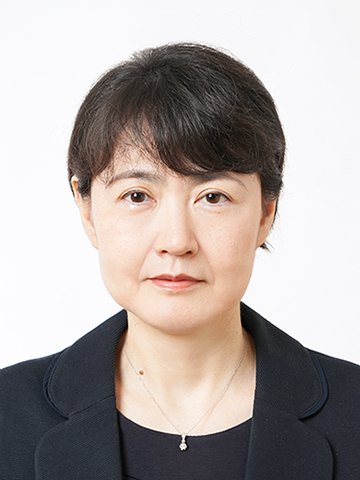
Suzuki, Sayo

写真a

Affiliation

Faculty of Pharmacy, Department of Pharmacy 医療薬学・社会連携センター 医療薬学部門 ( Shiba-Kyoritsu )

Position

Professor

External Links

Career 【 Display / hide

  • 2020.04
    -
    Present

    Keio University, Division of Pharmaceutical Care Sciences, Center for Social Pharmacy and Pharmaceutical Care Sciences, Keio University Faculty of Pharmacy, Professor

  • 2017.04
    -
    2020.03

    Keio University, Division of Pharmaceutical Care Sciences, Faculty of Pharmacy, Associate Professor

  • 2010.01
    -
    2017.03

    慶應義塾大学, 薬学部医療薬学センター, 専任講師

  • 2009.04
    -
    2009.12

    慶應義塾大学, 医学部臨床薬剤学講座, 助教

  • 2007.04
    -
    2009.03

    慶應義塾大学, 医学部薬剤部, 助教

display all >>

Academic Background 【 Display / hide

  •  

    Kyoto University, 薬学研究科

    Graduate School, Completed, Master's course

  •  

    Kyoto University, 薬学部, 薬学科

    University, Graduated

Academic Degrees 【 Display / hide

  • 薬学修士, 京都大学, Coursework

    ラットにおけるCisplatinの腎排泄挙動と毒性

  • 博士(医学), Keio University, Dissertation, 2013.10

    S100A10 protein expression is associated with oxaliplatin sensitivity in human colorectal cancer cells.

Licenses and Qualifications 【 Display / hide

  • 日本医学教育学会認定医学教育専門家, 2023.01

  • 薬剤師免許, 1989

  • 高等学校教諭二級普通免許(理科), 1989

  • 高等学校教諭専修免許(理科), 1991


Research Areas 【 Display / hide

  • Life Science / Clinical pharmacy (Clinical Pharmacology)

  • Medical Education / Pharmaceutical Education

Research Keywords 【 Display / hide

  • Personalized Medicine

  • Medical professionalism

  • 医学・薬学教育


Books 【 Display / hide

  • 今日の治療指針 2026年度版「薬物治療モニタリング(TDM)」

    谷川原祐介,鈴木 小夜. , 医学書院,東京, 2026.01

    Scope: 薬物治療モニタリング(TDM)

  • 今日の治療指針 2025年度版「薬物治療モニタリング(TDM)」

    谷川原祐介,鈴木 小夜. , 医学書院,東京 , 2025.01

    Scope: 薬物治療モニタリング(TDM)

  • 今日のOTC薬 改訂第6版.「第16章 やけど用薬」

    Sayo Suzuki, 南江堂, 東京, 2024.08,  Page: 666

    Scope: 第16章 やけど用薬,  Contact page: p. 416-425

  • 今日のOTC薬 改訂第6版.「第23章 強心薬」

    Sayo Suzuki, 南江堂, 東京, 2024.08,  Page: 666

    Scope: 第23章 強心薬,  Contact page: p. 508-519

  • 今日の臨床サポート 改訂第5版「小児薬用量の考え方と小児薬物療法における注意点(小児科)」

    清宮 啓介, 鈴木 小夜, エルゼビア・ジャパン株式会社, 2024.04

    Scope: 小児薬用量の考え方と小児薬物療法における注意点(小児科)

display all >>

Papers 【 Display / hide

  • Three Kampo medicines—bofutsushosan, boiogito, and daisaikoto—have different effects on host fat accumulation and the intestinal microbiota in a high-fat-diet–induced mouse model of obesity

    Nakamichi K., Yoshino T., Akiyama M., Jibiki A., Yokoyama Y., Kawazoe H., Suzuki S., Watanabe K., Kim Y.G., Nakamura T.

    Journal of Natural Medicines 79 ( 5 ) 1044 - 1056 2025.09

    Research paper (scientific journal), Joint Work, Accepted,  ISSN  13403443

     View Summary

    Inhibiting body fat accumulation is important for the prevention of obesity. In Japan, three Kampo medicines are commonly used to treat obesity: bofutsushosan, boiogito, and daisaikoto. To compare the influences of these Kampo medicines on the intestinal microbiota, it is necessary to conduct a simultaneous investigation using the same mouse model under the same experimental conditions. C57BL/6J mice were divided into five groups: normal chow (NC), high-fat diet (HFD), HFD + 3% bofutsushosan extract (BTS), HFD + 3% boiogito extract (BOT), and HFD + 3% daisaikoto extract (DST). Epididymal white adipose tissue (WAT) weight, mesenteric WAT weight, serum triglyceride levels, and serum total cholesterol levels were measured. Additionally, total bacteria, alpha diversity, beta diversity, and bacterial composition in stool samples were measured. Body weight and epididymal WAT weight gain were significantly inhibited in the BTS-treated group and DST-treated group, but not in the BOT-treated group, compared with the HFD control group. Additionally, serum total cholesterol levels were significantly lower in the DST-treated group than in the HFD group. Specific intestinal bacteria, Clostridium sensu stricto 1, Erysipelatoclostridium, Roseburia, and the Lachnospiraceae NK4A136 group, were significantly changed in the Kampo-treated groups compared with the HFD group, and each of them was correlated with body weight gain, body fat rate, epididymal WAT weight, or mesenteric WAT weight. Our simultaneous investigation of BTS, BOT, and DST under the same conditions clearly demonstrated different changes in the intestinal microbiota and different effects on fat accumulation as well as their association among the three Kampo medicines.

  • Identification of risk factors and development of a predictive model in patients using cefmetazole for international normalized ratio elevation

    Namiki T., Yokoyama Y., Kimura M., Fukuda S., Seyama S., Iketani O., Samura M., Ishikawa H., Jibiki A., Kawazoe H., Ohtani H., Hasegawa N., Matsumoto K., Hashi H., Suzuki S., Nakamura T.

    Plos One 20 ( 7 July ) e0322909 2025.07

    Research paper (scientific journal), Joint Work, Accepted

     View Summary

    Patient risk factors related to coagulopathy and bleeding when using cefmetazole (CMZ) have not yet been identified, and no models exist to predict side effects during CMZ treatment. Moreover, reports that examine which patients should be careful when using CMZ to ensure safety are lacking. Our objective was to understand risk factors for elevated international normalized ratio (INR) in patients using CMZ and to develop a predictive model for INR elevation using a risk score to enable safe administration of CMZ. This multicenter, retrospective, and observational study was conducted in Tokyo Bay Urayasu Ichikawa Medical Center and Keio University Hospital using data from patients being treated with CMZ. Patients were classified into INR-elevated or non-INR-elevated groups. Univariate and multivariate analyses were performed to calculate the adjusted odds ratios (aOR) and 95% confidence intervals (CI). The actual probability of an elevated INR and probability of an elevated INR predicted by the regression β coefficients were calculated and classified into four categories according to the risk score. Binomial logistic regression analysis revealed that liver disorder (aOR, 5.65; 95% CI, 1.69–18.91; risk scores, 2), nutritional risk (aOR, 6.32; 95% CI, 3.14–12.74; risk scores, 2), no-diabetes mellitus (aOR, 4.53; 95% CI, 1.34–15.26; risk scores, 2), and warfarin use (aOR, 98.44; 95% CI, 7.05–1375.50; risk scores, 5) were significantly associated with INR elevation. The predicted incidence probabilities of INR elevation were<5% (low risk), 5–<30% (medium risk), 30–<90% (high risk), and ≥ 90% (very high risk). The model validity showed a good fit (AUC, 0.79; 95% CI, 0.73–0.85, P<0.001). We identified risk factors that contribute to INR elevation and constructed a model to predict INR elevation using the risk score. Using this predictive model enables the appropriate use of CMZ in a safe manner.

  • Analysis of the Stability of 0.04% Mitomycin C Ophthalmic Solution under Various Storage Conditions

    Nonomiya Yuma, Yamaguchi Koki, Yokoyama Yuta, Nakajima Isana, Hara Ryusei, Shoji Daigo, Takiguchi Tomomi, Takehana Kazumi, Jibiki Aya, Suzuki Sayo, Nakamura Tomonori, Tsuji Hideki, Yamaguchi Masakazu

    The Keio Journal of Medicine (The Keio Journal of Medicine)  74 ( 4 ) 214 - 220 2025.06

    Research paper (scientific journal), Joint Work, Accepted,  ISSN  00229717

     View Summary

    <p>A 0.04% mitomycin C (MMC) ophthalmic solution is not commercially available and is prepared in hospitals as required. The physical properties and stability of the MMC ophthalmic solution have not been clarified because of a lack of data. This study aimed to assess the stability of the MMC ophthalmic solution under various storage conditions. The MMC ophthalmic solution was prepared by dissolving 2 mg of MMC in 5 mL of saline solution. Each batch of ophthalmic solution was stored under three conditions [cold/shaded light, room temperature/shaded light, and room temperature/scattered light (approximately 4000 lx)], and MMC concentration was determined using high-performance liquid chromatography on days 0, 1, 3, 5, 7, 14, and 21. The expiry date was calculated based on the results of the degradation analysis. pH measurements and bacterial culture tests were conducted for each storage condition. The MMC concentrations on day 21 under cold/shaded light, room temperature/shaded light, and room temperature/scattered light were 340, 287, and 227 µg/mL, respectively. MMC concentrations decreased over time, and the decrease was highest when the samples were stored at room temperature and exposed to light, and lowest under cold conditions and protected from light. The pH of MMC solutions was 5.8 after preparation, which increased to 6.9 with time under all storage conditions. Culture tests did not detect any bacteria under any storage conditions. The MMC ophthalmic solution was most stable under cold/shaded conditions, and our study clarifies its expiry date for clinical use.</p>

  • Efficacy of De-Escalation to Cefmetazole in Patients with Bacteremic Urinary Tract Infections Caused by Extended-Spectrum <i>β</i>-Lactamase-Producing <i>Escherichia coli</i>

    Namiki Takaya, Yokoyama Yuta, Kimura Motonori, Fukuda Shogo, Seyama Shoji, Iketani Osamu, Uwamino Yoshifumi, Jibiki Aya, Kawazoe Hitoshi, Ohtani Hisakazu, Hasegawa Naoki, Matsumoto Kazuaki, Oda Rentaro, Hashi Hideki, Suzuki Sayo, Nakamura Tomonori

    Biological and Pharmaceutical Bulletin (The Pharmaceutical Society of Japan)  48 ( 5 ) 537 - 544 2025.05

    Research paper (scientific journal), Accepted,  ISSN  09186158

     View Summary

    <p>This study aimed to clarify the optimal value for the unbound cefmetazole concentration to remain above the minimum inhibitory concentration (MIC) (<i>f</i>T ≥ MIC) for efficacy of de-escalation to cefmetazole in patients with bacteremic urinary tract infection by extended-spectrum <i>β</i>-lactamase-producing <i>Escherichia coli</i>. This double-center retrospective observational study was conducted at Tokyo Bay Urayasu Ichikawa Medical Center and Keio University Hospital from January 2012 to October 2022. Efficacy was determined <i>via</i> clinical evaluation (mortality rate, recurrence rate, vital changes) and bacteriological evaluation, and the optimal <i>f</i>T ≥ MIC was calculated <i>via</i> receiver operating characteristic curve analysis. As a result, the number of patients evaluated were 40 (35 and 5 in the treatment success and treatment failure groups, respectively). Univariate analysis showed that <i>f</i>T ≥ MIC, recurrence rate, and MIC for cefmetazole against bacteria were significantly different for the two groups (<i>p</i> < 0.05). Receiver operating characteristic curve analysis showed that the optimal <i>f</i>T ≥ MIC indicating efficacy was 57% (area under the curve: 0.94, 95% confidence interval: 0.86–1.00, <i>p</i> = 0.002). All patients with <i>f</i>T ≥ MIC ≥ 57% had successful treatment, whereas the frequency of treatment failure was high among those with <i>f</i>T ≥ MIC <57%. The optimal <i>f</i>T ≥ MIC for the clinical efficacy of de-escalation to cefmetazole in patients with bacteremic urinary tract infection by extended-spectrum <i>β</i>-lactamase-producing <i>E. coli</i> was <i>f</i>T ≥ MIC ≥ 57%. This finding would be useful for optimal dosing of cefmetazole.</p>

  • A simulated interprofessional team conference using cross-training in interprofessional education: A qualitative content analysis.

    Etsuko Tomizaki, Junji Haruta, Takashi Horiguchi, Tomoko Arahata, Rika Fukui, Shunsuke Uno, Takayuki Ando, Tetsuhiro Yoshino, Satoko Ishikawa, Sayo Suzuki, Katsunori Yamaura, Toshiaki Monkawa.

    Advances in Medical Education and Practice.  16   583 - 594 2025.04

    Research paper (scientific journal), Joint Work, Accepted,  ISSN  1179-7258

     View Summary

    Purpose: In 2021, we introduced a new simulation-based learning program focusing on a roleplay conference before patient discharge. This study aimed to evaluate the program’s effectiveness and highlight the significance of cross-training in interprofessional education (IPE). Methods: In September 2023, the program included 346 students (98 medical, 110 nursing, and 138 pharmacy students). The students’ reflective writing was analyzed using inductive content analysis to describe their learning and perspectives. The original items, subcategories, and main categories were extracted. The simulation involved the students role-playing various healthcare professionals during a discharge-planning conference for a stroke patient. This allowed them to experience the challenges and dynamics of interprofessional collaboration. Results: Student feedback emphasized the importance of understanding what constitutes a good healthcare team. A total of 203 items were grouped into eight main categories and 17 subcategories, including patient-centered care (related to the importance of patient-centered care, supporting patient decision-making, communicating with patients during conferences, and facilitating decision-making processes), contrasts in patient and interprofessional communication, conference communication (challenge of building consensus, the way to proceed conferences, importance of conference preparation, and process of information aggregation and realization of outcomes), mutual recognition and role contribution, building relationships (importance of daily interprofessional communication), understanding one’s profession (reflection on one’s own profession, understanding the roles of different professions, and communication within one’s own professional context), recursion into learning (motivation for continuous learning and improvement), and understanding other professions (understanding the role and perspectives of other professions and recognizing professional differences). Specific feedback highlighted improved empathy and communication skills. Students recognized the value of each profession’s contribution to patient care. Moreover, students reported a deeper appreciation of patient-centered approaches and the complexities of coordinating care across different healthcare roles. Conclusion: Simulated interprofessional team conferences using cross-training effectively taught junior students to understand the essence of a good healthcare team and the importance of a patient-centered approach. Cross-training significantly enhanced students’ interprofessional competencies, communication skills, and empathy toward other professions. This case underscores the necessity of incorporating cross-training into IPE to prepare healthcare professionals for collaborative practice and improve patient outcomes. Future research should consider expanding the scope to include more diverse scenarios and longitudinal assessments to measure longterm impacts on professional practice.

display all >>

Papers, etc., Registered in KOARA 【 Display / hide

display all >>

Reviews, Commentaries, etc. 【 Display / hide

  • 若手薬剤師を正しく導く圧倒的情報量と網羅性――ポケットの一冊

    鈴木 小夜

    薬剤師レジデントマニュアル 第4版 (医学書院)   2026.01

    Book review, literature introduction, etc., Single Work, Lead author, Corresponding author

  • 「医療薬学」と「薬学の社会責務」

    Sayo Suzuki

    三田評論 2025年12月号 ( No, 1305 ) p51 2025.12

    Article, review, commentary, editorial, etc. (bulletin of university, research institution), Single Work, Lead author, Corresponding author

  • Professionalism and emotional labor of pharmacists: Being a healthcare professional in clinical settings marked by conflict, dilemma, and anguish

    Suzuki Sayo, Ishii Itsuko, Utsumi Miho, Takata Yoshinori, Hanya Manako

    Japanese Journal of Pharmaceutical Education (Japan Society for Pharmaceutical Education)  9   e09016 2025.07

    Article, review, commentary, editorial, etc. (scientific journal), Joint Work, Lead author, Corresponding author,  ISSN  24324124

     View Summary

    <p>The next revision of the Model Core Curriculum for Pharmacy Education is planned for 2030. In formulating and revising the core curriculum, we should consider what is needed for pharmacy education, not only in terms of outcomes but also in terms of long-term impact (impact on society and contribution to society after graduation). Pharmacy education in itself is a discipline based on pedagogical theory, and its mission is to contribute to the development and improvement of curricula to produce excellent human resources that will contribute to society, looking at all specializations and curricula from basic science to clinical settings. In this symposium, we present the current research and work of specialists who are impacting the real world beyond the C to F domains of the Core Curriculum (as of 2024), as well as their opinions on what they ask for pharmacy education. </p>

  • Discuss with experts in each field about the ideal pharmaceutical

    Suzuki Sayo, Takeda Kayoko, Hari Yoshiyuki, Kanazawa Takanori, Inoue Takao, Ito Toshimasa

    Japanese Journal of Pharmaceutical Education (Japan Society for Pharmaceutical Education)  9   e09015 2025.06

    Article, review, commentary, editorial, etc. (scientific journal), Joint Work, Lead author, Corresponding author,  ISSN  24324124

     View Summary

    <p>The next revision of the Model Core Curriculum for Pharmacy Education is planned for 2030. In formulating and revising the core curriculum, we should consider what is needed for pharmacy education, not only in terms of outcomes but also in terms of long-term impact (impact on society and contribution to society after graduation). Pharmacy education in itself is a discipline based on pedagogical theory, and its mission is to contribute to the development and improvement of curricula to produce excellent human resources that will contribute to society, looking at all specializations and curricula from basic science to clinical settings. In this symposium, we present the current research and work of specialists who are impacting the real world beyond the C to F domains of the Core Curriculum (as of 2024), as well as their opinions on what they ask for pharmacy education.</p>

  • 基質特異性拡張型β-ラクタマーゼ産生腸内細菌目細菌菌血症性尿路感染症に対するセフメタゾールの最適なfT≧MICの同定

    並木 孝哉, 横山 雄太, 木村 元範, 福田 正悟, 瀬山 翔史, 池谷 修, 上蓑 義典, 長谷川 直樹, 松元 一明, 枦 秀樹, 中村 智徳, 地引 綾, 河添 仁, 大谷 壽一, 織田 錬太郎, 鈴木 小夜

    日本化学療法学会雑誌 ((公社)日本化学療法学会)  73 ( 1 ) 74 - 74 2025.01

    Research paper, summary (national, other academic conference),  ISSN  1340-7007

display all >>

Presentations 【 Display / hide

  • セフメタゾールのヒト血清アルブミンとの結合パラメータ及び結合部位の解明と結合パラメータより算出した予測遊離形濃度の評価.

    原龍星、横山雄太、並木孝哉、山﨑啓之、地引綾、野々宮悠真、溝口由梨香、鈴木 小夜、中村智徳.

    [Domestic presentation]  第35回日本医療薬学会年会 (神戸) , 

    2025.11

    Oral presentation (general), (一社)日本医療薬学会

  • 医原性閉経患者における更年期症状の相関解析.

    地引綾, 上瀧智花乃, 横田めぐみ, 堀場裕子, 吉野鉄大, 仁木晃子, 高畑海音子, 椎名美季, 大野あゆみ, 谷本慧子, 弟子丸亮太, 横山雄太, 野々宮悠真, 鈴木 小夜, 山上亘, 中村智徳.

    [Domestic presentation]  第40回日本女性医学学会学術集会 (東京) , 

    2025.11

    Poster presentation, 日本女性医学学会

  • 実習初期の省察能力に着目した実務実習生のプロフェッショナリズム向上を目指した教育的介入のための新たな示唆.

    梅田小梅, 榎本光晴, 小林聡太, 野々宮菜彌, 金沢和幸, 川島沙織, 地引綾, 横山雄太, 野々宮悠真, 津田壮一郎, 大谷壽一, 中村智徳, 鈴木 小夜

    [Domestic presentation]  第10回 日本薬学教育学会大会 (東京) , 

    2025.08

    Poster presentation, (一社)日本薬学教育学会

  • 「臨床経験を活かす薬学研究教育者として~薬学プロフェッショナル・アイデンティティの形成~」

    鈴木 小夜

    [Domestic presentation]  昭和薬科大学 令和7年度 特別講義., 

    2025.06

    Oral presentation (invited, special)

  • セフェム系抗菌薬の最適投与設計に向けたHPLCによる血中総濃度および遊離形濃度同時測定法の構築.

    田中爽乃, 横山雄太, 原龍星, 並木孝哉, 枦秀樹, 地引綾, 鈴木 小夜, 中村智徳.

    [Domestic presentation]  日本薬学会第145年会. (福岡) , 

    2025.03

    Oral presentation (general), 日本薬学会

display all >>

Research Projects of Competitive Funds, etc. 【 Display / hide

  • 薬学スペシャリストの提言に基づく世界基準質保証を目指した薬学教育実現に向けた検討

    2024.04
    -
    2029.03

    Grants-in-Aid for Scientific Research, Grant-in-Aid for Scientific Research (C), Research grant, Coinvestigator(s)

     View Summary

    薬学教育のモデル・コアカリキュラムは数年毎に改訂されている。同時に職能に求められる資質・能力もAIやICTの発展により、本質的に重要となる基盤の能力に加えて、社会ニーズに応えるための新たな能力の育成が必要になる。本研究では、薬学の各領域のスペシャリストが考える将来の薬学教育のあるべき姿を把握し、2030年の薬学教育モデル・コア・カリキュラム改訂に向けて、将来、薬剤師あるいは薬学を学んだ者が社会で職能を発揮し、発展するために必要な教育や資質・能力を検討する。

  • Development of novel treatment approaches for graft-versus-host disease (GVHD) based on the anti-inflammatory properties of traditional medicine.

    2023.04
    -
    2026.03

    Japan Society for the Promotion of Science; Ministry of Education, Culture, Sports, Science and Technology (MEXT), Grant-in-Aid for Scientific Research, Grant-in-Aid for Scientific Research (C), Research grant, Principal investigator

     View Summary

    移植片対宿主病(GVHD)は、造血器悪性腫瘍や血液悪性疾患等に対する同種造血幹細胞移植後に発生する最も重篤な合併症であり、その制御は治療成功に不可欠である。申請者はこれまでに和漢薬・桔梗湯がGVHD発症との関連が注目されているマクロファージの生存・増殖・分極化に影響する可能性を見出している。
    本研究では、マクロファージ細胞を用いたin vitro実験、及び急性/慢性GVHDマウスモデルを作製することにより桔梗湯及び抗炎症作用を有する和漢薬によるGVHD抑制効果及び作用機序を明らかにし(in vivo実験)、新規GVHD予防・治療法の開発を目指す。

  • 植物由来インゲノール関連化合物の膵がん細胞増殖抑制メカニズムに関する研究

    2022.04
    -
    2023.03

    慶應義塾, 福澤基金研究補助, Research grant, Principal investigator

  • トウダイグサ科植物由来の抗腫瘍活性インゲノール関連化合物の探索とメカニズム研究

    2022.04
    -
    2023.03

    慶應義塾, 2022年度 学事振興資金(個人研究), Research grant, Principal investigator

  • 地域における効果的な薬剤師確保の取組に関する調査研究

    2021
    -
    2022

    厚生労働科学研究費補助金 健康安全確保総合研究分野 医薬品・医療機器等レギュラトリーサイエンス政策研究, Research grant, Collaborating Investigator(s) (not designated on Grant-in-Aid)

     View Summary

    令和3年6月30日に公表された「薬剤師の養成及び資質向上等に関する検討会 とりまとめ」では、薬剤師の従事先には業態の偏在や地域偏在があり、偏在を解消するための薬剤師確保の取組が必要であり、特に病院薬剤師の確保は喫緊の課題であることが指摘されている。本研究班では、全国の薬科大学・薬学部と在籍する5・6年生を対象にアンケート調査を実施し、薬剤師の偏在に関係する主に薬剤師教育側の要因を明らかにし、地域における効果的な薬剤師確保に資する提言を⽬指す。

display all >>

Intellectual Property Rights, etc. 【 Display / hide

  • Method for determining sensitivity to anticancer agent.

    Date applied: PCT/JP2010/069362  2010.10 

    Date issued: EP 2495568 B1  2018.08

    Patent, Joint

  • METHOD FOR DETERMINING SENSITIVITY TO AN ANTICANCER AGENT.

    Date applied: 特願2011-538506  2010.10 

    Date issued: 特許第5548693号  2014.05

    Patent, Joint

  • METHOD FOR DTERMINATION OF SENSITIVITY TO ANTI-CANCER AGENT.

    Date applied: 特願2011-538507  2010.10 

    Date issued: 特許第5548694号  2014.05

    Patent, Joint

  • METHOD FOR DTERMINATION OF SENSITIVITY TO ANTI-CANCER AGENT.

    Date applied: 13/504,985  2010.10 

    Date issued: US 8,765,713 B2  2014.07

    Patent, Joint

  • 谷川原祐介

    Date applied: 201080049197. 8  2010.10 

    Date issued: ZL 2010 8 0049197.8  2016.03

    Patent, Joint

display all >>

Awards 【 Display / hide

  • 第44回日本臨床薬理学会学術総会 優秀発表賞

    並木孝哉, 横山雄太, 枦 秀樹, 織田錬太郎, 地引綾, 河添 仁, 松元 一明, 鈴木小夜, 中村 智徳., 2023.12, 日本臨床薬理学会

    Type of Award: Award from Japanese society, conference, symposium, etc.

  • 第8回日本薬学教育学会大会 優秀発表賞

    牧山大輝, 松野 昂樹, 小林聡太, 野々宮菜彌, 地引 綾, 横山雄太, 河添仁,津田壮一郎, 大谷壽一, 中村智徳, 鈴木小夜, 2023.08, 日本薬学教育学会, フィードバックと省察ワークシートによる介入が病院実務実習生のプロフェッショナリズム評価と省察能力に与えた影響

    Type of Award: Award from Japanese society, conference, symposium, etc.

  • 第16回日本性差医学・医療学会学術集会優秀演題賞

    地引綾, 村上紗恵子, 吉野鉄大, 堀場裕子, 横山雄太, 河添仁, 鈴木小夜, 渡辺賢治, 中村智徳., 2023.02, 日本性差医学・医療学会, 更年期症状に対する漢方治療不応例の分析

    Type of Award: Award from Japanese society, conference, symposium, etc.

  • 第32回日本医療薬学会年会 Young Investigator's Award(社会人部門)

    並木孝哉, 横山雄太, 枦 秀樹, 地引 綾, 河添 仁, 松元一明, 鈴木小夜, 中村智徳, 2022.09, 第32回日本医療薬学会年会, ESBL産生腸内細菌科細菌に対する血液透析患者の遊離形CMZ濃度を用いたPK/PDに基づく最適投与法の評価.

    Type of Award: Award from Japanese society, conference, symposium, etc.

  • 第3回和漢医薬学会若手研究者フォーラム 優秀発表賞

    仲道公輔, 地引 綾, 横山雄太, 河添 仁, 鈴木小夜, 吉野鉄大, 渡辺賢治, 秋山雅博, 金 倫基, 中村智徳, 2022.08, 第3回和漢医薬学会若手研究者フォーラム, 抗肥満作用を有する漢方薬の薬効と 腸内細菌叢構成の関連性の検討.

    Type of Award: Award from Japanese society, conference, symposium, etc.

display all >>


Courses Taught 【 Display / hide

  • STUDY OF MAJOR FIELD: (PHARMACEUTICAL CARE SCIENCES)

    2025

  • SEMINAR: (PHARMACEUTICAL CARE SCIENCES)

    2025

  • RESEARCH FOR BACHELOR'S THESIS 1

    2025

  • PRIOR LEARNING FOR CLINICAL PRACTICE 3

    2025

  • PRIOR LEARNING FOR CLINICAL PRACTICE 1

    2025

display all >>

Educational Activities and Special Notes 【 Display / hide

  • 昭和薬科大学 令和7年度 特別講義「臨床経験を活かす薬学研究教育者として~薬学プロフェッショナル・アイデンティティの形成~」

    2025.06

    , Lecture at Education Method and Practice

  • 2024 年度 実務実習教科担当教員会議/2024 年度 薬学臨床系教員連絡会議 合同会議「薬学生からプロフェッショナルへの成長を支援するために~新しい実務実習 ガイドラインとプロフェッショナリズム教育から考える」

    2025.03

    , Lecture at Education Method and Practice

  • 宮城県病院薬剤師会 令和6年度 第1回薬学教育委員会研修会「医療プロフェッショナリズムを考える~ 薬剤師の社会・地域貢献と活躍を目指して~」

    2024.12

    , Lecture at Education Method and Practice

  • 京都府薬剤師会 病院診療所薬剤師部会 第24回 管理職等交流会「薬剤師のプロフェッショナリズムを考える~ プロフェッショナリズムの基盤と教育 ~」

    2024.11

    , Lecture at Education Method and Practice

  • 慶應義塾大学薬学部 生涯学習 指導薬剤師のためのワークショップ「薬剤師のプロフェッショナリズムを考える~ プロフェッショナリズムの基盤と教育 ~」

    2024.09

    , Lecture at Education Method and Practice

display all >>


Social Activities 【 Display / hide

  • 第2回公開シンポジウム「地域における効果的な薬剤師確保の取組に関する調査研究」令和4年度厚生労働行政推進調査事業補助金(医薬品・医療機器等レギュラトリーサイエンス政策研究事業)

    2023.03
  • University of Southern California Marshall School of Business GSBA 580 C – PRIME Japan 2019 Japanese Women in Business

    University of Southern California Marshall School of Business

    2019.05
  • The Annual Overseas Pharmacy Internship Presentation on February 2nd, 2019

    2019.01
  • University of Southern California Marshall School of Business GSBA 580 C – PRIME Japan 2018 Japanese Women in Business

    University of Southern California Marshall School of Business

    2018.05
  • 「Oxalipltinの神経系細胞障害に対するanthraquinone系化合物emodinによる細胞保護効果」Nanion・東京女子医大 イオンチャネルフォーラム 2017~オートパッチクランプ技術とその発展~.

    Nanion, 東京女子医大 イオンチャネルフォーラム 2017~オートパッチクランプ技術とその発展~, 

    2017.07

display all >>

Media Coverage 【 Display / hide

  • 「各領域の専門家が社会貢献から薬学教育を考える」(日本薬学会第143年会特集号)薬事日報

    薬事日報, 2023.03

  • 「ルーブリック評価,薬局・病院実習でトライアル実施 日本薬学教育学会大会で報告」薬事日報.

    薬事日報 (2017年9月6日(水)第11917号(1面)) , 2017.09

  • 将来を考えるお仕事ガイド-医療に関わるお仕事「薬剤師」.

    Z-KAI, Azest, 2014.02

  • 抗癌剤の反応性判別でバイオマーカー探索‐ヤクルトと慶大が共同研究

    ヤクルト本社、慶應義塾大学, プレスリリース, 2009.04

  • 「大腸がん、薬の効き目予測、タンパク質、量で個人差」日本経済新聞.

    日本経済新聞 (朝刊(取材・新聞掲載)) , 2009.03

display all >>

Academic Activities 【 Display / hide

  • 日本薬学会薬学教育委員会主催  2025年度 大学院生のためのキャリアデザインに関するワークショップ 「これからの「薬学研究」を支える大学院生集まれ<薬学研究の魅力を語り、薬学研究の輪を広げよう!」

    日本薬学会 薬学教育委員会,  ((オンライン開催)) , 

    2026.01

  • 日本薬学会薬学教育委員会主催  2025年度シン・全国学生ワークショップ「医療・ヘルスケアの未来の課題と薬学:薬学の力を合わせ未知の疾患に挑戦する!」.

    日本薬学会 薬学教育委員会,  (昭和大学富士吉田キャンパス) , 

    2025.08

  • 第10回日本薬学教育学会大会ワークショップ「プロフェッショナル・アイデンティティの形成をどの様に支援するか考えてみよう!」

    日本薬学会 薬学教育委員会,  (東京) , 

    2025.08

  • 日本薬学会薬学教育委員会主催  2024年度 大学院生のためのキャリアデザインに関するワークショップ 「これからの「薬学研究」を支える大学院生あつまれ」<薬学研究の魅力を語り、薬学研究の輪を広げよう!>

    日本薬学会 薬学教育委員会,  ((オンライン開催)) , 

    2025.01

  • 日本薬学会薬学教育委員会主催  2024年度シン・全国学生ワークショップ「研究マインド・能力を持った医療人材を育成する6年制薬学教育を考える」

    日本薬学会 薬学教育委員会,  (昭和大学富士吉田キャンパス) , 

    2024.08

display all >>

Memberships in Academic Societies 【 Display / hide

  • American Association of Cancer Research, 

    2006
    -
    Present
  • International Association of Therapeutic Drug Monitoring and Clinical Toxicology, 

    2016
    -
    Present
  • Asian Association of School of Pharmacy, 

    2021.01
    -
    Present
  • 日本薬学会, 

    1991
    -
    Present
  • 日本医療薬学会, 

    2001
    -
    Present

display all >>

Committee Experiences 【 Display / hide

  • 2025.06
    -
    Present

    薬剤師認定制度認証機構 薬剤師認定制度委員, 公益社団法人 薬剤師認定制度認証機構

  • 2024.06
    -
    Present

    日本病院薬剤師会 専門薬剤師認定制度委員会 委員, 一般社団法人 日本病院薬剤師会

  • 2023.04
    -
    Present

    日本薬学会薬学教育委員会 委員, 公益社団法人 日本薬学会

  • 2022.04
    -
    Present

    薬学臨床系教員連絡会 関東地区世話人, 薬学臨床系教員連絡会

  • 2021.06
    -
    Present

    日本薬剤師会 薬価基準検討会委員会(幹事), 公益社団法人 日本薬剤師会

display all >>