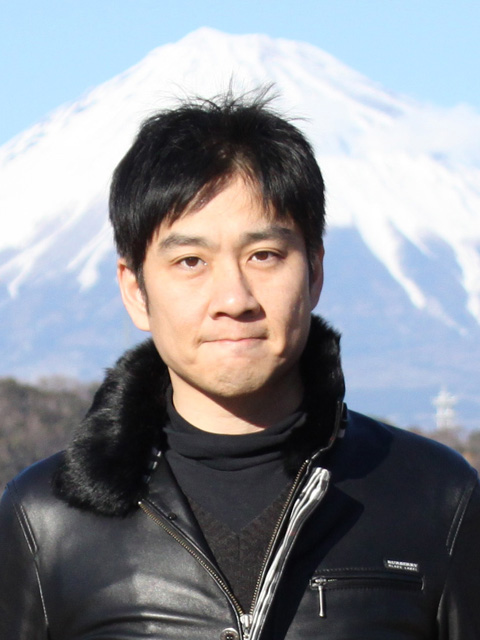
KURODA Hiroki

写真a

Affiliation

Faculty of Environment and Information Studies ( Shonan Fujisawa )

Position

Professor

E-mail Address

E-mail address

Related Websites

External Links

Profile 【 Display / hide

  • Born in Kyoto Prefecture in 1973. After graduating from the Department of Molecular Biology, Faculty of Science at Nagoya University in 1996, he entered the Graduate School of Arts and Sciences at the University of Tokyo. Under the supervision of Professor Makoto Asashima, a leading authority in developmental biology, he conducted research on cell adhesion and the mechanisms of morphogenesis during early development using Xenopus laevis. He received his Ph.D. (Doctor of Philosophy) in March 2001. Following the completion of his doctoral program, he worked as a postdoctoral fellow at the University of California, Los Angeles (UCLA) in the United States. In 2005, he was appointed as an Associate Professor in the Science Education Course, Faculty of Education at Shizuoka University. He then joined the Faculty of Environment and Information Studies at Keio University as an Associate Professor in 2013, and currently serves as a Professor at the faculty, while also being a member of the Graduate School of Media and Governance.

Message from the Faculty Member 【 Display / hide

  • The process by which a single cell—a fertilized egg—develops into a complex body is nothing short of a "miracle" that no human technology can match. Even at this very moment, trillions of cells within our bodies are working in perfect teamwork to keep us moving. Modern science is now evolving beyond simply "understanding" the mechanisms of life; we are entering a realm where we can "create" new possibilities. This marks the dawn of an exciting era in which we must rethink what it means to be human and what it means to live. If you have ever felt a sense of pure wonder, asking yourself, "Why do living things take such shapes?", please feel free to reach out to me.

Academic Background 【 Display / hide

  • 1998.04
    -
    2001.03

    The University of Tokyo, 総合文化研究科広域科学専攻, 生命環境科学系

    Graduate School, Completed, Doctoral course

  • 1996.04
    -
    1998.03

    The University of Tokyo, 総合文化研究科広域科学専攻, 生命環境科学系

    Graduate School, Completed, Master's course

  • 1992.04
    -
    1996.03

    Nagoya University, 理学部, 分子生物学科

    University, Graduated, Other

Academic Degrees 【 Display / hide

  • Ph.D., The University of Tokyo, Coursework, 2001.03

    Molecular mechanisms of prenotochord cell sorting in Xenopus laevis

  • 修士(学術), The University of Tokyo, Coursework, 1998.03

  • 学士, Nagoya University, Coursework, 1996.03


Books 【 Display / hide

  • 休み時間の分子生物学 第2版

    黒田裕樹, 講談社, 2026.05,  Page: 256

     View Summary

    2026年5月に改訂された黒田裕樹著の『休み時間の分子生物学 第2版』は、1テーマ約10分のコンパクトな解説や身近な例え話を用いたわかりやすさはそのままに、全84項目へと内容をアップデートすることで、目まぐるしく進化する生命科学の「基礎」から「最先端の今」までを無駄なく学べる仕様になっており、大学の講義対策や理科教育、医療(コメディカル)関係者の基礎固め、さらには大人の学び直しまで、通学・通勤などのすきま時間に生命科学の根本を気軽に完全マスターできる、定評ある日本の入門書の最新決定版です。

  • 希望の分子生物学: 私たちの「生命観」を書き換える

    黒田裕樹, NHK出版, 2023.11,  Page: 224

     View Summary

    医療、環境、産業など多岐にわたる分野に革命を起こしつつある現代分子生物学の「驚きの未来像」を豊富な例え話で分かりやすく提示した新書であり、DIYバイオや遺伝子治療、AI創薬といった21世紀の最先端技術が私たちの社会や生命観をどのように一変させるのかを歴史的背景からSF世界のような未来予想図まで体系的に描いているため、慶應義塾大学SFCで履修倍率6〜7倍を誇る著者の大人気講義を追体験するように、生物学的な「わたし」という存在の解像度を格段に上げ、科学がもたらす未来への希望をワクワクしながら実感できる一冊です。

  • 休み時間の分子生物学

    黒田裕樹, 講談社, 2020.07,  Page: 240

Papers 【 Display / hide

  • Possible Horizontal Gene Transfer of Novel Transposable Elements in Anisakis simplex between Hosts and Parasites

    Naoki Hoshino, Hiroki Kuroda

    microPublication Biol. (Caltech Library)   2025

    Research paper (scientific journal), Joint Work, Last author, Corresponding author, Accepted,  ISSN  2578-9430

  • Comparative Metabolomics of Small Molecules Specifically Expressed in the Dorsal or Ventral Marginal Zones in Vertebrate Gastrula

    Suzuki Y., Hayasaka R., Hasebe M., Ikeda S., Soga T., Tomita M., Hirayama A., Kuroda H.

    Metabolites 12 ( 6 )  2022.06

     View Summary

    Many previous studies have reported the various proteins specifically secreted as inducers in the dorsal or ventral regions in vertebrate gastrula. However, little is known about the effect on cell fate of small molecules below 1000 Da. We therefore tried to identify small molecules specifically expressed in the dorsal marginal zone (DMZ) or ventral marginal zone (VMZ) in vertebrate gastrula. Small intracellular and secreted molecules were detected using explants and supernatant samples. Hydrophilic metabolites were analyzed by capillary ion chromatography–mass spectrometry and liquid chromatography–mass spectrometry, and lipids were analyzed by supercritical fluid chromatography–tandem mass spectrometry. In total, 190 hydrophilic metabolites and 396 lipids were identified. The DMZ was found to have high amounts of glycolysis-and glutathione metabolismrelated metabolites in explants, and the VMZ was richer in purine metabolism-related metabolites. We also discovered some hydrophilic metabolites and lipids differentially contained in the DMZ or VMZ. Our research would contribute to a deeper understanding of the cellular physiology that regulates early embryogenesis.

  • Protocadherin-1 is expressed in the notochord of mouse embryo but is dispensable for its formation

    Fukunaga K., Tanji M., Hanzawa N., Kuroda H., Inui M.

    Biochemistry and Biophysics Reports 27 2021.09

     View Summary

    Notochord is an embryonic midline structure that serves as mechanical support for axis elongation and the signaling center for the surrounding tissues. Precursors of notochord are initially induced in the dorsal most mesoderm region in gastrulating embryo and separate from the surrounding mesoderm/endoderm tissue to form an elongated rod-like structure, suggesting that cell adhesion molecules may play an important role in this step. In Xenopus embryo, axial protocadherin (AXPC), an orthologue of mammalian Protocadherin-1 (PCDH1), is indispensable for the assembly and separation from the surrounding tissue of the notochord cells. However, the role of PCDH1 in mammalian notochord remains unknown. We herein report that PCDH1 is expressed in the notochord of mouse embryo and that PCDH1-deficient mice form notochord normally. First, we examined the temporal expression pattern of pcdh1 and found that pcdh1 mRNA was expressed from embryonic day (E) 7.5, prior to the stage when notochord cells detach from the surrounding endoderm tissue. Second, we found that PCDH1 protein is expressed in the notochord of mouse embryos in addition to the previously reported expression in endothelial cells. To further investigate the role of PCDH1 in embryonic development, we generated PCDH1-deficient mice using the CRISPR-Cas9 system. In PCDH1-deficient embryos, notochord formation and separation from the surrounding tissue were normal. Structure and marker gene expression of notochord were also unaffected by loss of PCDH1. Major vascular patterns in PCDH1-deficient embryo were essentially normal. These results suggest that PCDH1 is dispensable for notochord formation, including the tissue separation process, in mammalian embryos. We successfully identified the evolutionary conserved expression of PCDH1 in notochord, but its function may differ among species.

  • Comprehensive measurement andcomparison of ionic small molecules containedin citrus unshiu marc. using metabolomic analysis

    Hara Y., Sugawara A., Yamada K.C., Endo K., Ashitani S., Igarashi K., Soga T., Shinjo A., Kuroda H.

    Nippon Shokuhin Kagaku Kogaku Kaishi 67 ( 12 ) 499 - 513 2021

    ISSN  1341027X

     View Summary

    Few studies have comprehensively screened for ionic small molecules with high water-solubility in the traditional Japanese mandarin orange Citrus unshiu Marc. Here, we performedmetabolomic analysis with capillary electrophoresismass spectrometry (CE-MS) to comprehensively identify and accumulate gross quantitative data for water-soluble components in the different varieties of.Aoshima. and 'Okitsu/ Miyagawa Wase., according to grade and processing method. In this analysis, we focusedon 151 components andshowed the characteristic components relatedto each different variety andprocessing method, e.g., Met, Gly, andAsp in var. Wase; ornithine, putrescine, synephrine, andGln in var. Aoshima; andpyroglutamate, GABA (γ -aminobutyric acid), andmalonate in the juice of var. Aoshima. Furthermore, we conductedprocessing tests andid entifiedcomponents that were affectedby squeezing or heating. These data represent basic data for further investigation of the metabolism of C. unshiu Marc. or chemical changes in their components due to external factors such as processing.

  • The Experimental Procedures to Create Life and Transplantable Heart

    KURODA HIROKI

    Keio SFC J (Vol. No. Page.-)  15 ( 1 ) 262 - 282,IV-V 2015.09

    Joint Work, Lead author, Corresponding author,  ISSN  1347-2828

display all >>

Papers, etc., Registered in KOARA 【 Display / hide

display all >>


Courses Taught 【 Display / hide

  • THEORY OF GLOBAL ENVIRONMENT TECHNOLOGY

    2026

  • MOLECULAR AND CELLULAR BIOLOGY 2

    2026

  • GRADUATION PROJECT 1

    2026

  • SEMINAR B

    2026

  • THE EPOCH-MAKING DISCOVERIES IN CELL BIOLOGY

    2026

display all >>