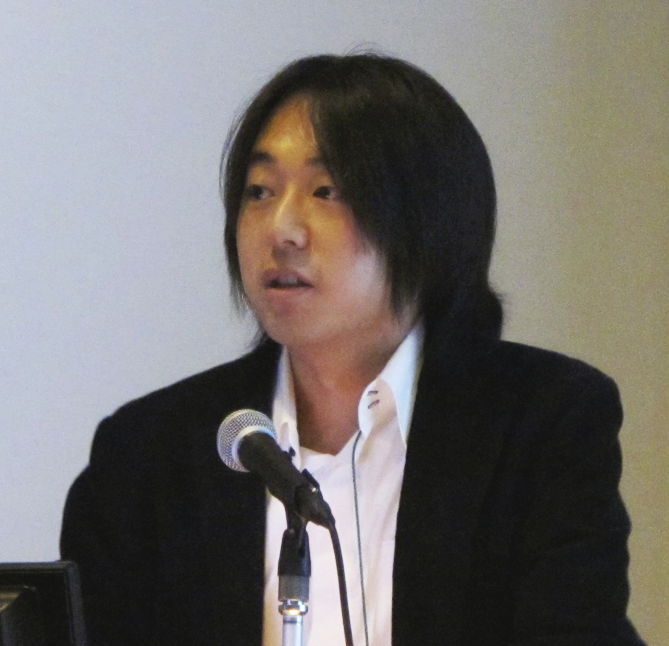
Arakawa, Kazuharu

写真a

Affiliation

Graduate School of Media and Governance ( Shonan Fujisawa )

Position

Professor

Related Websites

External Links

Career 【 Display / hide

  • 2007.04
    -
    2009.03

    Graduate School of Media and Governance, Keio University, Research Associate

  • 2009.04
    -
    2014.03

    Graduate School of Media and Governance, Keio University, Project Assistant Professor

  • 2014.04
    -
    2017.03

    Graduate School of Media and Governance, Keio University, Project Associate Professor

  • 2017.04
    -
    Present

    Faculty of Environment and Information Studies, Keio University, Associate Professor

Academic Degrees 【 Display / hide

  • 政策・メディア, Keio University, Coursework, 2006.03


Research Areas 【 Display / hide

  • Life Science / Molecular biology

  • Life Science / Genome biology (Applied Genome Science)

  • Life Science / System genome science

Research Keywords 【 Display / hide

  • Systems Biology

  • Bioinformatics

  • Molecular Biology

  • Cell Biology


Books 【 Display / hide

  • オープンソースで学ぶバイオインフォマティクス

    ARAKAWA Kazuharu, Tokyo Denki University Press, 2008.03

    Scope: 250

  • RとBioconductorを用いたバイオインフォマティクス

    ARAKAWA Kazuharu, シュプリンガー・ジャパン, 2007.07

  • Automatic reconstruction of cell-wide metabolic pathway models from the genome

    ARAKAWA Kazuharu, 慶應義塾大学湘南藤沢学会, 2006.04

Papers 【 Display / hide

  • Complete genome sequence of Solobacterium moorei 10714-02 isolated from the stool of a human colorectal cancer patient

    Shinomiya A., Oshibuchi K., Yang J., Fukuda S., Arakawa K.

    Microbiology Resource Announcements 15 ( 2 )  2026.02

     View Summary

    We report the complete circular genome sequence (2,316,546 bp; 37.0% G + C) of Solobacterium moorei 10714-02, a gram-positive obligate anaerobe isolated from stool samples of a human colorectal cancer patient, differing from the typically linear chromosome of this species.

  • Genome-wide association study of plasma amino acids and Mendelian randomization for cardiometabolic traits

    Toki R., Fushiki S., Kojima S., Sutoh Y., Otsuka-Yamasaki Y., Harada S., Iida M., Hirata A., Miyagawa N., Matsumoto M., Edagawa S., Miyake A., Kuwabara K., Hirayama A., Sugimoto M., Sato A., Amano K., Soga T., Tomita M., Arakawa K., Kinoshita K., Sakurai-Yageta M., Tamiya G., Ohmomo H., Shimizu A., Okamura T., Takebayashi T.

    Scientific Reports 15 ( 1 )  2025.12

     View Summary

    Plasma amino acids (AAs) have emerged as promising biomarkers for metabolic disorders, yet their causality remains unclear. We aimed to investigate the genetic determinants of AA levels in a cohort of 10,333 individuals and their causal effects on cardiometabolic traits using Mendelian randomization (MR). Plasma levels of 20 AAs were quantified using capillary electrophoresis mass spectrometry. Genome-wide association studies were conducted using BOLT-LMM and heritability estimation via LDSC analysis. Causal effects of AAs on 11 cardiometabolic traits were examined using two-sample MR analyses. We identified 85 locus-metabolite associations across 43 genes for 18 AAs, including 44 novel loci linked to metabolic genes. Heritability for AAs was estimated at 16%. MR analysis demonstrated cystine to positively associate with systolic blood pressure (SBP) (β = 0.056, SE = 0.010), while serine indicated protective effects on SBP (β = − 0.040, SE = 0.011), diastolic BP (β = − 0.044, SE = 0.010), and coronary artery disease (odds ratio 0.888, SE = 0.028). We identified potentially novel genetic loci associated with AA levels and demonstrated robust causal associations between several AAs and cardiometabolic traits. These findings reinforce the importance of AAs as potential biomarkers and therapeutic targets in cardiometabolic health.

  • Rhizospheric microbiomes differ between dormant and active Potaninia mongolica in the Gobi desert of Mongolia

    Erdenetsetseg B., Arakawa K., Galipon J., Undrakhbold S., Fukuda S., Boldgiv B.

    Scientific Reports 15 ( 1 )  2025.12

     View Summary

    Rhizospheric microbiomes differ between active and dormant plants due to changes in root activity and exudate production, especially under environmental stress. In arid regions, native plants such as Potaninia mongolica Maxim enter dormancy to survive harsh conditions. However, rhizospheric microbial and chemical differences between active and dormant states of plants remain poorly described. This study investigated rhizospheric microbial communities and soil chemical changes in the case of active and dormant P.mongolica plants. Rhizospheric soil samples were collected, and soil texture and chemical variables were analyzed. High-throughput sequencing targeting the 16S rRNA and ITS regions was conducted to profile bacterial and fungal communities, respectively. Results showed that the dominant fungal phyla were Ascomycota and Basidiomycota, while Proteobacteria and Actinobacteria were the dominant bacterial phyla in both plant states. Although bacterial diversity did not differ significantly between active and dormant plants (p > 0.05, Welch’s t-test), fungal diversity was significantly different. Among soil chemical variables, total nitrogen was notably elevated in the rhizosphere of dormant plants (mean = 7.93; SD = 5.91). These findings reveal differences in fungal community structure and nitrogen levels in the rhizosphere between active and dormant plant states. Understanding these interactions contributes to our knowledge of desert plant microbiome dynamics and may inform the use of microbial indicators or amendments to support vegetation restoration in arid environments.

  • Causal relationship between body mass index and insulin resistance: Linear and nonlinear Mendelian randomization study in a Japanese population

    Ishida N., Harada S., Toki R., Hirata A., Matsumoto M., Miyagawa N., Iida M., Edagawa S., Miyake A., Kuwabara K., Shibuki T., Kato S., Arakawa K., Kinoshita K., Sakurai-Yageta M., Tamiya G., Nagashima K., Muraoka H., Sato Y., Takebayashi T.

    Journal of Diabetes Investigation 16 ( 7 ) 1305 - 1314 2025.07

    ISSN  20401116

     View Summary

    Aims/Introduction: Obesity is a known risk factor for several chronic diseases, including type 2 diabetes mellitus, which results from increased insulin resistance and impaired insulin secretion. However, the association between obesity and insulin resistance in Asian populations has not yet been fully elucidated. Therefore, we aimed to investigate the causal relationship between body mass index (BMI) and glycemic traits using Mendelian randomization (MR). Materials and Methods: We performed individual-level MR analyses using genetic risk scores based on BMI-related variants in 3,745 individuals without diabetes mellitus from a Japanese cohort. We examined heterogeneity through subgroup analyses based on potential modifiers and determined the shape of the causal relationship using nonlinear MR analyses to further assess the impact of BMI on the homeostasis model assessment of insulin resistance (HOMA-IR). Results: MR analyses revealed a significant positive association between BMI and HOMA-IR (β = 0.077; 95% confidence interval, 0.014–0.141; P = 0.016; outcome variable was log-transformed and standardized). Additional analyses revealed heterogeneity among subgroups differentiated by age, sex, lifestyle habits, and cardiometabolic traits. Nonlinear MR analyses suggested a potential J-shaped causal relationship between BMI and HOMA-IR. Conclusions: Our findings demonstrated that obesity and low BMI may contribute to increased insulin resistance. Furthermore, the impact of BMI on insulin resistance could vary owing to effect modification. Managing BMI is crucial in individuals at high risk of increased insulin resistance and may have important implications for preventing type 2 diabetes, especially given the low insulin secretory capacity observed in East Asian populations.

  • Uncommon N-Glycan Structures in Anhydrobiotic Tardigrades

    Yagi H., Saito T., Guu S.Y., Yamakawa N., Shimamura S., Kondo S., Yagi-Utsumi M., Takai K., Furukawa J.I., Guérardel Y., Khoo K.H., Arakawa K., Kato K.

    Molecular and Cellular Proteomics 24 ( 6 )  2025.06

    ISSN  15359476

     View Summary

    We characterized the N-glycosylation profiles of anhydrobiotic tardigrades, Ramazzottius varieornatus and Hypsibius exemplaris, identifying high-mannose, paucimannose, and complex-type oligosaccharides, while hybrid-type glycans were undetectable. Notably, paucimannose-type oligosaccharides accounted for 39% of the N-glycans in R. varieornatus and 17% in H. exemplaris, with a substantial proportion of them exhibiting fucosylation of the innermost GlcNAc via an α1,6-linkage. This core fucosylation pattern, common to all animals, was observed alongside a distinctive glycosylation signature prominently observed in tardigrades: complex-type glycans lacking galactosylation but containing α1,3-fucosylated GlcNAc at non-reducing termini. This structure was more prevalent in H. exemplaris, with 22 out of 87 identified glycoproteins expressing the Fucα1,3-GlcNAc motif, including eight induced during anhydrobiosis. Key glycoproteins such as Cu/Zn-superoxide dismutase and papilin, implicated in oxidative stress protection and extracellular matrix remodeling, were among those modified. Comparative analyses reveal that non-reducing terminal α1,3-fucosylation in tardigrades is distinct from the mammalian Lewis X antigen and similar structures found in invertebrates, suggesting a unique substrate specificity of fucosyltransferases in these species. Genomic analysis identified homologs of FUT9 and FucTC, indicating potential candidates responsible for this glycosylation pattern. Our findings provide new insights into the molecular mechanisms of glycosylation in tardigrades and their relevance to their extreme stress tolerance.

display all >>

Papers, etc., Registered in KOARA 【 Display / hide

display all >>

Reviews, Commentaries, etc. 【 Display / hide

display all >>

Presentations 【 Display / hide

  • 複製によって形成されたバクテリアゲノム構造の解析

    ARAKAWA Kazuharu

    [Domestic presentation]  日本進化学会 (東京) , 

    2010.08

    Oral presentation (general)

  • G-language Bookmarklet: a gateway for Semantic Web, Linked Data, and Web Services

    ARAKAWA Kazuharu

    [International presentation]  Bioinformatics Open Source Conference (Boston, USA) , 

    2010.07

    Oral presentation (general)

  • The tardigrade genome of an anhydrobiotic extremotolerant species, Ramazzottius varieornatus

    Kunieda T, Kuwahara H, Horikawa DD, Toyoda A, Katayama T, Arakawa K, Shin-I T, Ohishi K, Motoyama A, Aizu T, Kohara Y, Fujiyama A

    [International presentation]  ISEPEP3 (Tsukuba, Japan) , 

    2009.08

    Oral presentation (general)

  • Comparative metabolome profiling of active and anhydrobiotic states of Tardigrade Ramazzottius varieornatus

    ARAKAWA Kazuharu

    [International presentation]  11th International Symposium on Tardigrada (Tuebingen, Germany) , 

    2009.08

    Oral presentation (general)

  • Draft genome sequence assembly and preliminary annotations of Ramazzottius varieornatus genome

    Katayama T, Arakawa K, Hasebe Y, Kido N, Kunieda T, Toyoda A, Shin-I T, Horikawa DD, Kuwahara H, Ohishi K, Motoyama A, Aizu T, Kanehisa M

    [International presentation]  11th International Symposium on Tardigrada, 2009 (Tuebingen, Germany) , 

    2009.08

    Oral presentation (general)

display all >>

Research Projects of Competitive Funds, etc. 【 Display / hide

  • クマムシ特異的非ドメイン型タンパク質の探索と機能解析

    2021.09
    -
    2026.03

    MEXT,JSPS, Grant-in-Aid for Scientific Research, 学術変革領域研究(A), Principal investigator

  • マルチオミクス解析によるクマムシ乾眠機構の全体像の解明

    2017.04
    -
    2021.03

    MEXT,JSPS, Grant-in-Aid for Scientific Research, Grant-in-Aid for Scientific Research (B), Principal investigator

Awards 【 Display / hide

  • Oxford Journals - Japanese Society for Bioinformatics Prize

    Kazuharu Arakawa, 2016.10, Japan Society for Bioinformatics, Multi-omics study of the intracellular dynamics

  • Mathup Award 4th: Google Award

    ARAKAWA Kazuharu, 2008.10, Genome Projector

    Type of Award: Other

     View Description

    We developed a web-based genome browser called Genome Projector, which allows multi-dimensional and multi-perspective viewing of genomic information

  • CBI学会優秀ポスター賞

    ARAKAWA Kazuharu, 2003.09

    Type of Award: Award from Japanese society, conference, symposium, etc.

  • 慶應義塾塾長賞

    ARAKAWA Kazuharu, 2003.03, ゲノム解析ソフトウェアG-language

    Type of Award: Keio commendation etc.

  • ISMB Best Poster Award

    ARAKAWA Kazuharu, 2002.08, G-language Genome Analysis Environment

    Type of Award: International academic award (Japan or overseas)


Courses Taught 【 Display / hide

  • WORKSHOPS ON GENOME ANALYSIS

    2025

  • SYSTEMS OF LIFE

    2025

  • SPECIAL RESEARCH PROJECT B

    2025

  • SOIL BIORESOURCE SCIENCE

    2025

  • SEMINAR B

    2025

display all >>


Memberships in Academic Societies 【 Display / hide

  • 生命情報科学若手の会, 

    2008.12
    -
    2014
  • オープンバイオ研究会, 

    2004
    -
    Present
  • International Society for Computational Biology, 

    2001
    -
    Present
  • 日本バイオインフォマティクス学会, 

    1999
    -
    Present
  • 日本分子生物学会, 

    1999
    -
    Present

Committee Experiences 【 Display / hide

  • 2008.12
    -
    Present

    Committee Member, 生命情報科学若手の会

  • 1999
    -
    Present

    Member, 日本分子生物学会

  •  

    委員, オープンバイオ研究会

  •  

    会員, International Society for Computational Biology

  •  

    会員, 日本バイオインフォマティクス学会

display all >>