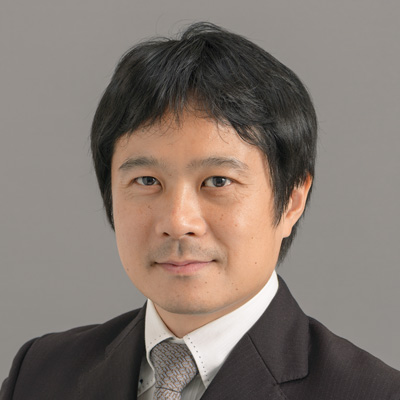
Onoe, Hiroaki

写真a

Affiliation

Faculty of Science and Technology, Department of Mechanical Engineering ( Yagami )

Position

Professor

Related Websites

Career 【 Display / hide

  • 2005.04
    -
    2007.03

    The University of Tokyo, Graduate School of Information Science and Technology, JSPS Research Fellowship for Young Scientists (DC2-PD)

  • 2007.04
    -
    2009.03

    The University of Tokyo, Institute of Industrial Science, JSPS Research Fellowship for Young Scientists (PD)

  • 2007.08
    -
    2009.01

    University of California Berkeley, Department of Chemistry, Visiting Scholar

  • 2009.04
    -
    2014.03

    The University of Tokyo, Institute of Industrial Science, Assistant Professor

  • 2010.10
    -
    2014.05

    Japan Science and Technology Agency, ERATO assistant research director

display all >>

Academic Background 【 Display / hide

  • 1997.04
    -
    2001.03

    The University of Tokyo, School of Engineering, Department of Mechano-Informatics

    University, Graduated

  • 2001.04
    -
    2006.03

    The University of Tokyo, Graduate School of Information Science and Technology, Department of Mechano-Informatics

    Graduate School, Completed, Doctoral course

Academic Degrees 【 Display / hide

  • 博士(情報理工学), The University of Tokyo, Coursework, 2006.03

    マイクロ構造体の順序付き自己組立て


Research Areas 【 Display / hide

  • Nanotechnology/Materials / Nano/micro-systems

  • Informatics / Mechanics and mechatronics

  • Informatics / Robotics and intelligent system

  • Life Science / Biomedical engineering

  • Life Science / Biomaterials

Research Keywords 【 Display / hide

  • Micro-Nano system

  • Microfluidics

  • Self-assembly

  • Soft material

  • Tissue engineering


Books 【 Display / hide

  • マイクロ・ナノ熱工学の進展

    吉田光輝, 尾上弘晃, NTS, 2021.05

    Scope: 熱駆動マイクロゲルデバイス,  Contact page: 505-513

  • Integrated microsystems for bridging multiscale elements

    Yoshida K., Onoe H., Advances in Chemical Engineering, 2021.01

     View Summary

    Hydrogels are emerging as enabling materials for a wide range of new applications for soft robots because of their flexibility. Some of the polymer chains that make up the hydrogel have a nano-scale function of swelling and contracting in response to external stimuli. In addition, because the network of polymer chains is on the nanometer order, it is possible to encapsulate various functional materials. Therefore, stimulus-responsive hydrogels and functional materials encapsulating hydrogels are also being actively studied for use as soft robot components. From a fundamentals point of view, the nano-scale functions of hydrogels, fabrication method, and integration with functional materials must be considered for each specific application. This section provides a basic understanding of hydrogels and the recent development of novel fabrication and integration of hydrogel with functional materials such as magnetic nanoparticles, Pt catalyst, graphene, photonic colloidal crystal, and living cells.

  • Microspring Fabrication by Anisotropic Gelation (Micro and Nano Fabrication Technology)

    Hiroaki Onoe, Koki Yoshida, Springer Nature Singapore, 2018.04

    Scope: pp. 1-20

  • ハイドロゲルをマイクロスケールで精密加工するには?(ゲル化・増粘剤の使い方,選び方 事例集)

    中島駿介,尾上 弘晃, 技術情報協会, 2018.02

    Scope: pp. 374-382

  • Fabrication of 3D cellular tissue utilizing MEMS technologies (Hyper Bio Assembler for 3D Cellular Systems)

    Shotaro Yoshida, Daniela Serien, Fumiaki Tomoike, Hiroaki Onoe, Shoji Takeuchi, Springer, 2015.07

    Scope: pp. 177-202

display all >>

Papers 【 Display / hide

  • Three-dimensional intestinal tube with a crypt-like uneven inner wall fabricated using electrolysis-generated microbubbles

    Uramoto S., Tanaka S., Itai S., Muramatsu J., Arai D., Tsukada K., Abe T., Toyohara T., Onoe H.

    Lab on A Chip 26 ( 3 ) 541 - 550 2026.02

    ISSN  14730197

     View Summary

    We present a three-dimensional intestinal hydrogel tube with a crypt-like uneven inner wall fabricated using electrolysis-generated microbubbles. The uneven structure observed in crypt and villus intestinal epithelial tissue in vivo serves as crucial geometry for forming hierarchical tissue consisting of stem cells localized in the crypts and various differentiated cells located in the villi. Our approach utilizes electrically generated microbubbles on a wire mold during the fabrication of the hydrogel tube, resulting in the formation of crypt-like cavities on the inner wall. We fabricated the hydrogel tube with various sizes of crypt-like cavities by changing the voltage-applied time. Caco-2 cells were cultured in the fabricated tubes for over 7 d, and it was observed that they maintained the crypt-like structure. Furthermore, we used immunofluorescence staining to successfully observe the polarity of the intestinal epithelial cells and the unique cell morphology with a specific cell shape and height in response to the crypt-like structure. This specific cell morphology suggests the potential of the tube model to generate hierarchical intestinal tissue. With its highly biomimetic and high-throughput fabrication capabilities, our model will serve as a platform for intestinal models.

  • Use of a new micropattern tape method to detect chirality shifts in differentiating C2C12 cells

    Weng Q., Osaka T., Onoe H., Yoshida K., Kuroda Y., Matsuo K., Kawaai K.

    Plos One 20 ( 12 December )  2025.12

     View Summary

    Chirality is an intrinsic property of cells manifested as left-right (LR) asymmetry in terms of cellular morphology and organization, which influences cell behavior, migration, and tissue development. Traditional in vitro methods used to study cell chirality often require complex fabrication methods, limiting their accessibility and reproducibility. Here, we present a novel micropattern tape method that facilitates fabrication of high-quality rectangular micropatterns useful for efficient, high-throughput analysis of cell chirality. Using this method, we characterized chirality of C2C12 myoblasts and MC3T3-E1 osteoblasts, which respectively exhibit clockwise (CW) and counterclockwise (CCW) chirality relative to the long axis of the rectangle. We used the method to analyze how cellular differentiation impacts chirality and observed striking reversal of C2C12 cell chirality upon bone morphogenic protein-2 (BMP2)-induced osteoblastic differentiation. These results demonstrate that our micropattern tape method can effectively detect dynamic change of cell chirality during differentiation.

  • M/G-Ratio-Tuned Calcium Alginate Hydrogel Microcarrier for Controlled Delivery of Adeno-Associated Virus for Gene Therapy

    Hioki A., Takatsuka S., Kurashina Y., Onoe H.

    Biotechnology and Bioengineering 122 ( 12 ) 3433 - 3445 2025.12

    ISSN  00063592

     View Summary

    This paper proposes the controlled release of adeno-associated virus (AAV) by polymer mesh structures of alginate hydrogel microbeads (gel-beads). The polymer mesh structure of alginate hydrogel can be controlled by adjusting the number of cross-linking points depending on the molecular structure (M/G ratio) of the alginate hydrogel. Scanning electron microscopic analysis on the mesh structures of alginate hydrogels with M/G ratios of 0.96 (MG-0.96) and 0.42 (MG-0.42) indicates that the mesh size distribution of MG-0.42 hydrogel was smaller than that of MG-0.96 hydrogel. Using these characteristics, controlled release of AAVs (AAV-1 or AAV-5) from M/G-ratio-tuned gel-beads (MG-0.96 or MG-0.42), Janus-shaped gel-beads consisting of hemispheres of the MG-0.96 and MG-0.42, and MG-0.64 gel-beads consisting of a mixture of MG-0.96 and MG-0.42 were examined with ELISA for AAV capsids and the GFP fluorescent signals from the transfected cells. The precise control of AAV release by the mesh structure of the alginate hydrogels could be an effective method for creating AAV micro-carriers for gene therapy.

  • Oil-sealed RGD-modified alginate hydrogel microwell array for analysis of single-cell-derived extracellular vesicles and particles

    Yamagata C., Hamazaki Y., Nakazato T., Itai S., Honjo M., Kato M., Kurashina Y., Asai M., Hoshino A., Onoe H.

    Microsystems and Nanoengineering 11 ( 1 )  2025.12

     View Summary

    We propose an oil-sealed, arginine-glycine-aspartic (RGD) -modified alginate hydrogel microwell array for the analysis of single-cell-derived extracellular vesicles and particles (EVPs) secreted by adherent cells cultured in enclosed spaces. Taking advantage of the mesh structure of alginate hydrogel, we developed a microwell array with size-selective permeability that allows nutrients to pass through the hydrogel while preventing EVPs from doing so. Continuous single-cell culture in sealed microwells (>19 days) has been achieved, while retaining the EVPs inside the microwells. The single-cell-derived EVPs were collected from sealed microwells using a glass capillary to analyze surface membrane proteins. We believe that our oil-sealed RGD-modified alginate hydrogel microwell array will contribute to revealing the heterogeneity of cells, thereby advancing our understanding of the mechanisms of various diseases.

  • Fabrication of a hydrogel-based microstrip patch antenna by laser-induced graphitization

    Hattori Y., Kato M., Onoe H., Terakawa M.

    Optical Materials Express 15 ( 11 ) 2688 - 2698 2025.11

     View Summary

    Hydrogels have attracted attention as highly biocompatible supporting materials for wearable devices. An antenna is a key component for wireless transmission of information collected by the devices worn on the human body. Furthermore, integrating antennas into the devices eliminates the need for external wiring, which could obstruct the movement of the human body. In this study, we demonstrated the fabrication of planar conductive structures by laser-induced graphitization of tannic acid-containing alginate hydrogels and the fabrication of microstrip patch antennas (MPAs) using the fabricated structures. In a single laser scan onto the hydrogels, cracks were formed in the fabricated structures. For the fabrication of continuous planar structures, we used a method leveraging the water absorption property of hydrogels. By the method, in which an aqueous solution of tannic acid was added to the structures, followed by rescanning the laser beam to convert tannic acid to graphitic carbon, the number of cracks decreased. Additionally, it is confirmed that the fabricated structures can be applied to the radiation patches of hydrogel-based MPAs. A decrease in the resonant frequency of the fabricated MPAs corresponding to the decrease in the number of cracks is observed.

display all >>

Papers, etc., Registered in KOARA 【 Display / hide

display all >>

Reviews, Commentaries, etc. 【 Display / hide

  • Can nanoparticles enhance drug-delivery performance of hydrogels?

    Rossi F., Kurashina Y., Onoe H.

    Nanomedicine (Nanomedicine)  18 ( 8 ) 653 - 657 2023.04

    ISSN  17435889

  • 3次元灌流共培養のためのマイクロゲルチューブデバイス

    板井駿,尾上弘晃

    ケミカルエンジニヤリング 63 ( 11 ) 52 - 57 2018.11

    Article, review, commentary, editorial, etc. (trade magazine, newspaper, online media), Joint Work

  • 細胞ファイバの形成技術と再生組織移植への応用

    尾上弘晃, 興津輝

    実験医学 33 ( 8 ) 1235 - 1241 2015

    Article, review, commentary, editorial, etc. (trade magazine, newspaper, online media), Joint Work

  • 生体組織構築のための細胞ファイバ技術

    尾上弘晃, 竹内昌治

    生物物理 55 ( 4 ) 206 - 207 2015

    Article, review, commentary, editorial, etc. (trade magazine, newspaper, online media), Joint Work

  • 曲面や粗面をつかむロボットハンドの実現に求められる樹脂吸盤 –そのニーズと開発事例-

    西田知司, 尾上弘晃

    MATERIAL STAGE 15 ( 3 ) 63 - 67 2015

    Article, review, commentary, editorial, etc. (trade magazine, newspaper, online media), Joint Work

display all >>

Presentations 【 Display / hide

  • Microfluidic reflective display with primary color sub-pixels

    Junpei Muramatsu, Hiroaki Onoe

    [International presentation]  The 33rd International Conference on Micro Electro Mechanical Systems (MEMS 2020), 

    2020.01

    Poster presentation

  • Locally bendable stimuli-responsive hydrogel actuator with axially patterned functional materials

    Nobuki Takeuchi, Shunsuke Nakajima, Yutaka Hori, Ryuji Kawano, Hiroaki Onoe

    [International presentation]  The 33rd International Conference on Micro Electro Mechanical Systems (MEMS 2020), 

    2020.01

    Oral presentation (general)

  • pNIPAM/SWCNT-based hydrogel micro-gripper driven by infrared light for intravascular surgery

    Takaya Kuroda, Hiroaki Onoe

    [International presentation]  The 33rd International Conference on Micro Electro Mechanical Systems (MEMS 2020), 

    2020.01

    Poster presentation

  • Self-folding acute-angel origami driven by surface bending force

    Takuya Uchida, Hiroki Yasuga, Tomohiro Tachi, Eiji Iwase, Hiroaki Onoe

    [International presentation]  The 33rd International Conference on Micro Electro Mechanical Systems (MEMS 2020), 

    2020.01

    Poster presentation

  • ECM-based gradient generator for tunable surface environment by interstitial flow

    Azusa Shimizu, Wei H. Goh, Rahul Karyappa, Michinao Hashimoto, Hiroaki Onoe

    [International presentation]  The 33rd International Conference on Micro Electro Mechanical Systems (MEMS 2020), 

    2020.01

    Oral presentation (general)

display all >>

Research Projects of Competitive Funds, etc. 【 Display / hide

  • 三次元組織の高度成熟化を自律的に達成する知能化培養システム基盤の創出

    2023.04
    -
    2026.03

    基盤研究(A), Principal investigator

  • 機械的メタマテリアルとDNAゲルの融合による生化学構造色センサの高感度化

    2021.07
    -
    2024.03

    MEXT,JSPS, Grant-in-Aid for Scientific Research, Grant-in-Aid for Challenging Research (Pioneering), Principal investigator

  • 力学刺激の知能化によるin vitro3次元組織の超効率的成熟化

    2019.04
    -
    2022.03

    MEXT,JSPS, Grant-in-Aid for Scientific Research, Grant-in-Aid for Scientific Research (A) , Principal investigator

  • ナノグルコースセンサが取り込まれた人工組織の開発

    2016.09
    -
    2018.03

    日本学術振興会, Grant-in-Aid for Scientific Research, Research grant, Principal investigator

  • 炎症が惹起する神経変性機構解明のためのヒト血液脳関門の構築

    2016.04
    -
    2018.03

    日本学術振興会, Grant-in-Aid for Scientific Research, Research grant, Coinvestigator(s)

display all >>

Works 【 Display / hide

  • Biohybird Art

    Biohybrid Art Lab with Fu Tsurumaki

    Spiral Independent Creator’s Festival, 2011, 

    2010.05

    Other, Joint

Intellectual Property Rights, etc. 【 Display / hide

  • 給電型遠心駆動微小液滴生成装置およびその生成物

    Date applied: 特願2018-76379  2018.05 

    Patent, Joint

  • 多層構造体とその製造方法及び利用方法

    Date applied: 特願2017-92602  2017.05 

    Patent, Joint

  • 刺激応答性ファイバ,刺激応答性ファイバの製造方法,及び刺激応答性ファイバの製造装置

    Date applied: 特願2016-199517  2016.10 

    Patent, Single

  • カラーフィルタ、これを用いた表示装置、及びカラーフィルタの作製方法

    Date applied: 特願2016-10932  2016.01 

    Patent, Joint

  • マイクロビーズ及びその製造方法

    Date applied: 特願2015-210971  2015.10 

    Patent, Joint

display all >>

Awards 【 Display / hide

  • The Commendation for Science and Technology by the Minister of Education, Culture, Sports, Science and Technology

    2017.04, Minister of Education, Culture, Sports, Science and Technology, マイクロ加工技術を利用した人工生体組織構築の研究

  • 第4回新化学技術研究奨励賞

    尾上弘晃, 2014.05, 公益財団法人 新化学技術推進協会, マイクロゲルファイバのself-foldingによる複合3次元機能材料構築法の創生

  • Outstanding paper award

    1. Yuya Morimoto, Hiroaki Onoe, Shoji Takeuchi, 2013, Twenty Sixth International Conference on Micro Electro Mechanical Systems, Muscle Based Bioactuator Driven in Air

    Type of Award: International academic award (Japan or overseas)

  • Igarashi Prize (Best presentation award)

    2011.09, IEEJ sensors and micromachines, Construction of centimeter-scale three-dimensional tissue with cell fibers

  • JIEP best paper award

    3. Tetsuo Kan, Yusuke Takei, Hiroaki Onoe, Eiji Iwase, Tetsuji Dohi, Kiyoshi Matsumoto, Isao Shimoyama, 2009, The International Conference on Electronics Packaging, Nano-Mechanical Structure Fabrication Technology for Highly Integrated, Complex MEMS

    Type of Award: International academic award (Japan or overseas)

display all >>


Courses Taught 【 Display / hide

  • SPECIAL LECTURE SERIES ON MULTIDISCIPLINARY AND DESIGN SCIENCE

    2025

  • LABORATORIES IN SCIENCE AND TECHNOLOGY

    2025

  • INTRODUCTION TO MECHANICS OF MATERIALS

    2025

  • INDEPENDENT STUDY ON INTEGRATED DESIGN ENGINEERING

    2025

  • INDEPENDENT STUDY FOR EXCHANGE STUDENT B

    2025

display all >>

Courses Previously Taught 【 Display / hide

  • 機械工学創造演習

    Keio University

    2015.04
    -
    2016.03

    Autumn Semester, Seminar, Outside own faculty (within Keio), 2h, 140people

  • 理工学基礎実験

    Keio University

    2015.04
    -
    2016.03

    Spring Semester, Laboratory work/practical work/exercise, Outside own faculty (within Keio), 2h

  • プロダクションエンジニアリング

    Keio University

    2015.04
    -
    2016.03

    Spring Semester, Seminar, Outside own faculty (within Keio), 2h, 140people

  • 機械工学実験

    Keio University

    2015.04
    -
    2016.03

    Spring Semester, Laboratory work/practical work/exercise, Outside own faculty (within Keio), 3h, 140people

  • 機械工学創造演習

    Keio University

    2014.04
    -
    2015.03

    Autumn Semester, Seminar

display all >>


Memberships in Academic Societies 【 Display / hide

  • IEEE, 

    2016
    -
    Present
  • 電気学会, 

    2016
    -
    Present
  • Japanese Society of Mechanical Engineering, 

    2013
    -
    Present
  • Society for Chemistry and Micro-Nano Systems, 

    2010
    -
    Present
  • The Biophysical Society of Japan, 

    2009
    -
    Present

Committee Experiences 【 Display / hide

  • 2017.04
    -
    Present

    広報担当・幹事, 日本機械学会マイクロ・ナノ工学部門 総務委員会

  • 2017.02
    -
    2018.01

    主査, 電気学会 第34回センサ・マイクロマシンと応用システムシンポジウム論文委員会

  • 2017.02
    -
    2018.01

    広報委員, 日本機械学会 第8回マイクロ・ナノ工学 実行委員会

  • 2017.01
    -
    2019.12

    委員, 電気学会 立体構造や柔軟材料への微細加工、実装技術に関する若手研究者を中心とした調査専門委員会

  • 2016.02
    -
    2017.01

    副主査, 電気学会 第33回センサ・マイクロマシンと応用システムシンポジウム論文委員会

display all >>