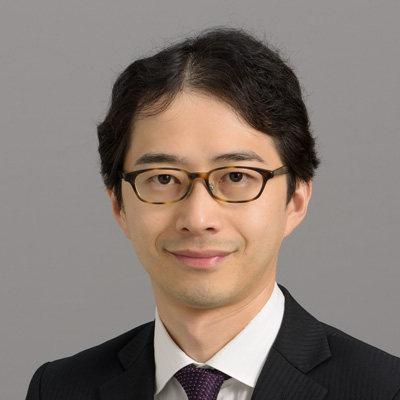
Ando, Keita

写真a

Affiliation

Faculty of Science and Technology, Department of Mechanical Engineering ( Yagami )

Position

Associate Professor

Related Websites

Profile Summary 【 Display / hide

Career 【 Display / hide

  • 2010.07
    -
    2010.08

    California Institute of Technology, Postdoctoral Scholar

  • 2010.10
    -
    2012.03

    Nanyang Technological University, Research Fellow

  • 2012.04
    -
    2019.03

    Keio University, Faculty of Science and Technology, Senior Assistant Professor

  • 2019.04
    -
    Present

    Keio University, Faculty of Science and Technology, Associate Professor

  • 2013.10
    -
    2015.09

    Keio University, Faculty of Science and Technology, 情報通信ネットワーク委員会 委員

display all >>

Academic Background 【 Display / hide

  • 2001.04
    -
    2005.03

    Keio University, Faculty of Science and Technology, Department of Mechanical Engineering

    University, Graduated

  • 2005.07
    -
    2006.06

    California Institute of Technology, Division of Engineering and Applied Science, Department of Mechanical Engineering

    United States, Graduate School, Completed, Master's course

  • 2006.07
    -
    2010.06

    California Institute of Technology, Division of Engineering and Applied Science, Department of Mechanical Engineering

    United States, Graduate School, Completed, Doctoral course

Academic Degrees 【 Display / hide

  • Ph.D., California Institute of Technology, Coursework, 2010.06

    Effects of Polydispersity in Bubbly Flows

  • M.S., California Institute of Technology, Coursework, 2006.06


Research Areas 【 Display / hide

  • Manufacturing Technology (Mechanical Engineering, Electrical and Electronic Engineering, Chemical Engineering) / Fluid engineering (Multiphase flow, Acoustics)

  • Manufacturing Technology (Mechanical Engineering, Electrical and Electronic Engineering, Chemical Engineering) / Thermal engineering (Heat and mass transfer)

Research Keywords 【 Display / hide

  • Multiphase flow

  • Cavitation

  • Bubble dynamics

  • Ultrasound

  • Shock waves

display all >>


Books 【 Display / hide

  • Introduction to Fine Bubble Science and Technology

    K. Terasaka, S. Himuro, K. Ando, T. Hata, Nikkan Kogyo Shimbun, 2016.11

    Scope: Chap. 3 (Acoustical Engineering and Fine Bubbles), Sect. 8.1 (Ultrasonic Cleaning)

     View Summary

    ファインバブル(微細気泡)の基礎(物理化学、音響工学、化学工学、生物学)および関連技術・応用(発生技術、気泡計測技術、洗浄、水産業、農業、食品など)を解説した。

  • 超音波洗浄とキャビテーション(気泡・分散系現象の基礎と応用)

    安藤景太, 三恵社, 2016.10

    Scope: 2. 基礎〜応用・第1章

     View Summary

    超音波照射下の洗浄液中で発生するキャビテーション気泡の運動がもたらす物理洗浄効果に着目し、超音波洗浄の高効率化およびダメージレス化に向けた設計指針を新たに提案した。

  • ガス過飽和水中における微細気泡の安定化機構(マイクロバブル(ファインバブル)のメカニズム・特性制御と実際応用のポイント)

    安藤景太, 情報機構, 2015.03

    Scope: 2章1節2項

     View Summary

    気泡曝気により生成されるガス過飽和水の熱力学的準安定下において,直径が1μmにも満たないナノバブルが液相バルク中にも存在しうることを議論した。さらには、ガス過飽和水を洗浄液として利用した低音圧の超音波キャビテーション洗浄によりエロージョンを回避しつつも洗浄効率を維持する物理洗浄の手法を提案した。

  • Bubble Dynamics and Shock Waves (Shock Wave Science and Technology Reference Library, Vol. 8)

    K. Ando, T. Colonius, C.E. Brennen, Springer, 2013.01

    Scope: 141-175

     View Summary

    We investigate the shock dynamics of liquid flows containing small gas bubbles with numerical simulations based on a continuum bubbly flow model. Particular attention is devoted to the effects of distributed bubble sizes and gas-phase nonlinearity on shock dynamics. Ensemble-averaged conservation laws for polydisperse bubbly flows are closed with a Rayleigh–Plesset-type model for single bubble dynamics. Numerical simulations of one-dimensional shock propagation reveal that phase cancellations in the oscillations of different-sized bubbles can lead to an apparent damping of the averaged shock dynamics. Experimentally, we study the propagation of waves in a deformable tube filled with a bubbly liquid. The model is extended to quasi-one-dimensional cases. This leads to steady shock relations that account for the compressibility associated with tube deformation, bubbles and host liquid. A comparison between the theory and the water-hammer experiments suggests that the gas-phase nonlinearity plays an essential role in the propagation of shocks.

Papers 【 Display / hide

  • Megasonic enhancement of single-phase immersion cooling in viscous silicone fluids: Flow topology and geometric optimization

    T. Thungthong, W. Chaiworapuek, K. Ando, M. Motozawa, C. Suvanjumrat

    Applied Thermal Engineering (Elsevier)  302   132009 2026.08

    Research paper (scientific journal), Joint Work, Accepted,  ISSN  13594311

     View Summary

    This study experimentally investigates heat transfer enhancement in single-phase KF-96 silicone fluid immersion cooling subjected to 2.4 MHz megasonic irradiation. A vertically immersed symmetric two-sided heated plate with one instrumented face was employed under heat fluxes ranging from 2.21 to 6.86 kW/m2, while the piezoelectric disk diameter (16–25 mm) and fluid kinematic viscosity (1–50 cSt) were systematically varied. Particle Image Velocimetry (PIV) resolved near-wall acoustic streaming to elucidate convective mechanisms. The results show that megasonic excitation reduced surface temperature by up to 13.5% relative to natural convection. Among all configurations, the 20 mm transducer yielded the highest performance, achieving a maximum heat transfer enhancement of 60% at 2.21 kW/m2 in 1 cSt fluid and a peak enhancement per watt metric of 0.84 at 6.86 kW/m2 in 10 cSt fluid. The enhancement exhibited a non-monotonic dependence on transducer diameter, governed by an optimal dimensionless acoustic parameter window of 153 to 167 and an area coverage ratio of 0.11. Furthermore, the enhancement trend decreases with increasing heat flux in low-viscosity fluids but conversely increases in highly viscous fluids due to localized, thermally induced viscosity reduction. PIV revealed that low-viscosity fluids generate wide, divergent shear layers promoting macro-recirculation and high turbulent intensity. Conversely, high-viscosity fluids produce narrow, collimated streams constrained by internal friction, despite velocity increment ratios reaching up to 164 times those of natural convection. An empirical correlation was developed to predict the overall Nusselt number ratio, yielding a mean absolute error of 3.67%. These findings demonstrate that optimal megasonic-assisted immersion cooling requires aligning transducer geometry with fluid rheology to overcome viscous damping.

  • Elasticity measurement of chemical gel with laser-induced microbubble dynamics

    J.Y. Zhao, K. Ando, M. Asai, T. Katashima, T. Sakai

    Macromolecular Chemistry and Physics (Wiley)  227 ( 1 ) e00385 2026.01

    Research paper (scientific journal), Joint Work, Accepted,  ISSN  10221352

     View Summary

    The elasticity of Tetra-PEG chemical gel deformed by the oscillation of a laser-induced microbubble was obtained through comparison to a bubble dynamics model. An infrared nanosecond laser pulse was focused into the gel to nucleate a spherical microbubble was recorded using a high-speed camera. The evolution of the bubble radius is found to be symmetric between the growth and shrinkage phases, suggesting that the gel structure is not damaged by finite-amplitude oscillations of the bubble. The radius evolution in the first collapse phase (from the maximal to the minimal size) was compared with the Rayleigh–Plesset (RP) equation equipped with neo-Hookean and quadratic Kelvin–Voigt (qKV) constitutive models, allowing for the determination of the shear modulus under high-frequency deformation. When the maximum radius of the bubble is sufficiently small, the measured shear modulus agrees with values from previous conventional rheometer studies, indicating frequency-independent behavior of the chemical gel above a certain deformation rate threshold. On the other hand, when the maximum radius exceeds a threshold, the neo-Hookean model fails to capture the elastic response, and comparison with the RP equation with the qKV model, reveals pronounced stiffening under large deformation.

  • Particle image velocimetry measurement of wall shear flow around a bubble growing in carbonated water

    Z. Zhang, K. Ando

    Applied Sciences (MDPI)  15 ( 22 ) 12124 2025.11

    Research paper (scientific journal), Joint Work, Last author, Accepted

     View Summary

    An experimental technique was developed for two-dimensional Particle Image Velocimetry (PIV) measurement of wall shear flow around a bubble growing under dissolved gas supersaturation. Carbonated water was used as dissolved-gas-supersaturated liquid, and its flow was created in a small container with a tube pump. An isolated CO2 bubble nucleated from an intentionally created scratch on the glass surface was placed in the flow. The mass-diffusion-driven growth of the bubble (from nucleation to detachment from the surface) was recorded using a video camera with backlighting; the radius of the detached bubble was below 1 mm in the present experimental conditions. The velocity field without and with the wall-attached bubble was obtained through PIV with the water (seeded with fluorescent particles) and with a planar laser sheet, which enables one to obtain local shear flow. With the measured liquid velocity at the bubble center, the particle Reynolds number was found to be below 1. The proposed PIV measurement technique allows for careful examination of bubble detachment dynamics and convective mass transfer around attached bubbles.

  • Current amplification driven by reversible redox cycling in a thin-layer reactor using boron-doped diamond electrodes

    K. Asai, A. Otake, K. Ando, Y. Einaga

    Journal of the American Chemical Society (ACS Publications)  147 ( 22 ) 19413 - 19420 2025.06

    Research paper (scientific journal), Joint Work, Accepted,  ISSN  00027863

     View Summary

    Current amplification plays an essential role in electrochemistry by improving the productivity of the electrochemical production of industrial materials and enhancing the sensitivity of environmental and biomedical sensing. Various approaches have been explored to enhance steady-state current, such as thin-layer reactors, microelectrodes, and rotating-disk electrodes. Thin-layer reactors have several advantages, including the ability to generate larger currents using bulk-sized electrodes and simple fabrication processes. In this study, we developed a thin-layer reactor using boron-doped diamond (BDD) electrodes with an interelectrode distance of several tens of micrometers, which is comparable to the thickness of a diffusion layer. The use of BDD electrodes enabled reversible redox cycling in the thin-layer reactor, resulting in more than 2-fold current amplification compared to conventional thin-layer reactors. This effect was observed only when BDD electrodes were used for both the working and counter electrodes, and the interelectrode distance was 200 μm and below. Based on the experimental results of the present study, we propose a novel concentration profile model and reaction mechanism for BDD thin-layer reactors that cannot be explained by conventional thin-layer reactor models. The model involves a three-step reversible redox cycle: (1) consumption of reduced species and generation of oxidized species at the working electrode, (2) regeneration of reduced species at the counter electrode, and (3) resupply of reduced species to the working electrode. The BDD thin-layer reactor also demonstrated twice the sensitivity, and a detection limit one-tenth those of the conventional bulk-reactor in electrochemical detection based on the proposed model.

  • Megasonic wave enhanced heat transfer in a rectangular chamber filled with HFE-7100 fluid

    T. Thungthong, K. Ando, S. Funatani, T. Sawada, G. Panomsuwan, S. Roddecha, W. Chaiworapuek

    International Journal of Heat and Mass Transfer (Elsevier)  241   126772 2025.05

    Research paper (scientific journal), Joint Work, Accepted,  ISSN  00179310

     View Summary

    This study experimentally investigated heat transfer and flow characteristics under natural convection in a closed rectangular chamber filled with HFE-7100 fluid, employing megasonic waves. Experiments using parallel heated plates with varying megasonic source distances and inter-plate spacings demonstrated a maximum heat transfer enhancement of 755 %. Particle image velocimetry (PIV) analysis revealed a megasonic wave-induced streaming effect that homogenized temperature differences within the chamber to <1 % under natural convective conditions, effectively addressing the problem of heat accumulation in localized regions. The optimal inter-plate distance between parallel heaters is critical; a reduced inter-plate distance enhances flow interactions between the heater surfaces, allowing confined streaming flow to impinge on and sweep across both boundary layers, thereby augmenting the cooling effect. In contrast, the spacing between the heaters increased, the acoustic streaming beam expanded, and its maximum velocity decreased due to the transformation of acoustic energy into beam enlargement, requiring a greater drive force to overcome acoustic energy attenuation and fluid viscosity. Additionally, the heat transfer effectiveness by megasonic waves is heat-flux dependent; strong acoustic streaming significantly reduces the thermal boundary layer at relatively low heat fluxes, resulting in more uniform temperatures. However, at higher fluxes, the waves' disruptive effect still sweeps away the thermal boundary layer with a relatively high-velocity stream, despite its thickness and vigorous natural convection, further improving heat transfer. These findings suggest that combining megasonic waves with dielectric liquids in two-phase immersion cooling systems could substantially improve thermal management in small electronic components and batteries.

display all >>

Papers, etc., Registered in KOARA 【 Display / hide

Reviews, Commentaries, etc. 【 Display / hide

  • Fluid Mechanics Education and its Internationalization in Keio’s Mechanical Engineering

    K. Ando

    Japanese Journal of Multiphase Flow 39 ( 3 ) 218 - 221 2025.09

    Article, review, commentary, editorial, etc. (international conference proceedings), Single Work, Lead author, Corresponding author

     View Summary

    This article outlines fluid mechanics education in the Department of Mechanical Engineering in the Faculty of Science and Technology at Keio University, emphasizing actions towards internationalization of its curriculum. The undergraduate courses cover the full scope of F.M. White’s Fluid Mechanics as a required “English” textbook. One of the undergraduate lectures has been offered in English since 2022, attracting both exchange students and Japanese students and fostering cross-cultural interaction between them. On the other hand, the graduate courses address more specialized topics including turbulent flows, compressible flows, multiphase flows, and bio-inspired fluid dynamics. To align with international standards in undergraduate and graduate curricula, some advanced topics in fluid mechanics are to shift to graduate-level teaching in the coming academic year. These initiatives are expected to contribute to the creation of an international learning environment, which is essential for cultivating global leaders for the future.

  • 微細粒子除去のための超音波洗浄におけるキャビテーション気泡の役割

    安藤景太

    砥粒加工学会誌 67 ( 7 ) 381 - 384 2023.07

    Article, review, commentary, editorial, etc. (scientific journal), Single Work, Lead author, Corresponding author

     View Summary

    In precision semiconductor cleaning, removing sub-micron particles using fluid-dynamic shear flows generated by cavitation bubbles is crucial, though violent bubble collapses risk causing surface erosion. This paper examines the mechanical role of cavitation bubbles in ultrasonic particle removal by combining bubble dynamics modeling with 28-kHz cleaning experiments in oxygen-supersaturated water. Single-bubble dynamics illustrate the acoustic localization of energy, while visualization and haze-method evaluations demonstrate that oxygen-supersaturated water significantly enhances particle removal efficiency even under low-intensity ultrasound. An optimal degree of dissolved-oxygen supersaturation exists due to a trade-off between increased bubble population and acoustic attenuation in high-void-fraction clouds. This approach achieves effective physical cleaning while suppressing erosion.

  • Ultrasonic Water Flow Based Cleaning

    K. Ando

    Japanese Journal of Multiphase Flow 37 ( 2 ) 174 - 181 2023.04

    Article, review, commentary, editorial, etc. (scientific journal), Single Work, Lead author, Corresponding author

     View Summary

    This review is concerned with a physical cleaning method based on ultrasound-superposed water jets that collide with cleaning targets and spread over their surface; this method is called ultrasonic water flow cleaning and can be used in semiconductor manufacturing processes. Visualization of the acoustic wave and cavitation bubbles in ultrasonic water flow is presented to examine the role of bubbles oscillating under ultrasound irradiation in the process of removing small silica particles from glass surfaces. The visualization results suggest that hydrodynamic force from single-phase water flow does not suffice for particle removal and that acoustic cavitation bubbles play a major role in particle removal as in the case of ultrasonic bath immersion cleaning.

  • Cavitation bubble collapse and its erosive effect

    K. Ando

    Electrical Review (in Japanese) (電気評論社)  104 ( 6 ) 59 - 61 2019.06

    Article, review, commentary, editorial, etc. (scientific journal), Single Work, Lead author, Corresponding author

     View Summary

    キャビテーションに起因するエロージョン現象の解明のための気泡崩壊の可視化技術を解説した。

  • Effects of dissolved gas concentration on ultrasonic cavitation erosion

    K. Ando, T. Yamashita

    Ultrasonic Technology (in Japanese) (JAPAN INDUSTRIAL PUBLISHING CO., LTD.)  31 ( 1 ) 25 - 27 2019.02

    Article, review, commentary, editorial, etc. (scientific journal), Joint Work, Lead author, Corresponding author

     View Summary

    アルミ箔を用いた水中超音波エロージョンに関する簡易試験から、溶存ガスの過飽和下では超音波キャビテーション由来のエロージョンが低減することを示した。

display all >>

Presentations 【 Display / hide

  • Marangoni flow generated in the applied layer of suspension containing surface-treated mica and silica powders dispersed in binary solution and its influence on the structure and UV protecting ability of the powder deposited layer

    R. Sugawara, T. Banno, S. Takekawa, K. Ando, K. Asakura

    [International presentation]  36th International Federation of Societies of Cosmetic Chemists (IFSCC) Congress (Cannes, France) , 

    2026.09

    Poster presentation

     View Summary

    This study investigates the spontaneous generation of Marangoni flow during the solvent evaporation of cosmetic suspensions containing surface-treated functional powders (mica and silica) and a UV-absorbing oil (ethylhexyl methoxycinnamate, EHMC). Using optical microscopy, scanning electron microscopy coupled with energy-dispersive X-ray spectroscopy (SEM-EDS), and UV absorbance analyzers, the research examines how Marangoni contraction dynamic droplets affect the spatial distribution of components and the resulting UV-protecting performance. The findings reveal that while Marangoni contraction occurs across all formulations during drying, powder migration and structural inhomogeneity depend heavily on powder type, concentration, and applicator gap size. Inhomogeneous powder distributions induce spatial heterogeneity in the UV-absorbing oil, which significantly degrades the UV protection of the applied layer. Conversely, increasing powder content suppresses particle migration, promoting higher spatial uniformity and enhanced UV-shielding efficacy. Ultimately, the work underscores that managing far-from-equilibrium hydrodynamic phenomena during solvent evaporation is crucial for optimizing the functional performance of suspension-type cosmetics.

  • Spontaneous generation of localized ascending and descending flow in the suspension of UV scattering microparticles and Marangoni flow in the applied layer of the suspension and their influence on the structure and UV protecting ability of the deposited layer

    S. Takagi, T. Banno, S. Takekawa, K. Ando, K. Asakura

    [International presentation]  35th International Federation of Societies of Cosmetic Chemists (IFSCC) Congress (Cannes, France) , 

    2025.09

    Poster presentation

     View Summary

    This study examines how volatile solvent evaporation and particle sedimentation influence the structure and UV-protecting performance of sunscreen films containing titanium dioxide (TS) microparticles and ethylhexyl methoxycinnamate (EHMC). Using digital microscopy, scanning electron microscopy with energy-dispersive X-ray spectrometry (SEM-EDS), and SPF analysis, the research evaluates the dynamic behavior of applied suspension layers on quartz substrates. The findings reveal that solvent evaporation triggers Marangoni contractions and "tears of wine" phenomena, which dictate whether fine pores or smoothed ring structures form in the deposited layer. Specifically, TS particles weaken Marangoni flow and promote pore creation at greater film thicknesses, whereas the addition of EHMC inhibits pore formation, smoothing the surface and enhancing UV protection. Additionally, bulk sedimentation tests demonstrate that particle suspensions spontaneously generate localized upward and downward flows that alter internal microparticle distribution. Ultimately, controlling far-from-equilibrium hydrodynamic patterns and sedimentation dynamics during application is critical for optimizing the spatial uniformity and efficacy of sunscreen products.

  • Effects of elasticity on bubble growth in gelatin gel

    J.Y. Zhao, K. Ando

    [International presentation]  5th International Symposium on Multiscale Multiphase Process Engineering (MMPE 2025) (Matsue, Shimane, Japan) , 

    2025.09

    Poster presentation

     View Summary

    In this study, the Epstein–Plesset equation was extended by incorporating both linear and nonlinear neo–Hookean elasticity to clarify the effect of elasticity on bubble growth in gelatin gels. Porcine skin-derived gelatin gels with concentrations of 3 wt%, 6 wt%, and 9 wt% were used. Bubbles were nucleated by laser irradiation, and their growth was monitored over time as gas diffused from the supersaturated gel. The results showed that the effect of elasticity was negligible in the 3 wt% gel. In gels with concentrations of 6 wt% or higher, the nonlinear elastic model more accurately reproduced the experimental results, indicating a significant contribution of nonlinear elasticity. Furthermore, in the highly concentrated 9 wt% gel, the bubble growth could not be fully described by either model. These findings indicate
    that nonlinear elasticity and softening effects are essential for accurately modeling bubble growth, especially in highly concentrated gels.

  • Enhancement of diffusion-controlled bubble growth by wall shear flow

    Z. Zhang, K. Ando

    [International presentation]  5th International Symposium on Multiscale Multiphase Process Engineering (MMPE 2025) (Matsue, Shimane, Japan) , 

    2025.09

    Poster presentation

     View Summary

    An experimental technique was developed for two-dimensional Particle Image Velocimetry (PIV) measurement of wall shear flow around a bubble growing under dissolved gas supersaturation. Carbonated water was used as dissolved-gas-supersaturated liquid, and its flow was created in a small container with a tube pump. An isolated CO2 bubble nucleated from an intentionally created scratch on the glass surface was placed in the flow. The mass-diffusion-driven growth of the bubble (from nucleation to detachment from the surface) was recorded using a video camera with backlighting; the radius of the detached bubble was below 1 mm in the present experimental conditions. The velocity field without and with the wall-attached bubble was obtained through PIV with the water (seeded with fluorescent particles) and with a planar laser sheet, which enables one to obtain local shear flow. The proposed PIV measurement technique allows for careful examination of bubble detachment dynamics and convective mass transfer around attached bubbles.

  • Acoustic bubbles in soft matter and their application to rheological measurement

    K. Ando

    [International presentation]  12th International Conference on Multiphase Flow (ICMF 2025) (Toulouse, France) , 

    2025.05

    Oral presentation (keynote)

     View Summary

    A fundamental understanding of acoustic bubbles in soft matter is of great importance in medical applications of high-intensity focused ultrasound (HIFU) for lithotripsy and histotripsy. In these applications, cavitation often appears as a cloud of cavitation bubbles that are nucleated from gas bubble nuclei existing randomly in human tissue. However, it is yet a challenge to model and simulate bubble cloud dynamics. Here, as a fundamental study, we consider the simpler case with a single bubble in gelatin gels under ultrasound irradiation and show the potential use of acoustic bubbles for rheological measurement of their surrounding media at spatially and temporally small scales. A single spherical bubble nucleus can be created by focusing a laser pulse into gels under dissolved-gas supersaturation. The size of nucleated bubbles can be controlled in quasistatic manner by their mass-diffusion-driven growth. With ultrasound irradiation, one can observe oscillations of the single spherical bubble with a high-speed video camera. From comparisons of the observed bubble dynamics to Rayleigh-Plesset-type simulation, one can obtain viscosity and elasticity of the gel surrounding the bubble. In my talk, I will summarize previous studies on acoustic bubbles in soft matter from my research group and then present recent studies on thermal effects on dynamics of a bubble in a gel under long-term ultrasound irradiation.

display all >>

Research Projects of Competitive Funds, etc. 【 Display / hide

  • 非接触洗浄の物理的パラメータの動態解明と洗浄メカニズムのモデル化

    2026.04
    -
    2027.03

    Joint research, Principal investigator

  • 溶融ガラスの脱泡促進及び微小異物の位置制御技術

    2024.04
    -
    2025.03

    Joint research, Principal investigator

  • 超音波洗浄中の気泡挙動解析

    2022.04
    -
    2025.03

    Joint research, Principal investigator

  • 研磨パッド表面に対する超音波洗浄特性の解明

    2022.04
    -
    2025.03

    Joint research, Principal investigator

  • 起泡性内面塗料を塗布した容器における発泡現象の評価方法

    2022.04
    -
    2023.03

    Joint research, Principal investigator

display all >>

Works 【 Display / hide

  • 研究室便り(機械工学におけるバブル崩壊)

    安藤景太

    東電記念財団ニュース(No. 50,2017年8月発行), 

    2017.08

    Other, Single

  • 研究室訪問(慶應義塾大学理工学部機械工学科・安藤研究室)

    安藤景太

    日本ソノケミストリー学会誌 2013年9月号(Vol. 7, No. 2), 

    2013.09

    Other, Single

Awards 【 Display / hide

  • 教育貢献賞(2023年度)

    安藤景太(代表),小尾晋之介,泰岡顕治,竹村研治郎,彭林玉, 2024.03, 慶應義塾大学理工学部・機械工学科

    Type of Award: Keio commendation etc.

     View Description

    2023年度において学科講義体系の国際化に尽力するとともに、学科の国際交流を加速し、留学生の受け入れ体制の充実化に献身的に取り組むなど、機械工学科における教育活動に大きく貢献

  • ベストレクチャー(2021年度)

    安藤景太, 2022.04, 慶應義塾大学理工学部

    Type of Award: Keio commendation etc.

     View Description

    2021年度機械工学科3年選択必修科目「流体力学」に対する表彰

  • Research Award for Young Researchers

    安藤景太, 2019.08, The Japanese Society for Multiphase Flow

    Type of Award: Award from Japanese society, conference, symposium, etc.

  • 慶応工学会賞

    安藤 景太, 2005.03, 慶応工学会

    Type of Award: Keio commendation etc.


Courses Taught 【 Display / hide

  • MECHANICAL ENGINEERING PRACTICE 3

    2026

  • MECHANICAL ENGINEERING PRACTICAL RESEARCH C

    2026

  • MECHANICAL ENGINEERING SEMINAR 1

    2026

  • MECHANICAL ENGINEERING PRACTICAL RESEARCH A

    2026

  • ADVANCED FLUID MECHANICS

    2026

display all >>

Courses Previously Taught 【 Display / hide

  • 総合教育セミナー/GIC

    Keio University

    2024.04
    -
    2027.03

    Spring Semester, Undergraduate (liberal arts), Lecture, Within own faculty

  • Introduction to Fluid Mechanics

    Keio University, Faculty of Science and Technology

    2022.04
    -
    2027.03

    Autumn Semester, Undergraduate (specialized), Lecture, Within own faculty

  • 総合教育セミナー

    Keio University, Faculty of Science and Technology

    2021.04
    -
    2024.03

    Autumn Semester, Undergraduate (liberal arts), Lecture, Within own faculty

  • Global Environment Policy Management

    Keio University, Graduate School of Science and Technology

    2019.04
    -
    2026.03

    Spring Semester, Postgraduate, Lecture, Within own faculty

  • Fluid Mechanics

    Keio University, Faculty of Science and Technology

    2018.04
    -
    2021.03

    Spring Semester, Undergraduate (specialized), Lecture, Within own faculty, 3h

display all >>


Memberships in Academic Societies 【 Display / hide

  • The Society of Chemical Engineers, Japan, 

    2016.04
    -
    Present
  • The Japanese Society for Multiphase Fow, 

    2012.08
    -
    Present
  • The Japan Society of Fluid Mechanics, 

    2012.06
    -
    Present
  • The Japan Society of Mechanical Engineers, 

    2012.05
    -
    Present
  • American Physical Society, 

    2008.07
    -
    Present

Committee Experiences 【 Display / hide

  • 2025.04
    -
    2027.03

    委員, 日本機械学会 イノベーションセンター研究協力事業委員会・RC304(熱流体工学におけるデジタルツインのための先端的計測・シミュレーション・データ科学とその産業応用に関する研究会)

  • 2023.04
    -
    2025.03

    委員, 日本機械学会 イノベーションセンター研究協力事業委員会・RC297(カーボンニュートラルに貢献する熱流体技術の開発に向けた産学ネットワーキングのための研究分科会)

  • 2023.04
    -
    2024.06

    Scientific Committee, 12th International Symposium on Cavitation (CAV 2024)

  • 2022.04
    -
    2024.03

    副代表, 化学工学会 粒子・流体プロセス部会 気泡・液滴・微粒子分散工学分科会

  • 2022.03
    -
    Present

    委員, ファインバブル産業界 ブランド確立委員会

display all >>