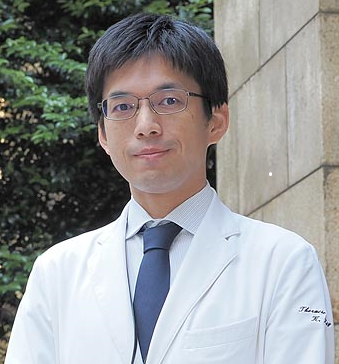
Kaseda, Kaoru

写真a

Affiliation

School of Medicine, Department of Surgery (General Thoracic Surgery) ( Shinanomachi )

Position

Assistant Professor/Senior Assistant Professor

External Links

Career 【 Display / hide

  • 2006.04
    -
    2008.03

    okyo Metropolitan Cancer and Infectious Diseases Center Komagome Hospital, 初期臨床研修医

  • 2008.04
    -
    2011.03

    okyo Metropolitan Cancer and Infectious Diseases Center Komagome Hospital, 後期臨床研修医

  • 2011.04
    -
    2012.03

    Division of Thoracic Surgery, Keio University School of Medicine, 専修医

  • 2012.04
    -
    2013.03

    Pathology Division, Research Center for Innovative Oncology, Department of Thoracic Surgery,National Cancer Center Hospital East, 短期がん専門研修医

  • 2013.04
    -
    2013.09

    Division of Thoracic Surgery, Keio University School of Medicine, 専修医

display all >>

Academic Degrees 【 Display / hide

  • 博士(医学), Keio University, Dissertation, 2016.10

Licenses and Qualifications 【 Display / hide

  • 医師免許証, 2006.04

  • 外科専門医, 2011.12

  • がん治療認定医, 2013.04

  • 呼吸器外科専門医, 2014.01

  • 肺がんCT検診認定機構 肺がんCT検診認定医, 2014.10

display all >>


Research Areas 【 Display / hide

  • Life Science / Tumor diagnostics and therapeutics (Comprehensive Genome Profiling)

  • Life Science / Respiratory surgery

Research Keywords 【 Display / hide

  • Comprehensive Genome Profiling

  • Percutaneous cryoablation

  • Thoracic Surgery

  • 胸部悪性腫瘍の集学的治療

Research Themes 【 Display / hide

  • Lung Cancer, 

    2011.04
    -
    Present

  • Percutaneous cryoablation, 

    2011.04
    -
    Present

  • 胸部悪性腫瘍, 

    2011.04
    -
    Present

  • がん遺伝子検査, 

    2011.04
    -
    Present

Proposed Theme of Joint Research 【 Display / hide

  • Lung Cancer


Papers 【 Display / hide

  • Lobectomy results in a greater increase in the pulmonary artery to aorta ratio compared to sublobar resection: a retrospective study.

    Nakai T, Okubo Y, Suzuki T, Suzuki S, Masai K, Kaseda K, Sato Y, Asakura K

    Journal of cardiothoracic surgery 21 ( 1 )  2026.04

  • Percutaneous Cryoablation Under Local Anesthesia for Pulmonary Metastases From Colorectal Cancer: Long-Term Outcomes From a Single-Institution Retrospective Cohort

    Yorimori S., Kaseda K., Aoki Y., Sugino K., Suzuki T., Okubo Y., Suzuki S., Masai K., Tamura M., Inoue M., Yashiro H., Nakatsuka S., Yamauchi Y., Izumi Y., Kawamura M., Jinzaki M., Asakura K.

    Cancer Reports 9 ( 4 ) e70550 2026.04

     View Summary

    Background: Surgical resection is the standard treatment for pulmonary metastases from colorectal cancer, but its safety and long-term efficacy in medically inoperable patients remain limited. Percutaneous cryoablation is a minimally invasive alternative to surgical resection and has gained increasing attention in recent years. Aims: This retrospective study aimed to evaluate complication rates, local tumor control, and overall survival associated with percutaneous cryoablation for pulmonary metastases from colorectal cancer. Methods and Results: We retrospectively reviewed patients treated with percutaneous cryoablation from 2002–2017. Complications were defined as adverse events ≥ grade 2 per Common Terminology Criteria for Adverse Events version 5.0. In total, 126 metastatic pulmonary tumors in 48 patients were treated across 73 sessions. Complications occurred in 18 sessions (24.7%), including 2 grade ≥ 3 events (2.7%). No treatment-related deaths occurred within 30 days. With a median follow-up of 9.7 months (maximum, 155.4 months), local tumor control rates at 1, 3, and 5 years were 74.5%, 58.8%, and 56.4%, respectively. Median overall survival was 3.8 years, with 1-, 3-, 5-, and 10-years rates of 86.8%, 60.4%, 41.9%, and 36.6%, respectively. The relatively short median follow-up should be considered when interpreting these long-term local control estimates. Six patients achieved 10-years survival. Conclusion: Percutaneous cryoablation is a safe, minimally invasive option that provides favorable local tumor control and encouraging long-term survival outcomes.

  • Upright/Supine Multi-detector Computed Tomography Quantification of Posture-related Central Airway Stenosis with a Giant Mediastinal Tumor: A Case Report

    Suzuki Takahiro, Asakura Keisuke, Yamada Yoshitake, Sugino Kosuke, Hishida Tomoyuki, Yamada Minoru, Yokoyama Yoichi, Okubo Yu, Suzuki Shigeki, Masai Kyohei, Kaseda Kaoru, Jinzaki Masahiro

    Respiratory Endoscopy (The Japan Society for Respiratory Endoscopy)  4 ( 1 ) 96 - 100 2026.03

     View Summary

    <p>Patients with giant mediastinal tumors often experience worsened dyspnea in the supine position due to central airway stenosis, which can become life-threatening during the induction of general anesthesia with muscle relaxants. However, posture-related changes in airway morphology in such cases have not been quantitatively evaluated. A 34-year-old male with a giant mediastinal tumor presented with dyspnea in the supine position. The recently developed upright and supine multi-detector computed tomography (MDCT) scans revealed a significant decrease in airway luminal areas from the upright to the supine position: 42.5%, 36.8%, and 40.4% in the trachea, right, and left main bronchi, respectively. These reductions were significantly greater than the 4%-9% changes previously reported in healthy individuals, suggesting that tumor weight worsened airway stenosis. To prevent airway collapse during general anesthesia, awake intubation was performed in the supine position prior to surgical resection. Airway luminal areas in patients with giant mediastinal tumors can significantly decrease from the upright to the supine position, which is considered to cause worsened dyspnea. Upright and supine MDCT enables safe and quantitative assessment of posture-related airway stenosis and may serve as an adjunctive imaging modality for evaluating patients who experience dyspnea in the supine position.</p>

  • Clinical nodal positive disease is associated with greater surgical complexity in salvage lung resection after tyrosine kinase inhibitor therapy

    Suzuki S., Suzuki T., Okubo Y., Masai K., Kaseda K., Asakura K.

    General Thoracic and Cardiovascular Surgery  2026

    ISSN  18636705

     View Summary

    The technical complexity of salvage lung resection after epidermal growth factor receptor (EGFR)–tyrosine kinase inhibitor (TKI) therapy remains unclear, in contrast to the well-recognized technical difficulty of salvage surgery after chemoradiotherapy. We retrospectively reviewed 15 patients with Stage IIIB/IV lung cancer who underwent anatomical lung resection after EGFR–TKI therapy and compared perioperative outcomes according to clinical nodal (cN) status (cN − vs. cN+). Although postoperative complication rates were similar, cN+ cases demonstrated greater technical complexity, including longer operative time (median increase, 66%), greater blood loss (median increase, 138%), and more frequently requiring bronchovascular reconstruction (30% vs. 0%). These findings may warrant caution for thoracic surgeons when operating on TKI-treated patients with cN+ disease, even when the primary tumor appears surgically favorable.

  • Surgical Resection of a Metastatic Lung Tumor with Polypoid Extension Into the Left Atrium Using the Bilateral Transseptal Approach

    Yano K., Ito T., Asakura K., Harada D., Matsumoto Y., Okubo Y., Masai K., Kaseda K., Kurebayashi Y., Shimizu H.

    Annals of Thoracic Surgery Short Reports  2026

     View Summary

    Lung tumor with polypoid extension into the left atrium (LA) poses a high systemic tumor embolism risk. We report a rare case of a woman with pulmonary metastasis from a retroperitoneal leiomyosarcoma extending into the LA as a polypoid mass through the left superior pulmonary vein. To minimize the risk of fatal embolization, complete resection was performed under cardiopulmonary bypass using a bilateral transseptal approach, enabling excellent visualization and precise intracardiac tumor resection before left upper lobectomy. She has remained recurrence free for 1 year. This approach safely manages lung tumors with polypoid LA invasion while mitigating catastrophic tumor embolism risk.

display all >>

Papers, etc., Registered in KOARA 【 Display / hide

Reviews, Commentaries, etc. 【 Display / hide

  • 自然気胸の再発は胸郭形態に関連するのか?

    政井 恭兵, 中山 和真, 鈴木 嵩弘, 大久保 祐, 鈴木 繁紀, 加勢田 馨, 朝倉 啓介

    日本気胸・嚢胞性肺疾患学会雑誌 (日本気胸・嚢胞性肺疾患学会)  25 ( 2 ) 84 - 84 2025.08

    ISSN  1883-0412

  • 集学的治療により病変を制御した反復性喀血を伴う慢性肺アスペルギルス症の1例

    寄森 駿, 政井 恭兵, 木村 征海, 青木 優介, 中井 猛斗, 中山 和真, 櫻田 明久, 杉野 巧祐, 矢野 海斗, 大久保 祐, 加勢田 馨, 菱田 智之, 朝倉 啓介

    日本胸部外科学会関東甲信越地方会要旨集 (日本胸部外科学会-関東甲信越地方会)   ( 198回 ) 19 - 19 2025.06

  • 楔状切除術後の局所再発に対し残肺葉切除を要したEWSR1-CREB1融合遺伝子を有さない原発性肺粘液性肉腫の1例

    中山 和真, 加勢田 馨, 櫻田 明久, 杉野 功祐, 矢野 海斗, 大久保 祐, 政井 恭兵, 菱田 智之, 朝倉 啓介, 紅林 泰

    肺癌 ((NPO)日本肺癌学会)  65 ( 3 ) 233 - 233 2025.06

    ISSN  0386-9628

  • 術中3Dナビゲーションを活用した,区域切除の経験

    矢野 海斗, 朝倉 啓介, 山田 稔, 木村 征海, 寄森 駿, 青木 優介, 中山 和真, 中井 猛斗, 櫻田 明久, 大久保 祐, 政井 恭兵, 加勢田 馨, 菱田 智之

    気管支学 ((一社)日本呼吸器内視鏡学会)  47 ( Suppl. ) S161 - S161 2025.05

    ISSN  0287-2137

  • 硬性鏡下気道インターベンションを安全に立ち上げるためには? 当院での経験を踏まえて

    菱田 智之, 矢野 海斗, 大久保 祐, 政井 恭兵, 加勢田 馨, 朝倉 啓介

    気管支学 ((一社)日本呼吸器内視鏡学会)  47 ( Suppl. ) S221 - S221 2025.05

    ISSN  0287-2137

display all >>

Research Projects of Competitive Funds, etc. 【 Display / hide

  • Development of the combination therapy with cryoablation and immune checkpoint inhibitor for lung cancer

    2016.04
    -
    2019.03

    Japan Society for the Promotion of Science, Grants-in-Aid for Scientific Research, Kaseda Kaoru, Grant-in-Aid for Young Scientists (B), No Setting

     View Summary

    Cryotherapy and cryoimmunotherapy were performed to 1.5cm femoral tumor that originated from Lewis Lung Cancer cell. Histologically, the area of nonviable tumor was significantly increased in size in cryoimmunotherapy group than cryotherapy group (Average: 88% vs 73%). Our data suggest that cryoimmunotherapy is superior than cryotherapy in local control and the most effective route is local administration. On the other hand, there was no difference in the effectiveness of local control between these three immune checkpoint inhibitors.

  • Hemoglobin vesicles ameriolate allograft airway rejection

    2012.04
    -
    2014.03

    Japan Society for the Promotion of Science, Grants-in-Aid for Scientific Research, KASEDA Kaoru, Grant-in-Aid for Young Scientists (B), No Setting

     View Summary

    Acute rejection after lung transplantation is the main risk factor for the development of bronchiolitis obliterans (BO). Hemoglobin-vesicles (HbV) have been developed for use as artificial oxygen carriers and this can provide anti-inflammatory effects and may serve to limit tissue injury in airway transplant. Here, we tested the ability of HbV to prevent airway rejection. Tracheal grafts from BALB/c or C57BL/6 were transplanted to C57BL/6 recipients. Experimental groups were treated with HbV. Histopathological evaluation of luminal obliteration was blindly reviewed. Immunohistochemistry and real-time RT-PCR analyses were performed. Allografts treated with HbV revealed a reduction of thickening in epithelial and subepithelial airway layers at day 7 in orthotopic trachea transplantation model compared with allografts treated with vehicle. There was also a concordant decrease in CD3+ lymphocytes and macrophages in HbV treated allografts.


Courses Taught 【 Display / hide

  • LECTURE SERIES, SURGERY

    2026

  • LECTURE SERIES, SURGERY

    2025

  • LECTURE SERIES, SURGERY

    2024

  • LECTURE SERIES, SURGERY

    2023

  • INTRODUCTION TO CLINICAL CLERKSHIPS

    2023

display all >>


Memberships in Academic Societies 【 Display / hide

  • International Association for the Study of Lung Cancer

     
  • 日本外科学会

     
  • 日本呼吸器外科学会

     
  • 日本胸部外科学会

     
  • 日本呼吸器内視鏡学会


display all >>

Committee Experiences 【 Display / hide

  • 2024.11
    -
    Present

    日本肺癌学会評議員

  • 2021.04
    -
    Present

    日本呼吸器内視鏡学会評議員

  • 2020.10
    -
    Present

    日本呼吸器外科学会評議員