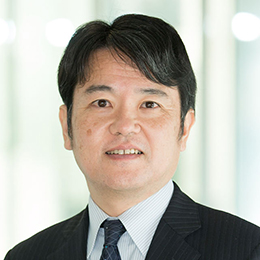
SUGIURA Junkichi

写真a

Affiliation

Faculty of Letters, Department of Humanities and Social Science (Human Relations) Sociology ( Mita )

Position

Professor

Career 【 Display / hide

  • 1998.10
    -
    2001.03

    愛知教育大学, 教育学部, 助手

  • 2001.04
    -
    2007.03

    愛知教育大学, 教育学部, 助教授

  • 2007.04
    -
    2013.03

    Aichi University of Education, Faculty of Education, Associate Professor

  • 2013.04
    -
    2015.03

    慶應義塾大学, 文学部 社会学専攻, 准教授

  • 2015.04
    -
    Present

    Keio University, Faculty of Letters, Professor

display all >>

Academic Background 【 Display / hide

  • 1989.04
    -
    1993.03

    Shinshu University, 人文学部, 人文学科 社会心理学専攻

    Graduated, Other

  • 1993.04
    -
    1995.03

    Nagoya University, 文学研究科, 心理学専攻

    Graduate School, Completed, Master's course

  • 1995.04
    -
    1998.09

    Nagoya University, 文学研究科, 心理学専攻

    Graduate School, Withdrawal after completion of doctoral course requirements, Doctoral course

Academic Degrees 【 Display / hide

  • 博士(心理学), Nagoya University, Coursework, 2001.03

    環境配慮行動の普及プロセスに関する社会心理学的研究


Research Areas 【 Display / hide

  • Humanities & Social Sciences / Social psychology

Research Keywords 【 Display / hide

  • Simulation & Gaming

  • persuasive communication


Papers 【 Display / hide

  • Implementation and Evaluation of Risk Communication Regarding Residual Pesticides

    Wakui N., Inoue K., Nunome M., Suzuki Y., Takagi A., Ito R., Iwasaki Y., Sugiura J., Akiyama H.

    Journal of the Food Hygienic Society of Japan 65 ( 1 ) 20 - 23 2024.02

    ISSN  00156426

     View Summary

    In this study, a public seminar on risk communication methods was conducted to raise awareness and disseminate accurate knowledge about residual pesticides to consumers. Additionally, surveys on consumer awareness were conducted on the attendees before and after the seminar to evaluate its effectiveness. Responses were obtained from 84 participants. The paired t-test was used to analyze the changes in awareness before and after the seminar. The results showed significant improvements in“trust in the government”and“understanding of residual pesticides.”Furthermore, step-wise multiple regression analysis was performed to explore the factors influencing satisfaction with the risk communication seminar, and the item“understanding of the safety of residual pesticides in food”was extracted. Understanding food safety is a crucial concern in daily life for consumers. To enable consumers to have an accurate understanding of food risks and make appropriate judgments, it is essential to continue implementing risk communication and conveying information about food safety and security in the future.

  • Differences Between Facilitator-Guided and Self-guided Debriefing on the Attitudes of University Students

    Kikkawa T., Kriz W.C., Sugiura J.

    Lecture Notes in Computer Science Including Subseries Lecture Notes in Artificial Intelligence and Lecture Notes in Bioinformatics 11988 LNCS   14 - 22 2021

    ISSN  03029743

     View Summary

    In this study, we investigated the effects of debriefing on 196 Japanese University students as part of an international collaboration between Austria and Japan. Based on the results of our previous studies [19–21], we showed that debriefing can bolster learning from the perspective of attitude changes and performance in games. However, there were weaknesses to previous studies in the sense that there were no facilitators to conduct the debriefings. In the experiments, all types of debriefing were carried out by students, i.e. self-guided. However, debriefing is usually conducted by a facilitator and carried out in a group. To address this weakness, we introduced facilitator-guided debriefing for the experimental conditions. Therefore, there were two experimental conditions: facilitator-guided debriefing and self-guided debriefing. After debriefing, groups of four participants played the Highway Planning game, which deals with co-operation and conflict. According to the results, the participants under facilitator-guided debriefing conditions showed more cooperative attitudes than did those under self-guided debriefing conditions, while participants in the self-guided debriefing group showed more competitive attitudes.

  • Evaluation of a Risk Communication Program for Pesticide Residues

    Akiyama H., Takagi A., Inoue K., Suzuki Y., Ito R., Wakui N., Asai M., Sugiura J.

    Journal of the Food Hygienic Society of Japan 62 ( 6 ) 187 - 192 2021

    ISSN  00156426

     View Summary

    To promote and raise the awareness of accurate knowledge on pesticide residues, the symposium program on risk communication on pesticide residues was held by the broadcasted online style. The risk communication program was statistically evaluated using a pre- and post-program online questionnaire survey. We had the questionnaire answers of the 105 valid participants. The analysis of post-program questionnaires shows that the risk communication program was effective in terms of levels of understanding and interest. Pre-program risk perception or awareness of safety assessments was significantly and positively correlated with awareness for establishing standard values of pesticide residues by the analysis of pre-program questionnaires. Risk perception after the program was significantly higher than before the program, suggesting that risk perception increased due to the program by analysis the same question between pre- and post-program questionnaires. Multiple regression analysis suggests that the participants with higher pre-program awareness of safety assessments or pre-program awareness for establishing standard values appeared to have higher levels of understanding and post-program risk perception.

  • Persuasion Game: Cross Cultural Comparison

    Ando K., Sugiura J., Ohnuma S., Tam K., Hübner G., Adachi N.

    Simulation and Gaming (Simulation and Gaming)  50 ( 5 ) 532 - 555 2019.10

    ISSN  10468781

     View Summary

    © The Author(s) 2019. Background. This study aims to examine the effectiveness of the “persuasion game” in changing environmental attitudes and behaviors in different cultural contexts. Personal communication has been identified as a key facilitator of environmental behaviors, but environmental communication in our daily lives is infrequent. Intervention. This study tested the effects of the persuasion game in Germany, Hong Kong, and Japan. The game divides participants into two groups: persuaders and persuadees. The persuaders were given 10 minutes to persuade as many persuadees as they could to adopt energy-saving behaviors. Further, after 10 minutes, these participants were asked to switch their roles. Method. The study employed a quasi-experimental pretest/posttest design to examine changes in attitudes and behavioral intentions of the participants toward energy-saving before and after their participation in the persuasion game. Participants were university students in Germany (N = 116), Hong Kong (N = 65), and Japan (N = 92). Results. In all three countries, playing the game was associated with increased intention to adopt energy-saving behaviors, perceived seriousness of environmental problems, descriptive norm, and subjective norm. The increase in subjective norm was especially high in Japan, where the increase in intention to adopt energy-saving behavior was particularly pronounced among those who had less environmental communication. Discussion. The results indicate that this game can not only facilitate communication on environmental issues in different cultural contexts but also change how people perceive others’ interest in environmental issues. Conclusion. This study showed that persuasion game can be played in countries other than Japan as well. Moreover, it provides an opportunity to communicate with others on environmental issues, which may contribute to promoting future environmental behaviors.

  • The effects of debriefing on the performance and attitude of Japanese University students

    Kikkawa T., Sugiura J., Kriz W.

    Lecture Notes in Computer Science (including subseries Lecture Notes in Artificial Intelligence and Lecture Notes in Bioinformatics) (Lecture Notes in Computer Science (including subseries Lecture Notes in Artificial Intelligence and Lecture Notes in Bioinformatics))  10825 LNCS   173 - 180 2018

    ISSN  9783319919010

     View Summary

    © Springer International Publishing AG, part of Springer Nature 2018. The present study examined the effects of debriefing on 171 Japanese university students as part of an international collaboration between Austria and Japan. There were eight experimental conditions, as follows: control group without treatment, fun game with no debriefing, Prisoner’s Dilemma (PD) game with no debriefing, PD game with self-completed debriefing, PD game with guided written debriefing, PD game with guided written debriefing and a conceptual frame, no game but reading of a text, and no game but study of a picture. Following completion of these activities, groups of four participants then played the Highway Planning Game [1], which deals with cooperation and conflict. Although performance during the Highway Planning Game did not significantly differ among the groups (probably because of the small number of groups), there were interesting differences in terms of performance and attitudes that will stimulate further research.

Papers, etc., Registered in KOARA 【 Display / hide

display all >>

Research Projects of Competitive Funds, etc. 【 Display / hide

  • Gaming simulation for increasing contingency capacity in groups

    2023.04
    -
    2026.03

    基盤研究(C), Principal investigator

  • 社会の分断と統合プロセスのゲーミングアプローチによる解明

    2019.04
    -
    2022.03

    MEXT,JSPS, Grant-in-Aid for Scientific Research, Grant-in-Aid for Scientific Research (C), Principal investigator

  • 格差と序列による対立と葛藤の生成プロセスとその解決に関するゲーミング研究

    2015.10
    -
    2019.03

    MEXT,JSPS, Grant-in-Aid for Scientific Research, Grant-in-Aid for Scientific Research (C), Principal investigator

Awards 【 Display / hide

  • 出版賞

    2012.10, 日本説得交渉学会

  • 日本質的心理学会第4回大会「研究発表最優秀表現奨励賞」

    2007.09, 日本質的心理学会

  • 優秀論文賞

    2006.11, 社団法人日本心理学会

  • 論文賞

    2004.06, 日本シミュレーション&ゲーミング学会

  • 論文賞

    2000.05, 廃棄物学会(現・廃棄物資源循環学会)

display all >>


Courses Taught 【 Display / hide

  • SPECIAL STUDY OF SOCIAL PSYCHOLOGY 2

    2025

  • SPECIAL STUDY OF SOCIAL PSYCHOLOGY 1

    2025

  • RISK COMMUNICATION

    2025

  • PROJECT FOR MULTIDISCIPLINARY AND INTERDISCIPLINARY KNOWLEDGE (SUSTAINABLE ENVIRONMENT)

    2025

  • INTRODUCTION TO SOCIAL RESEARCH 2

    2025

display all >>

Courses Previously Taught 【 Display / hide

  • 社会科学特論2

    Keio University

    2014.04
    -
    2015.03

    Autumn Semester, Within own faculty

  • 社会心理学概論2

    Keio University

    2014.04
    -
    2015.03

    Autumn Semester, Lecture, Within own faculty

  • 社会調査2

    Keio University

    2014.04
    -
    2015.03

    Autumn Semester, Seminar, Within own faculty

  • 社会学1

    Keio University

    2014.04
    -
    2015.03

    Spring Semester, Within own faculty

  • 社会調査1

    Keio University

    2014.04
    -
    2015.03

    Spring Semester, Seminar, Within own faculty

display all >>