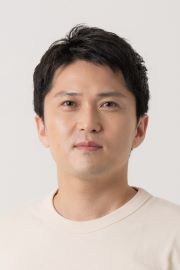
Chida, Kenta

写真a

Affiliation

Faculty of Policy Management (Shonan Fujisawa)

Position

Senior Assistant Professor (Non-tenured)/Assistant Professor (Non-tenured)

Other Affiliation 【 Display / hide

  • 慶應義塾體育會フェンシング部,部長

Academic Background 【 Display / hide

  • 2009.03

    Chuo University, 文学部, 文学科

    University, Graduated

  • 2017.03

    University of Tsukuba, 大学院, 人間総合科学研究科スポーツ健康システム・マネジメント専攻

    Graduate School, Completed, Master's course

  • 2025.03

    Keio University, 大学院, システムデザイン・マネジメント研究科システムデザイン・マネジメント専攻

    Graduate School, Completed, Doctoral course


Papers 【 Display / hide

  • Effects of Different Target Distances on the Kinematics of Hip, Knee, and Ankle Joints in the Fencing Lunge

    Chida K., Inami T., Yamaguchi S., Yoshida Y., Kohtake N.

    Biomechanics Switzerland 4 ( 2 ) 309 - 318 2024.06

     View Summary

    This study aimed to evaluate the effects of different target distances on various leg joints in the fencing lunge (lunge). Fifteen fencers performed the lunges from three different target distances (normal, short, and long). Joint angle data in the sagittal plane of the hip, knee, and ankle of the front and rear legs were measured using a 3D motion analysis system (Miqus M3). Joint angle variables were compared between each distance using a one-way repeated-measures analysis of variance and Friedman tests (p < 0.05). The results showed significant differences in various extensions, ranges of motion, and flexion angles in the measured joints for all distances. As the distances increased, there was greater flexion of the rear knee joint early during the lunge, followed by greater extension of the rear hip and knee joints, greater plantar flexion of the rear ankle joint, and higher peak velocity of the body center of mass. Furthermore, target distance extension was suggested to significantly affect front hip and knee joint flexion during the braking phase of the lunge. This study provides insight and information valuable to coaches and fencers operating in actual competition settings.

  • Assessing the validity of two-dimensional video analysis for measuring lower limb joint angles during fencing lunge

    Chida K., Inami T., Yamaguchi S., Nishioka T., Yoshida Y., Kohtake N.

    Frontiers in Sports and Active Living 6 2024

     View Summary

    Introduction: The fencing lunge (lunge), characterized by minimal body rotation, offers a movement well-suited for 2D video analysis. However, to the best of our knowledge, the validity of 2D video analysis for fencing has not been verified. This study aimed to validate 2D video analysis by comparing lower limb joints (hip, knee, and ankle joints) angles during lunge using both 2D video analysis and 3D motion analysis methods. Methods: Twenty-two male fencers performed lunge trials that were simultaneously recorded using eight motion capture cameras (Qualisys Miqus M1) and two digital video cameras (Sony AX-450 and AX450a). Results: The 2D video analysis results exhibited an extremely large correlation in knee joint angles of the front and rear legs in the sagittal with those from 3D motion analysis (r = 0.93–0.99). However, while a robust correlation was found between the ankle joint angles of the front and rear legs (r = 0.82–0.84), a large bias was also observed (−5.23° to −21.31°). Conversely, for the hip joints of the rear leg, a moderate correlation (r = 0.31) and a large bias (−10.89°) were identified. Conclusions: The results of this study will contribute to the development of coaching using 2D video analysis in competition settings because such analysis can be a useful alternative to 3D motion analysis when measuring the knee joint angle of the front leg and rear leg in the sagittal plane. However, for the ankle joint angle, further research on the optimal shooting position and height of the digital video camera is needed, whereas for the hip joint angle, 3D motion analysis is recommended at this time.

  • The Effect of Contrast Water Therapy on Dehydration during Endurance Training Camps in Moderate-Altitude Environments

    Inami T., Yamaguchi S., Nishioka T., Chida K., Hoshina K., Ito O., Hashimoto T., Murayama M.

    Sports 11 ( 12 )  2023.12

     View Summary

    The effects of contrast water therapy (CWT) on dehydration at moderate altitudes during training camps remain unknown. We hypothesized that CWT reduces dehydration resulting from training at moderate altitudes and improves performance, akin to conditions at sea level. A 13-day endurance training camp was held at a moderate altitude of 1100 m and included 22 university athletes, who were divided into two groups (CWT group, n = 12; control (CON) group, n = 10). The sample size was calculated based on an α level of 0.05, power (1 β) of 0.8, and effect size of 0.25 based on two-way ANOVA. Longitudinal changes over 13 days were compared using a two-group comparison model. Additionally, 16 athletes participated in an additional performance verification analysis. Subjective fatigue, body mass, and water content (total body water (TBW), extracellular water (ECW), and intracellular water) were measured using bioimpedance analysis every morning, and the titin N-terminal fragment in urine (UTF) was measured as an index of muscle damage. For performance verification, 10 consecutive jump performances (with the reactive strength index (RSI) as an indicator) were evaluated as neuromuscular function indices. The results indicated that the UTF did not significantly differ between the two groups. Moreover, the ECW/TBW values, indicative of dehydration, on days 4 and 5 in the CWT group were significantly lower than those in the CON group. However, there was no significant difference in RSI between the two groups. Therefore, although CWT reduces dehydration in the early stages of the training camp, it may not affect performance.

  • Relationship between Body Center of Mass Velocity and Lower Limb Joint Angles during Advance Lunge in Skilled Male University Fencers

    Chida K., Inami T., Yamaguchi S., Yoshida Y., Kohtake N.

    Biomechanics Switzerland 3 ( 3 ) 377 - 388 2023.09

     View Summary

    We investigated the influence of advance lunging in fencing from the perspective of velocity and lower limb joint angles to identify how the joint angles contribute to the peak velocity in a lunge with advance (LWA). Fourteen skilled athletes (age: 19.6 ± 0.9 years, height: 171.2 cm ± 5.2 cm, weight: 63.7 kg ± 5.3 kg, and fencing experience: 9.7 ± 3.1 years) participated by performing two types of attacking movements, and data were collected with a 3D movement analysis system. A correlation between the peak velocity of the body center of mass (CoM) in an advance lunge and several joint angle variables (rear hip peak flexion angle (r = 0.63), rear ankle peak dorsiflexion angle (r = −0.66), rear ankle range of motion (r = −0.59), and front hip peak extension angle (r = 0.54)) was revealed. In addition, the joint angle variables that significantly predicted peak CoM velocity during an LWA were the rear knee peak flexion angle (β = 0.542), rear knee peak extension angle (β = −0.537), and front knee peak extension angle (β = −0.460). Our findings suggest that the rear leg hip joint, rear leg ankle joint, and front leg hip joint may control the acceleration generated by an LWA. Furthermore, more flexion of the rear leg knee joint in the early phase of the lunge and greater extension of the rear and front leg knee joints at the end of the lunge phase may help increase peak velocity.

Papers, etc., Registered in KOARA 【 Display / hide

Presentations 【 Display / hide

  • 車いすフェンシング選手の身体的特徴および栄養素等摂取量の実態把握

    今井 菜美, 松永 修司, 鈴木 悠介, 佐藤 秀明, 千田 健太, 縣 右門, 加納 慎太郎, 東 伸行

    日本スポーツ栄養研究誌18 201-201, 

    2025.01

Research Projects of Competitive Funds, etc. 【 Display / hide

  • Lower limb kinematic evaluation during fencing lunges reflecting offensive and defensive tactics during matches

    2025.07
    -
    2027.03

    研究活動スタート支援, Principal investigator


Courses Taught 【 Display / hide

  • SEMINAR A

    2025

  • PHYSICAL EDUCATION 2 TO 5

    2025

  • PHYSICAL EDUCATION 1

    2025

  • INTRODUCTION TO SPORTS SCIENCE

    2025

  • GRADUATION PROJECT 2

    2025

display all >>


Social Activities 【 Display / hide

  • 第17回パラリンピック競技大会 車いすフェンシング競技 日本代表 監督

    日本パラリンピック委員会

    2024.09