
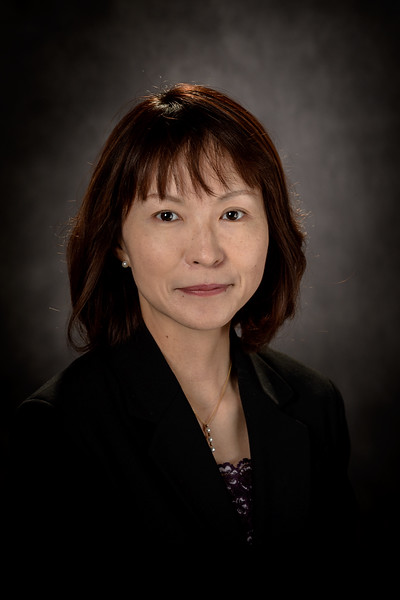
大場 純奈 ( オオバ ジュンナ )

Oba, Junna

写真a

所属(所属キャンパス)

医学部 石井・石橋記念講座(拡張知能医学) ( 信濃町 )

職名

専任講師(有期)

HP

特記事項

旧姓:岡田

経歴 【 表示 / 非表示 】

  • 2022年04月
    -
    継続中

    慶應義塾大学医学部, 石井・石橋記念講座(拡張知能医学), 専任講師

  • 2021年11月
    -
    2022年03月

    慶應義塾大学医学部, 石井・石橋記念講座(拡張知能医学), 助教

  • 2019年10月
    -
    2021年10月

    慶應義塾大学医学部, 腫瘍センター ゲノム医療ユニット, 特任講師

  • 2018年05月
    -
    2019年09月

    テキサス大学MDアンダーソンがんセンター, メラノーマ腫瘍学, インストラクター

  • 2016年07月
    -
    2018年04月

    テキサス大学MDアンダーソンがんセンター, メラノーマ腫瘍学, 上席主任研究官

全件表示 >>

学歴 【 表示 / 非表示 】

  • 1996年04月
    -
    2003年03月

    熊本大学, 医学部

    大学, 卒業, その他

  • 2007年04月
    -
    2012年03月

    九州大学, 大学院医学系学府

    大学院, 卒業, 博士

学位 【 表示 / 非表示 】

  • 医師, 熊本大学医学部, 課程, 2003年04月

  • 博士(医学), 九州大学大学院医学系学府, 課程, 2012年03月

免許・資格 【 表示 / 非表示 】

  • 医師免許, 2003年04月

  • 日本皮膚科学会専門医, 2009年10月


論文 【 表示 / 非表示 】

  • Explainable machine learning prediction of functional independence measure scores and gain in subacute stroke survivors

    Miyazaki Y., Oba J., Ishikawa T., Kawakami M., Kondo K., Hirabe A., Tsujikawa M., Honaga K., Robertson A.G., Woodman S.E., Tsuji T.

    Journal of Neuroengineering and Rehabilitation 23 ( 1 )  2026年04月

    研究論文(学術雑誌), 共著, 筆頭著者, 査読有り

     概要を見る

    Background: Traditional regression models struggle with non-linear data, limiting their ability to predict health outcomes such as activities of daily living (ADL) in stroke survivors. Machine learning (ML) methods offer improved accuracy but often lack interpretability. Explainable ML (XML) algorithms, including SHapley Additive exPlanations (SHAP), promise both precision and interpretability. This study aimed to develop interpretable XML-based prediction models for discharge ADL in subacute stroke survivors and to identify key prognostic factors. Methods: We retrospectively analyzed 980 subacute stroke survivors admitted to the Tokyo Bay Rehabilitation Hospital between March 2015 and September 2019. Thirty-three explanatory variables, including age, Functional Independence Measure (FIM) subitems, physical function measures, and nutritional assessments, were used to predict discharge FIM scores and FIM gain (motor, cognitive, total). Predictive models were developed using six algorithms (Elastic Net, Extra Trees, LightGBM, Random Forest, XGBoost, and their combinations - Mixed), and accuracy was evaluated using the coefficient of determination (R²) and root mean squared error (RMSE). Variable importance was quantified using SHAP scores. Results: Maximum R² values for motor, cognitive, and discharge total FIM scores were 0.776, 0.630, and 0.758, respectively. Those for FIM gain were 0.604, 0.413, and 0.536, respectively. SHAP scores highlighted the importance of age, trunk function, and grip strength. Furthermore, low-difficulty FIM motor subitems were significant predictors of total scores, whereas high-difficulty subitems were critical for FIM gain. Conclusions: XML achieved predictive performance comparable to reported parsimonious ML models, while providing higher clinical granular interpretability. By utilizing SHAP values, this approach overcomes the ‘black box’ nature of standard ML, providing transparent and actionable insights into how individual functional deficits contribute to outcomes. Notably, the predictive accuracy for FIM gain improved significantly compared to previous studies. Even without explicitly incorporating domain knowledge about the relationships between variables, XML was able to generate clinically relevant prediction models that accounted for these relationships. Thus, the examination of ADL prognostic factors using XML is clinically meaningful and has promising implications for real-world clinical applications.

  • Predicting coronary artery abnormalities in Kawasaki disease: Model development and validation.

    Wang Q, Kimura Y, Oba J, Ishikawa T, Ohnishi T, Akahoshi S, Iio K, Morikawa Y, Sakurada K, Kobayashi T, Miura M

    European journal of pediatrics 185 ( 5 )  2026年04月

    研究論文(学術雑誌), 査読有り,  ISSN  0340-6199

     概要を見る

    Routine echocardiography at one month after diagnosis is the current standard for screening coronary artery abnormalities (CAA), a major complication of Kawasaki disease. The study aimed to develop and validate models to predict CAA and assess whether routine echocardiography could be safely reduced in low-risk patients. Two prospective multicenter Japanese registries were utilized: PEACOCK (development/internal validation) and Post-RAISE (external validation). Variables obtained within one week of diagnosis were used to predict CAA at one month after diagnosis, defined as a maximum coronary artery Z score (Zmax) ≥ 2. The models included simple models using the previous maximum Z score only, logistic regression models, and machine learning models (LightGBM and XGBoost). Discrimination, calibration, and clinical utility were assessed. Among 4,973 PEACOCK and 2,438 Post-RAISE patients, the CAA incidence was 5.5% and 6.8%, respectively. Twenty-two models were developed using 29 variables. For external validation, a simple model using the maximum Z score at week 1 produced an area under the curve (AUC) of 0.79; adding other variables or using more complex models did not increase the AUC by more than 0.02. The models failed to efficiently reduce the number of echocardiographic examinations while minimizing missed cased of CAA. Conclusion: Until superior predictors are identified, routine echocardiography at one month after diagnosis should remain the standard practice.

  • Artificial Intelligence in Clinical Oncology: From Productivity Enhancement to Creative Discovery

    Kuno M., Osumi H., Udagawa S., Yoshikawa K., Ooki A., Shinozaki E., Ishikawa T., Oba J., Yamaguchi K., Sakurada K.

    Current Oncology 32 ( 11 ) 588 2025年11月

    査読有り,  ISSN  1198-0052

     概要を見る

    Modern clinical oncology faces an unprecedented data complexity that exceeds human analytical capacity, making artificial intelligence (AI) integration essential rather than optional. This review examines the dual impact of AI on productivity enhancement and creative discovery in cancer care. We trace the evolution from traditional machine learning to deep learning and transformer-based foundation models, analyzing their clinical applications. AI enhances productivity by automating diagnostic tasks, streamlining documentation, and accelerating research workflows across imaging modalities and clinical data processing. More importantly, AI enables creative discovery by integrating multimodal data to identify computational biomarkers, performing unsupervised phenotyping to reveal hidden patient subgroups, and accelerating drug development. Finally, we introduce the FUTURE-AI framework, outlining the essential requirements for translating AI models into clinical practice. This ensures the responsible deployment of AI, which augments rather than replaces clinical judgment, while maintaining patient-centered care.

  • Medical AI and AI for Medical Sciences.

    Sakurada K, Ishikawa T, Oba J, Kuno M, Okano Y, Sakamaki T, Tamura T

    JMA journal 8 ( 1 ) 26 - 37 2025年01月

    研究論文(学術雑誌), 共著, 査読有り,  ISSN  2433-328X

     概要を見る

    Digital transformation of healthcare is rapidly progressing. Digital transformation improves the quality of services and access to health information for users, reduces the workload and associated costs for healthcare providers, and supports clinical decision-making. Data and artificial intelligence (AI) play a key role in this process. The AI used for this purpose is called medical AI. Medical AI is currently undergoing a shift from task-specific to general-purpose models. Large language models have the potential to systematize existing medical knowledge in a standardized way. The usage of AI in medicine is not limited to digital transformation; it plays a pivotal role in fundamentally changing the state of medical science. This approach, known as "AI for Medical Science," focuses on pioneering a form of medical science that predicts the onset and progression of disease based on the underlying causes of disease. The key to such predictive medicine is the concept of "states," which can be sought through machine learning. Using states instead of symptoms not only dramatically improves the accuracy of identification (diagnosis) and prediction (prognosis) but also potentially pioneers P4 medicine by integrating it with empirical knowledge and theories based on natural principles.

  • Using a Systems Engineering Approach to Build a PCR Testing System at a Medical School During the COVID-19 Pandemic

    Oba J., Toriya M., Uwamino Y., Matsuo K.

    Risk Management and Healthcare Policy (Informa UK Limited)  17   649 - 662 2024年

    研究論文(学術雑誌), 共著, 筆頭著者, 査読有り,  ISSN  1179-1594

     概要を見る

    Background: During the COVID-19 pandemic, there was an increasing need to expand diagnostic testing in hospitals. At Keio University Hospital (KUH), clinical staff were concerned that the demand for PCR testing might exceed the capacity of the Clinical Laboratory. In response, basic researchers at Keio University School of Medicine (KUSM) set out to build a new, collaborative, PCR testing system. To be authorized to perform such diagnostic PCR testing, KUSM registered its core laboratory as an external clinical laboratory (ECL). Methods: In the pandemic, there was a pressure to build the PCR system quickly. Speed required discussions that developed a shared understanding of the unprecedented, new KUH/KUSM PCR system. To design, construct, and archive the new PCR testing system, we used a systems engineering (SE) approach. This included diagram visualization of functional flows and application of the Unified Architecture Framework (UAF), both of which are often used in system building. We considered daily demand for PCR testing at KUH and KUSM, and daily COVID-19 infections in Japan. Results: We operated the collaborative PCR testing system from August 2020 to June 2022. Given public health insurance reimbursement policies, KUH focused on individuals with suspicious symptoms, while the ECL at KUSM screened samples from asymptomatic individuals. KUSM performed about half as many tests as KUH. Interviewing KUH staff revealed that diagrams helped promote a better understanding of the KUH/KUSM PCR testing system. Conclusion: When designing temporary systems that may be repurposed in the future, we suggest using an SE approach with diagrams and UAF perspectives. This approach will enable stakeholders to understand what is being proposed to be built, and facilitate achieving an informed consensus on the proposed system. We suggest that SE approaches should be widely used in projects that involve building and operating complex, collaborative systems, and documenting the process.

全件表示 >>

KOARA(リポジトリ)収録論文等 【 表示 / 非表示 】

総説・解説等 【 表示 / 非表示 】

  • Building a versatile medical test system in a pandemic

    大場純奈, 鳥谷真佐子, 松尾光一

    Impact (Science Impact, Ltd.)  2023 ( 2 ) 42 - 44 2023年04月

    筆頭著者,  ISSN  2398-7073

     概要を見る

    The COVID-19 pandemic was unprecedented and forced countries to organise and combine resources and develop coordinated responses. Temporary systems were established with the support of researchers and other stakeholders. Dr Junna Oba, Assistant Professor at the Department of Extended Intelligence for Medicine at Keio University School of Medicine (KUSM) is devising methodologies for developing adjustable temporary systems that are quick and efficient to build, apply and dissemble when emergency situations have passed. KUSM helped to respond to the COVID-19 crisis by collaborating with basic science researches to reinforce the PCR testing system in hospitals. Among those involved in this effort were Professor Masako Toriya of Keio University Global Research Institute (KGRI) and Professor Koichi Matsuo from the KUSM's Collaborative Research Resources group. The researchers built from scratch a workflow for effective testing and information sharing. Since this time, the team has been working to build a cooperative network, developing a novel approach to planning, analysing and recording various processes and strategies to address emergency situations that will be shared with the wider healthcare community and policy makers. The researchers used systems engineering methods to launch an unprecedented collaborative system that offers the ability to gain an overall picture of the interrelationships between departments that are working together on the diagnosis, treatment and management of COVID-19.

  • 治療早期のがん患者に対するスクリーニング遺伝子検査の診断的有用性について

    四十物 絵理子, 中村 康平, 柳田 絵美衣, 山田 寛, 佐々木 瑛里, 林 秀幸, 谷嶋 成樹, 大場 純奈, 西原 広史

    日本癌学会総会記事 ((一社)日本癌学会)  79回   OE15 - 1 2020年10月

    ISSN  0546-0476

  • FFPE組織由来DNAの品質と遺伝子パネル検査のシーケンス成功率の検討

    柳田 絵美衣, 山田 寛, 高松 玲佳, 松岡 亮介, 四十物 絵理子, 中村 康平, 林 秀幸, 谷嶋 成樹, 大場 純奈, 西原 広史

    日本癌学会総会記事 ((一社)日本癌学会)  79回   OJ7 - 3 2020年10月

    ISSN  0546-0476

  • 次世代シーケンサーを用いたゲノム解析による、ERBB2増幅症例での治療推奨におけるコピー数のカットオフ値の標準化について

    中村 康平, 四十物 絵理子, 大場 純奈, 植木 有紗, 今井 光穂, 柳田 絵美衣, 山田 寛, 林 秀幸, 西原 広史

    日本癌学会総会記事 ((一社)日本癌学会)  79回   OJ7 - 2 2020年10月

    ISSN  0546-0476

競争的研究費の研究課題 【 表示 / 非表示 】

  • 大規模バイオバンクを用いたがんマルチモービディティの層別化と分子プロファイル統合

    2026年04月
    -
    2029年03月

    日本学術振興会, 科学研究費助成事業, 大場 純奈, 石川 哲朗, 基盤研究(C), その他,  研究代表者

     研究概要を見る

    本研究は、UK Biobankの約50万人規模の臨床・レジストリ・オミクスデータを活用し、がん特異的なマルチモービディティを解明することを目指す。特定のがん発症前の併存疾患パターンの抽出、発症後患者の層別化と予後・QOLとの関連評価、クラスター間のメタボローム・プロテオーム・ゲノム差異の解析を通じて、がん医療の層別化・個別化に資する知見を得る。さらに、社会医学・公衆衛生上の示唆と、病態理解に基づく介入標的候補の提示を目指す。

  • パンデミック状況下における可塑的対応を可能とする検査システムモデルの構築

    2021年04月
    -
    2025年03月

    文部科学省・日本学術振興会, 科学研究費助成事業, 大場 純奈, 基盤研究(C), 研究代表者

     研究概要を見る

    新型コロナウイルス感染症の流行に伴い、大学研究機関における検査可能数を増やすため慶應義塾大学は2020年、医学部を衛生検査所として登録し、無症状者を対象としたPCR検査を開始した。今後も起こり得るパンデミックやその他の医療危機に効果的に対応できるよう、本研究は、国内の大学研究機関・大学病院の検査体制を調査し、個々のフローをシステムズエンジニアリングの手法を用い可視化し、多施設間の検査体制を網羅的に比較検証し、問題点・改善点を明らかにした上で、異なる基礎的背景に応じた可塑的な臨時検査体制の最適モデルの提唱を行い、現場へ還元・応用することを目的とする。
    本研究は、新型コロナウイルス感染症の流行時に国内の大学研究機関において立ち上がった臨時PCR検査体制の機能、構造、構築プロセスなどについて、システムズエンジニアリングの手法を用いて比較検証を行い、抽象化したパターンを抽出した。これまでの成果として、PCR検査のCt値を目安とした社会活動度の提唱を論文発表(Keio J Med, 2021)し、スクリーニング目的のPCR検査の検証結果を論文発表(PLoS One, 2022)し、慶應義塾大学における病院と医学部のPCR検査体制の構築過程や検査数の推移等についての解析を論文発表(Risk Manag Healthc Policy, 2024)した。
    システムズエンジニアリングの考え方やダイアグラムを用いることでパンデミックのような緊急時においても、関係者間の共通認識を醸成しながら効率よく迅速にシステムの立ち上げを行い、円滑に運営・終了を行うことができることを示した。こうした研究対象となりにくい一過的なシステムの、整理された伝達可能な記録を残し検証することは、次のパンデミック危機に迅速かつ効率的に対応するためにも重要な共有すべき知見である。我々の研究成果は、現場で活用できる記録の方法論提案であり、かつ、変化する外部環境に対応するためのシステム構築の在り方の提唱でもある。