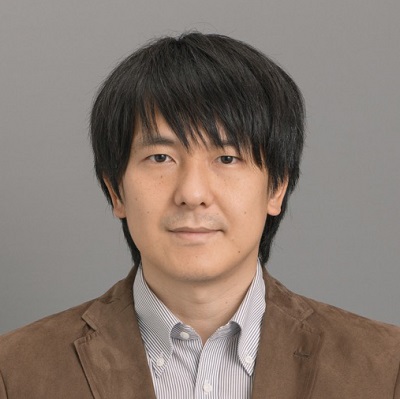
NISHIMURA Yasuhiro

写真a

Affiliation

Faculty of Science and Technology, Department of Physics 理工学部物理学科 ( Yagami )

Position

Associate Professor

Related Websites

External Links


Papers 【 Display / hide 】

  • Search for Diffuse Supernova Neutrino Background with 956.2 Days of Super-Kamiokande Gadolinium Dataset

    Abe K., Abe S., Asaoka Y., Harada M., Hayato Y., Hiraide K., Hosokawa K., Hung T.H., Ieki K., Ikeda M., Kameda J., Kanemura Y., Kataoka Y., Miki S., Mine S., Miura M., Moriyama S., Nakahata M., Nakayama S., Noguchi Y., Pronost G., Sato K., Sekiya H., Shinoda R., Shiozawa M., Suzuki Y., Takeda A., Takemoto Y., Tanaka H., Yano T., Itow Y., Kajita T., Nishijima R., Okumura K., Tashiro T., Tomiya T., Wang X., Fernandez P., Labarga L., Samudio D., Zaldivar B., Yanagisawa C., Kearns E., Mirabito J., Wan L., Wester T., Pointon B.W., Bian J., Cortez B., Griskevich N.J., Jiang Y., Smy M.B., Sobel H.W., Takhistov V., Yankelevich A., Hill J., Jang M.C., Lee S.H., Moon D.H., Park R.G., Yang B.S., Bodur B., Scholberg K., Walter C.W., Beauchêne A., Le Blévec E., Drapier O., Ershova A., Ferey M., Mueller T.A., Santos A.D., Paganini P., Quach C., Rogly R., Nakamura T., Jang J.S., Litchfield R.P., Machado L.N., Soler F.J.P., Learned J.G., Choi K., Cao S., Anthony L.H.V., Prouse N.W., Scott M., Uchida Y., Berardi V., Calabria N.F., Catanesi M.G., Ospina N., Radicioni E., Langella A., De Rosa G., Collazuol G., Feltre M., Mattiazzi M., Ludovici L., Gonin M., Périssé L., Quilain B.

    Astrophysical Journal 1005 ( 1 )  2026.07

    ISSN  0004637X

     View Summary

    We report the search result for the Diffuse Supernova Neutrino Background (DSNB) in neutrino energies beyond 9.3 MeV in the gadolinium-loaded Super-Kamiokande (SK) detector with a 22,500 × 956.2 m<sup>3</sup> day exposure. Starting in the summer of 2020, SK introduced 0.01% gadolinium (Gd) by mass into its ultrapure water to enhance the neutron capture signal, termed the SK-VI phase. This was followed by a 0.03% Gd-loading in 2022, a phase referred to as SK-VII. We then conducted a DSNB search using 552.2 days of SK-VI data and 404.0 days of SK-VII data through 2023 September. This analysis includes several new features, such as two new machine learning neutron detection algorithms with Gd, an improved atmospheric background-reduction technique, and two parallel statistical approaches. No significant excess over background predictions was found in a DSNB spectrum-independent analysis, and 90% confidence level (C.L.) upper limits on the astrophysical electron antineutrino flux were set. Additionally, a spectral fitting result exhibited a ∼1.2σ disagreement with a null DSNB hypothesis, comparable to a previous result from 5823 days of all SK pure-water phases.

  • Evaluating position dependence of detection performance for 50-cm Hyper-Kamiokande photomultiplier tube

    Horiuchi S., Nishimura Y.

    Journal of Instrumentation 21 ( 6 )  2026.06

     View Summary

    The R12860, a new 50-cm photomultiplier tube (PMT) manufactured by Hamamatsu Photonics K.K., was developed for Hyper-Kamiokande to enable measurements of neutrino oscillation parameters with unprecedented precision. To minimize systematic uncertainties, the PMT responses — detection timing, charge, and efficiency — were evaluated in detail with an emphasis on their uniformity with respect to the light incident position on the photosensitive area. Timing measurements performed over the entire PMT aperture revealed a small variation of less than 1.4 ns within the region |θ| < 70°. Here, θ parameterizes the light incident position, with θ = 0° at the PMT center and θ = ±90° at the edge. In addition, the magnetic-field dependence of the detection timing was evaluated along two orthogonal axes of the PMT aperture. It was found that a 100 mG magnetic field could either delay or advance the detection timing depending on its direction; however, the shift was less than 1 ns within |θ| < 60°. Finally, all three responses — timing, charge, and efficiency — were investigated along the two axes over the expected range of high-voltage in operation and found to be quite stable.

  • Neutron-Multiplicity Measurement in Muon Capture on Oxygen Nuclei in the Gadolinium-Loaded Super-Kamiokande Detector

    Miki S., Abe K., Abe S., Asaoka Y., Bronner C., Harada M., Hayato Y., Hiraide K., Hosokawa K., Ieki K., Ikeda M., Kameda J., Kanemura Y., Kaneshima R., Kashiwagi Y., Kataoka Y., Mine S., Miura M., Moriyama S., Nakahata M., Nakayama S., Noguchi Y., Okamoto K., Pronost G., Sato K., Sekiya H., Shiba H., Shimizu K., Shiozawa M., Sonoda Y., Suzuki Y., Takeda A., Takemoto Y., Takenaka A., Tanaka H., Watanabe S., Yano T., Kajita T., Okumura K., Tashiro T., Tomiya T., Wang X., Yoshida S., Megias G.D., Fernandez P., Labarga L., Ospina N., Zaldivar B., Pointon B.W., Yanagisawa C., Kearns E., Raaf J.L., Wan L., Wester T., Bian J., Cortez B., Griskevich N.J., Locke S., Smy M.B., Sobel H.W., Takhistov V., Yankelevich A., Hill J., Jang M.C., Lee S.H., Moon D.H., Park R.G., Yang B.S., Bodur B., Scholberg K., Walter C.W., Beauchêne A., Drapier O., Ershova A., Giampaolo A., Mueller T.A., Santos A.D., Paganini P., Quach C., Quilain B., Rogly R., Nakamura T., Jang J.S., Litchfield R.P., Machado L.N., Soler F.J.P., Learned J.G., Choi K., Iovine N., Cao S., Anthony L.H.V., Martin D., Prouse N.W., Scott M., Sztuc A.A., Uchida Y., Berardi V., Calabria N.F., Catanesi M.G., Radicioni E.

    Physical Review Letters 136 ( 13 )  2026.04

    ISSN  00319007

     View Summary

    In recent neutrino detectors, neutrons produced in neutrino reactions play an important role. Muon capture on oxygen nuclei is one of the processes that produce neutrons in water Cherenkov detectors. We measured neutron multiplicity in the process using cosmic ray muons that stop in the gadolinium-loaded Super-Kamiokande detector. For this measurement, neutron detection efficiency is obtained with the muon capture events followed by gamma rays to be 50.2-2.1+2.0%. By fitting the observed multiplicity considering the detection efficiency, we measure neutron multiplicity in muon capture as P(0)=24±3%, P(1)=70-2+3%, P(2)=6.1±0.5%, P(3)=0.38±0.09%. This is the first measurement of the multiplicity of neutrons associated with muon capture on oxygen without neutron energy threshold.

  • Sensitivity of the Hyper-Kamiokande experiment to neutrino oscillation parameters using accelerator neutrinos

    Zsoldos S., Zito M., Zietara K., Ziembicki M., Zhu T., Zhong H., Zhao X., Zarnecki G., Zaremba K., Zalipska J., Zaldivar B., Yuriy O., Yu T., Yu I., Yousefnejad S., Yoshioka Y., Yoshimoto Y., Yoshida T., Yoo J., Yokoyama M., Yevarouskaya U., Yershov N., Yano T., Yang B.S., Yamauchi K., Yamashita M., Yamamoto K., Yamaguchi Y., Xie Z., Xia J., Wuethrich J., Wronka S., Wojciechowski M., Wilson S., Wilson J.R., Wendell R., Wark D., Wachala T., Vyalkov M., Vogelaar R., Vladisavljevic T., Vivolo D., Virginet U., Vinning B., Vasseur G., Vallmajó O., Valder S., Vagins M., Urquijo P., Urano S., Uchida Y., Tzanov M., Tsushima T., Tsukamoto T., Tsui K.M., Tsuchii R., Tseng J., Tran N., Tomiya T., Tomatani Sánchez A.K., Toledo Alarcón J.F., Tiwari D., Thrane E., Thiesse M., Terada K., Tashiro T., Tanigawa H., Tanaka M., Tanaka H.K.M., Tanaka H., Takhistov V., Takeuchi Y., Taketa A., Takemoto Y., Takeda A., Taghayor S., Tada M., Svirida D., Suzuki Y., Suzuki S.Y., Suzuki A., Suwa Y., Sunanda , Suchenek M., Suárez Gómez S.L., Studenikin A., Stowell P., Stawarz L., Stavropoulos D., Stankevich K., Spradlin P., Spisso B., Spina R., Sozzi M.S., Soler F.J.P., Sobel H.W., Sobczyk J., Smy M., Smithers B.R., Skwarczynski K.

    European Physical Journal C 86 ( 2 )  2026.02

    ISSN  14346044

     View Summary

    This paper presents the expected sensitivity to the neutrino oscillation parameters of the Hyper-Kamiokande long-baseline program. The Hyper-Kamiokande experiment, currently under construction in Japan, will measure the oscillations of accelerator-produced neutrinos with thousands of selected events per sample: this corresponds to an increase of statistics of a factor 25–100 with respect to recent results from the currently-running long-baseline neutrino oscillation experiment in Japan, T2K. In the most favorable scenario we will achieve the discovery of Charge-Parity (CP) violation in neutrino oscillation at 5σ C.L. in less than 3 years. With 10 years of data-taking, and assuming a neutrino : antineutrino beam running ratio of 1:3, a CP violation discovery at 5σ C.L. is possible for more than 60% of the actual values of the CP-violating phase, δCP. Moreover, we will measure δCP with a precision ranging from 20∘, in the case of maximal CP violation, to 6∘, in the case of CP conservation. We aim to achieve a 0.5% resolution on the Δm322 parameter, and a resolution between 3% and 0.5% on the sin2θ23 parameter, depending on its true value. These results are obtained by extending the analysis methods of T2K with dedicated tuning to take into account the Hyper-Kamiokande design: the larger far detector, the more powerful beam, the upgraded near detector ND280, and the planned additional Intermediate Water Cherenkov Detector.

  • First Associated Neutrino Search for a Failed Supernova Candidate with Super-Kamiokande

    Nakanishi F., Abe K., Abe S., Asaoka Y., Harada M., Hayato Y., Hiraide K., Hosokawa K., Hung T.H., Ieki K., Ikeda M., Kameda J., Kanemura Y., Kataoka Y., Miki S., Mine S., Miura M., Moriyama S., Nakahata M., Nakayama S., Noguchi Y., Pronost G., Sato K., Sekiya H., Shiozawa M., Suzuki Y., Takeda A., Takemoto Y., Tanaka H., Yano T., Itow Y., Kajita T., Nishijima R., Okumura K., Tashiro T., Tomiya T., Wang X., Fernandez P., Labarga L., Zaldivar B., Pointon B.W., Yanagisawa C., Kearns E., Wan L., Wester T., Bian J., Cortez B., Griskevich N.J., Jiang Y., Smy M.B., Sobel H.W., Takhistov V., Yankelevich A., Hill J., Jang M.C., Lee S.H., Moon D.H., Park R.G., Yang B.S., Bodur B., Scholberg K., Walter C.W., Beauchêne A., Le Blévec , Drapier O., Ershova A., Ferey M., Mueller T.A., Santos A.D., Paganini P., Quach C., Rogly R., Nakamura T., Jang J.S., Litchfield R.P., Machado L.N., Soler F.J., Learned J.G., Choi K., Cao S., Anthony L.H.V., Prouse N.W., Scott M., Uchida Y., Berardi V., Calabria N.F., Catanesi M.G., Ospina N., Radicioni E., Langella A., De Rosa G., Collazuol G., Feltre M., Mattiazzi M., Ludovici L., Gonin M., Périssé L., Quilain B., Horiuchi S., Kawabata A.

    Astrophysical Journal Letters 997 ( 1 )  2026.01

    ISSN  20418205

     View Summary

    In 2024, a failed supernova (SN) candidate, M31-2014-DS1, was reported in the Andromeda galaxy (M31), located at a distance of approximately 770 kpc. In this Letter, we search for neutrinos from this failed SN using data from Super-Kamiokande (SK). Based on the estimated time of black hole formation inferred from optical and infrared observations, we define a search window for neutrino events in the SK data. Using this window, we develop a dedicated analysis method for failed SNe and apply it to M31-2014-DS1, by conducting a cluster search using the timing and energy information of candidate events. No significant neutrino excess is observed within the search region. Consequently, we place an upper limit on the time-integrated electron antineutrino luminosity from M31-2014-DS1 and discuss its implications for various failed SN models and their neutrino emission characteristics. Despite the 18 MeV threshold adopted to suppress backgrounds, the search remains sufficiently sensitive to constrain the Shen-TM1 equation of state, in a more optimistic emission scenario with progenitor stars of 40 M<inf>⊙</inf> and relatively high mean electron-antineutrino energies of about 23.2 MeV, yielding a 90% confidence level upper limit of 1.76 × 10<sup>53</sup> erg on the time-integrated electron antineutrino luminosity, moderately above the expected value of 1.35 × 10<sup>53</sup> erg.

display all >>

Papers, etc., Registered in KOARA 【 Display / hide 】

Research Projects of Competitive Funds, etc. 【 Display / hide 】

  • Improvement of Low-Energy Event Selection at a Water Cherenkov Detector toward Proton Decay Searches

    2023.04
    -
    2026.03

    基盤研究(C), Principal investigator

  • 新光検出システム確立で目指す大型ニュートリノ・核子崩壊検出装置の高性能化

    2018.04
    -
    2020.03

    MEXT,JSPS, Grant-in-Aid for Scientific Research, Grant-in-Aid for Early-Career Scientists , Principal investigator


Courses Taught 【 Display / hide 】

  • GRADUATE RESEARCH ON MATHEMATICAL AND PHYSICAL SCIENCES 1

    2026

  • GRADUATE RESEARCH ON FUNDAMENTAL SCIENCE AND TECHNOLOGY 1

    2026

  • INDEPENDENT STUDY ON FUNDAMENTAL SCIENCE AND TECHNOLOGY

    2026

  • BACHELOR'S THESIS

    2026

  • LABORATORY IN SCIENCE

    2026

display all >>