
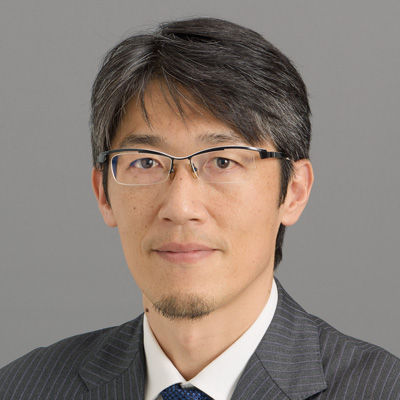
大槻 知明 ( オオツキ トモアキ )

Ohtsuki, Tomoaki

写真a

所属(所属キャンパス)

理工学部 情報工学科 ( 矢上 )

職名

教授

HP

外部リンク

経歴 【 表示 / 非表示

  • 2000年04月
    -
    2001年03月

    大学訪問講師(理工学部)

  • 2001年04月
    -
    2002年03月

    大学訪問講師(理工学部)

  • 2002年04月
    -
    2003年03月

    大学訪問講師(理工学部)

  • 2003年04月
    -
    2004年03月

    大学専任講師(有期・NTTドコモ「次世代ブロードバンド移動通信研究プロジェクト」)(非常勤)(大学院理工学研究科)

学歴 【 表示 / 非表示

  • 1990年03月

    慶應義塾大学, 理工学部, 電気工学科

    大学, 卒業

  • 1992年03月

    慶應義塾大学, 理工学研究科, 電気工学専攻

    大学院, 修了, 修士

  • 1994年09月

    慶應義塾大学, 理工学研究科, 電気工学専攻

    大学院, 修了, 博士

学位 【 表示 / 非表示

  • 博士(工学), 慶應義塾大学, 課程, 1994年09月


著書 【 表示 / 非表示

  • ひと見守りテクノロジー

    大槻 知明, ,エヌ・ティー・エス, 2017年09月

  • Radar for Indoor Monitoring: Detection, Classification, and Assessment

    大槻 知明, CRC Press, 2017年09月

  • シミュレーション辞典

    大槻 知明, 日本シミュレーション学会編,コロナ社, 2012年

  • 無線分散ネットワーク

    大槻 知明 他, コロナ社, 2011年03月

    担当範囲: 224

  • 映像情報メディア工学大事典

    大槻 知明, オーム社, 2010年06月

    担当範囲: 1760

全件表示 >>

論文 【 表示 / 非表示

  • Mobile Edge Computing Based Intelligent Charging Strategy for Electric Vehicles in Cyber Physical Energy System

    Pan G., Guan X., Wang N., Liu Y., Wu H., Chen H., Ohtsuki T., Han Z.

    IEEE Transactions on Vehicular Technology 75 ( 2 ) 3205 - 3221 2025年

    責任著者,  ISSN  00189545

     概要を見る

    The development of intelligent transportation systems has promoted the application of wireless technology in vehicular communication networks and mobile services. At the same time, electric vehicles are popular due to their environmental-friendliness and cost-saving characteristics. However, charging of electric vehicles without proper and real-time rules may cause serious traffic congestion and high expense, which results in unnecessary charging stations and wasted power generation with high carbon emission. Therefore, it is crucial to design an efficient charging strategy for electric vehicles without causing road congestion, together with an economic dispatch strategy to offer proper power generation and decarbonization. In this paper, we introduce mobile edge computing architecture to enhance real-time response capabilities through edge device positioning data. This approach allows charging strategies to swiftly adapt to varying road conditions and user demands, effectively mitigating traffic congestion. Regarding the forecasting of load demand for charging stations, this paper employs a deep learning model based on informer and deploys it on edge servers, quickly providing accurate demand predictions for economic dispatching and enhancing the precision of scheduling strategies. With the application of deep reinforcement learning models, the system can formulate efficient charging plans based on real-time user data, improving user satisfaction and quality of services. Numerical results show the efficiency of the obtained strategies for electric vehicles charging and power economic dispatching, and the two-stage modeling approach significantly improves the convergence of the model and the quality of the solution.

  • A Rapid SAR Image Simulation Method for Ship Wakes Coupled with Sea Waves Using Fluid Velocity Potential

    Zhao C., Li K., Wang L., Ohtsuki T., Adachi F.

    IEEE Signal Processing Letters 32   271 - 275 2025年

    責任著者,  ISSN  10709908

     概要を見る

    In simulating synthetic aperture radar (SAR) ship wakes, dynamic wake modeling often uses the linear superposition of sea waves and Kelvin wakes. This method, however, overlooks the alterations in sea surface roughness caused by the nonlinear interaction between waves and wakes, thus failing to accurately capture real sea surface variations. In this letter, we introduce a rapid SAR image simulation technique for ship wakes that incorporates sea waves using fluid velocity potential. Firstly, the computational domain and ship grid are constructed, with the grid scale tailored to the ship's surface structure to satisfy boundary conditions for efficient fluid velocity potential calculations. Next, to enhance boundary calculation accuracy, we employ the Taylor expansion boundary element method to swiftly resolve both steady and unsteady velocity potential components. Additionally, our approach not only depicts the interaction between sea waves and ship wakes but also facilitates the simulation analysis of various sea condition parameters. By treating the ship wake as noise and comparing images containing only background sea waves with the simulation images, the results show that the accuracy of the proposed approach is 0.2 SSIM higher than that of the linear superposition method, and the speed is 3 hours faster than that of CFD method.

  • Deep Learning-Based Channel Estimation to Mitigate Channel Aging in Massive MIMO With Pilot Contamination

    Hirose H., Yang S., Ohtsuki T., Bouazizi M.

    IEEE Access 13   1834 - 1845 2025年

    研究論文(学術雑誌), 責任著者

     概要を見る

    In time division duplex (TDD)-based massive multiple-input multiple-output (MIMO) systems, accurate channel state information (CSI) between the base station (BS) and user terminal (UT) is crucial for efficient signal processing, including received signal separation and transmission precoding. However, due to the time-varying nature of wireless channels and the limited coherence time, the pilot signals must be short, and the number of orthogonal pilot sequences is finite. Consequently, pilot signal reuse across neighboring cells leads to pilot contamination, significantly degrading channel estimation accuracy. Traditional methods like minimum mean square error (MMSE) estimation require prior knowledge of the channel covariance matrix, which is often unavailable. This paper proposes a novel deep learning-based channel estimation approach that effectively mitigates the dual challenges of channel aging and pilot contamination. The method leverages two distinct convolutional neural networks (CNNs): one for processing pilot signals to suppress inter-cell interference and another for data signals to address both inter-cell and intra-cell interference. To further enhance estimation accuracy, a smoothing filter is employed to minimize local distortions caused by incorrect symbol detection in the time domain. Simulation results demonstrate the effectiveness of the proposed method, particularly at normalized Doppler frequencies above 0.01, where it significantly outperforms conventional techniques and interpolation-based approaches. The results highlight the proposed method's robustness in maintaining high channel estimation accuracy in dynamic and interference-prone environments.

  • Indoor Human Activity Recognition Using Multiple Dynamic Nonlinear Mapping Applied to 3-D LiDAR-Collected Data

    Meng X., Bouazizi M., Li Z., Ohtsuki T.

    IEEE Internet of Things Journal 12 ( 11 ) 16797 - 16812 2025年

    研究論文(学術雑誌), 最終著者

     概要を見る

    Activity recognition is essential in computer vision applications, such as smart homes and healthcare services. While RGB images have been widely used in this area, they pose challenges related to privacy invasion and environmental constraints. To address these issues, some research has explored using 3-D light detection and ranging (3-D LiDAR) to collect 3-D point cloud data for activity recognition. However, the high-computational cost and large model parameters required for processing 3-D point clouds remain major limitations. To overcome these challenges, we propose a novel multiclass activity recognition system based on skeleton extraction from depth images collected by 3-D LiDAR. First, we use 3-D LiDAR to collect depth images of ten distinct activities, such as walking, falling, and squatting. Next, we process these depth images using our proposed multiple dynamic nonlinear mapping (MDNLM) method. The MDNLM method enhances the clarity of human body details by adjusting the color distribution of depth values based on the human position, ensuring that more colors are allocated to specific regions of the human body. This enhancement allows a fine-tuned algorithm to extract skeleton joints accurately from the mapped images. Finally, the extracted skeletons are fed into a convolutional neural network combined with a long short-term memory network (CNN+LSTM) for multiclass activity recognition. Our proposed method achieved 100.0% accuracy for a 2-class classification task (fall detection), 99.0% accuracy for a 7-class classification task, and 94.7% accuracy for a 10-class classification task.

  • Avoiding Shortcuts: Enhancing Channel-Robust Specific Emitter Identification via Single-Source Domain Generalization

    Wang Y., Ohtsuki T., Sun Z., Niyato D., Wang X., Gui G.

    IEEE Transactions on Wireless Communications 24 ( 4 ) 3163 - 3176 2025年

    研究論文(学術雑誌), 責任著者,  ISSN  15361276

     概要を見る

    By extracting radio frequency (RF) fingerprints from received signals, specific emitter identification (SEI) becomes a promising technique for physical layer identification of wireless devices. Recently, channel-robust SEI has attracted increasing attention due to the weak robustness exhibited by deep learning (DL)-based SEI methods in cross-channel conditions. To address these limitations, we propose a novel channel-robust SEI framework based on single-source domain generalization (SDG). Initially, we analyze the weak robustness of existing SEI methods from the perspective of the "shortcut learning"phenomenon in DL. Shortcut learning may lead traditional SEI methods to prioritize easily-mined, yet transient, channel characteristics in signal samples, rather than focusing on the more stable RF fingerprints derived from hardware differences. Next, from the perspective of SDG, we outline the optimization goal to rectify the shortcut learning in SEI. Inspired by this optimization goal, we then propose a channel-robust SEI method. This method consists of feature embedding through a multi-scale convolutional attention network (MSCAN), domain expansion using random overlay augmentation (ROA) to generate multiple virtual domains, and dual alignment strategy based on contrastive learning. Specifically, supervised contrastive learning is implemented for category-wise alignment, while supervised contrastive adversarial learning is utilized for domain-wise alignment. This dual alignment strategy can optimize the MSCAN to learn discriminative and domain-invariant feature representations, thereby enhancing the robustness of SEI. Simulation experiments on the ORACLE dataset and the WiSig dataset have demonstrated the superiority of our method compared to state-of-the-art techniques.

全件表示 >>

KOARA(リポジトリ)収録論文等 【 表示 / 非表示

総説・解説等 【 表示 / 非表示

全件表示 >>

研究発表 【 表示 / 非表示

  • Correlation analysis of objective features and online meeting quality

    R. Oba

    HCI International 2025 Conference (Gothenburg) , 

    2025年06月

  • Beamforming and Trajectory Planning Method under Fixed-Footprint Conditions for Multi-HAPS Systems

    T. Mori

    [国際会議]  ICC2025 (Montreal) , 

    2025年06月

  • A Novel Physical Spoofing Technique Using Radio Frequency Fingerprint Emulation and Model Fitting

    Z. Yao

    ICC2025 (Montreal) , 

    2025年06月

  • A Novel MIMO FMCW Radar-based Approach for Heart Rate Estimation Using Positional Feature Selection

    S. Nakatani

    ICC2025 (Montreal) , 

    2025年06月

  • Stress Detection Through Eye Tracking Incorporating Custom Lasso Stress Index

    X. Meng

    ICC2025 (Montreal) , 

    2025年06月

全件表示 >>

競争的研究費の研究課題 【 表示 / 非表示

  • Transformerに基づくインテリジェント無線通信システム

    2024年04月
    -
    2028年03月

    大槻 知明, 基盤研究(B), 補助金,  研究代表者

  • 条件付き相互情報量規範適応量子化に基づく信号処理設計と深層学習を用いた無線通信

    2019年04月
    -
    2023年03月

    文部科学省・日本学術振興会, 科学研究費助成事業, 大槻 知明, 基盤研究(B), 補助金,  研究代表者

  • 嗜好解析に基づくトラヒック予測及び統合環境認知によるユーザセントリック無線通信

    2015年04月
    -
    2018年03月

    文部科学省・日本学術振興会, 科学研究費助成事業, 大槻 知明, 基盤研究(B), 補助金,  研究代表者

知的財産権等 【 表示 / 非表示

  • イベント検出装置

    発行日: 特許第4576515号  2010年09月

    特許権, 共同

受賞 【 表示 / 非表示

  • Best paper Award

    A. Li, X. Guan, Z. Yang, and T. Ohtsuki,, 2014年08月, 9th International Conference on Communications and Networking in China 2014 (CHINACOM '14), Coalition Graph Game for Multi-hop Routing Path Selection in Cooperative Cognitive Radio Networks

    受賞区分: 国内外の国際的学術賞,  受賞国: 中華人民共和国

  • 電子情報通信学会通信ソサイエティ活動功労賞

    大槻 知明, 2010年03月, 電子情報通信学会

    受賞区分: 国内学会・会議・シンポジウム等の賞

     説明を見る

    電子情報通信学会ユビキタス・センサネットワーク研究会幹事としての貢献に対して

  • 電子情報通信学会通信ソサイエティ活動功労賞

    大槻 知明, 2009年03月, 電子情報通信学会

    受賞区分: 国内学会・会議・シンポジウム等の賞

     説明を見る

    電子情報通信学会英文論文誌編集副委員長としての貢献に対して

  • 第5回国際コミュニケーション基金優秀研究賞

    大槻 知明, 2006年, KDDI財団, 広帯域(UWB)方式の容量増加に関する研究開発

    受賞区分: 出版社・新聞社・財団等の賞

     説明を見る

  • 船井情報学奨励賞

    大槻 知明, 2002年, 船井財団, 有線・無線通信における高効率通信方式の研究

    受賞区分: 出版社・新聞社・財団等の賞

全件表示 >>


担当授業科目 【 表示 / 非表示

  • 情報工学輪講

    2026年度

  • 国内国際活動Ⅲ

    2026年度

  • 人間・社会システム情報科学博士研究

    2026年度

  • 半学半教プロジェクトⅣ

    2026年度

  • 人間・社会システム情報科学修士研究B2

    2026年度

全件表示 >>
